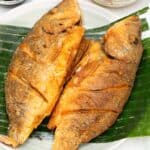
Crispy Fried Whole Fish
Whole fish fried until crisp, with tender, flaky meat inside.
Servings 6
Calories 642kcal
Cost $10-$15
Equipment
- Wok or large pan
Ingredients
- Whole fish (1½ to 2 pounds) cleaned, scaled, and gutted
- ½ cup cornstarch, all-purpose flour, or a mix of both
- Salt to taste
- Neutral oil for frying
- Dipping sauce for serving
Instructions
- Rinse the fish inside and out, then pat it dry with paper towels.
- Make shallow diagonal cuts on both sides, about 1 to 2 inches apart.
- Season the fish with salt inside, outside, and in the cuts. Lightly coat with cornstarch or flour, shaking off any excess. Let rest for 10 minutes.
- Heat enough oil in a wok or large pan to cover about half of the fish. The oil is ready when small bubbles form around the end of a wooden chopstick.
- Carefully lower the fish into the oil and fry for about 5 minutes per side. Spoon hot oil over the head and tail as it cooks. The fish is done when the meat is opaque, flakes easily, or reaches 145°F.
- Transfer to a wire rack to drain, then serve with your favorite dipping sauce.
Notes
- Fish: Firm and meaty varieties like pompano, branzino, tilapia, and catfish hold up well during frying. I used whole snapper, a fish with firm and flaky flesh, to get that crunchy outside while keeping the inside tender and moist.
- Starch: Cornstarch and all-purpose flour are great for frying for a crispy texture and a beautiful golden color. If you need a gluten-free alternative, rice flour or potato starch work well too.
- Oil: Use a neutral oil with a high smoke point, such as vegetable oil, canola oil, avocado oil, or peanut oil that can withstand the heat.
- Dipping sauce: Since the fish is seasoned with only salt, you'll want a tasty sauce or sawsawan to add extra flavor, like soy-vinegar, banana ketchup, sweet chili sauce, and lechon sauce.
Nutrition
Calories: 642kcal | Carbohydrates: 10g | Protein: 80g | Fat: 29g | Saturated Fat: 4g | Polyunsaturated Fat: 9g | Monounsaturated Fat: 15g | Trans Fat: 0.1g | Cholesterol: 360mg | Sodium: 505mg | Potassium: 1152mg | Fiber: 0.1g | Vitamin A: 405IU | Calcium: 68mg | Iron: 4mg