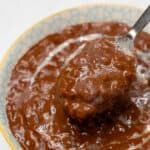
Filipino Champorado
A chocolate rice porridge traditionally made with tablea (chocolate tablets), glutinous or sticky rice, and sugar.
Servings 6
Calories 270kcal
Cost $4-$6
Equipment
- Heavy-bottomed pot
Ingredients
- 1 cup glutinous rice see note
- 5 cups water
- 1 (13.5-ounce) can coconut milk see note
- 4 ounces dark chocolate sub: tablea, cocoa powder; see note
- ¼ cup cocoa powder see note
- ¼ cup brown sugar adjust to taste
- Pinch of salt
Instructions
- Cook the rice: In a heavy-bottomed pot, combine 1 cup of glutinous rice and 5 cups of water. Bring to a boil over medium-high heat, stirring occasionally to avoid clumping or sticking to the bottom. Once boiling, reduce the heat to low. Cover and simmer for about 10, or until the rice is tender and fully cooked.
- Add your choice of dairy: Pour the coconut milk into the cooked rice and stir well. Let it simmer for about 5 minutes, just enough to heat everything through and allow the flavors to meld together. If you prefer a thinner consistency, feel free to add a bit more water during this stage, adjusting to your taste.
- Add the chocolate: If you're using cocoa powder, dissolve it in a small amount of warm or hot water to create a smooth paste. Alternatively, if you're using chopped chocolate or tablea, make sure it's chopped to melt easily and evenly in the mixture. Stir gently to combine.
- Sweeten to your taste: Add sugar, tasting as you go, until you reach your desired level of sweetness. Then, add a pinch of salt to help balance and bring out the sweet flavors in your Champorado. Turn off the heat.
- Ladle the Champorado into bowls and serve warm. For added richness, consider drizzling evaporated milk, condensed milk, or sprinkling some milk powder on top.
Notes
- Glutinous rice: Also known as sticky rice, sweet rice, or malagkit, this type of rice has a higher starch content that becomes sticky and chewy when cooked.
- Coconut milk: There are plenty of dairy options, like evaporated milk, coconut cream, regular milk or cream, or even plant-based milk. But If you prefer, plain water works too. Then, you can top it off with a little of your favorite milk for extra richness.
- Chocolate: Tablea, or cacao tablets, is traditionally used with a deep, slightly bitter flavor. Cocoa powder is a convenient and widely available alternative; Dutch-processed cocoa powder will specifically yield a darker Champorado. You can also use chocolate bar or chips, especially one with a high percentage of cocoa.
Nutrition
Calories: 270kcal | Carbohydrates: 45g | Protein: 4g | Fat: 9g | Saturated Fat: 5g | Polyunsaturated Fat: 0.3g | Monounsaturated Fat: 3g | Trans Fat: 0.01g | Cholesterol: 1mg | Sodium: 58mg | Potassium: 226mg | Fiber: 4g | Sugar: 13g | Vitamin A: 7IU | Vitamin C: 0.002mg | Calcium: 35mg | Iron: 3mg