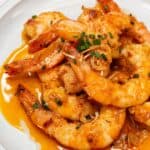
Gambas Recipe
The Filipino adaptation of Gambas al Ajillo, a Spanish tapas dish with shrimp cooked in olive oil and a generous amount of garlic.
Servings 4
Calories 332kcal
Cost $8-$10
Equipment
- Skillet
Ingredients
- 1 pound large shrimp peeled and deveined; see note
- ½ cup extra virgin olive oil see note
- 8 cloves garlic thinly sliced
- 1 tablespoon tomato paste see note
- 1 teaspoon paprika see note
- ½ teaspoon crushed red pepper see note
- Lemon wedges for serving
- Salt to taste
- Fresh parsley or chives chopped, for garnish
Instructions
- Rinse the shrimp and pat dry with paper towels. Season with salt.
- In a skillet, add a bit of extra-virgin olive oil to coat the bottom and set to medium-high heat. To get that slightly charred exterior, make sure the skillet is very hot before adding the shrimp. Sear the shrimp in a single layer without overcrowding the pan, about a minute on each side. Do not move them too much to allow them to develop a nice, golden-brown crust.PRO TIP: Shrimp cook very quickly and can easily become rubbery if overcooked. Watch for the color change; they are ready when they turn opaque pinkish-white. Keep in mind that the residual heat will continue to cook them, so it's best to take them off the heat just before they're fully done.
- Clean the skillet if necessary, then add the rest of the extra-virgin olive oil. Set it to medium heat, then add the garlic and sauté until just golden. Be careful not to overcook the garlic, as it can turn bitter if it browns too much.
- Add the tomato paste, paprika, and crushed red pepper. Sauté until the tomato paste begins to caramelize, about a minute. Season the oil mixture with a pinch of salt.
- Add the shrimp back into the skillet, then turn off the heat. Coat each piece with the oil mixture. Turn off the heat.
- Squeeze fresh lemon juice over the shrimp to brighten the flavors and add a fresh, zesty note to the dish.
- Garnish with chopped parsley, chives, or scallions, then serve with lemon wedges.
Notes
- Shrimp: Medium to large shrimp, categorized as "16/20" or "21/25" (indicating the number of shrimp per pound), are recommended. These sizes are ideal as they are substantial enough to retain a juicy, tender texture when cooked, yet small enough to absorb the flavors of garlic and olive oil.
- Extra-virgin olive oil: It is traditionally used for its flavor, but any high-quality oil will work.
- Tomato paste: A concentrated form of tomatoes with a rich and intense flavor that adds depth and subtle sweetness when caramelized.
- Spices: Paprika is typically mild (except for hot paprika) and sweet, while crushed red pepper is sharper with more pronounced spiciness. For alternatives, cayenne pepper can increase the heat, while chili powder offers a milder spice.
Nutrition
Calories: 332kcal | Carbohydrates: 4g | Protein: 16g | Fat: 28g | Saturated Fat: 4g | Polyunsaturated Fat: 3g | Monounsaturated Fat: 20g | Trans Fat: 0.01g | Cholesterol: 143mg | Sodium: 737mg | Potassium: 201mg | Fiber: 0.4g | Sugar: 1g | Vitamin A: 378IU | Vitamin C: 4mg | Calcium: 75mg | Iron: 1mg