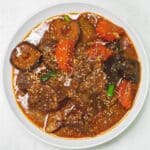
Korean Beef Stew
A rich stew of beef short ribs and chuck cooked with vegetables in a subtly sweet and savory sauce made with soy sauce, pear, and aromatics.
Servings 10
Calories 444kcal
Cost $32-$35
Equipment
- 6-quart Dutch oven or a heavy-bottomed pot
Ingredients
- 2 pounds bone-in beef short ribs (see note)
- 3 pounds beef chuck cut into large chunks (see note)
- ⅓ cup flour
- 1- inch ginger minced
- 1 onion chopped
- 1 head garlic minced
- ½ cup rice wine (see note)
- ½ cup soy sauce
- 1 Asian pear or apple grated (see note)
- 2 tablespoons gochujang (see note)
- ¼ cup brown sugar
- 8 to 10 dried shiitake mushrooms (soaked in water) cut in half, if big
- 8 ounces carrot large-diced
- 8 ounces daikon radish large-diced
- 3 scallions cut into 2” lengths
- Sesame seeds (optional)
- Cheese e.g., cheddar, raclette, or gruyere (optional)
- Salt and pepper to taste
Instructions
- Trim off excess fat from the beef. Season them with salt and pepper, then lightly coat them with flour.
- Over medium-high heat, add a bit of oil and sear the meat in batches. Transfer them to a plate.
- Sauté ginger, onion, and garlic in oil until fragrant and softened for about a minute.
- Add rice wine, soy sauce, pear, gochujang, sugar, and 2 cups of water (only 1 cup if using a pressure cooker). Mix it up and bring it to a boil.
- Add the meat back in. Cover and simmer over medium heat until the meat is tender for 2 to 3 hours. Add more water, if necessary.If using a pressure cooker, cover and switch to the high or stew setting for 30 minutes.
- Remove the layer of fat that floats on top. Taste to see if more soy sauce or sugar is needed. The level of saltiness will vary depending on the brand of soy sauce you are using.
- Add mushrooms, carrots, radish, and scallions. Cook for another 20 minutes (10 minutes for the pressure cooker).
- Add some ground pepper and sesame seeds.
- Add cheese just before serving, if desired.
Notes
- Beef: I used a combination of bone-in short ribs and chuck. Bone-in short ribs have a great texture and flavor but can be pricey. A chuck roast usually has good marbling—it's also meatier and cheaper. Boneless beef shank and point-cut brisket are other alternatives.
- Rice wine: I used Shaoxing wine; you may also use another type of rice wine, dry sherry, or red/white wine. Alcohol enhances the flavors of this dish, but if you want to keep it alcohol-free, you can skip it.
- Gochujang: It is a thick, red chili paste made with glutinous rice and fermented soybeans. It has a concentrated flavor with varying levels of spiciness. As a substitute, you may use Sriracha.
- Asian pear: A common ingredient in Korean marinades, it contains enzymes that tenderize the meat and adds natural sweetness. To substitute, you can use apple instead.
Nutrition
Calories: 444kcal | Carbohydrates: 19g | Protein: 41g | Fat: 23g | Saturated Fat: 10g | Polyunsaturated Fat: 2g | Monounsaturated Fat: 11g | Trans Fat: 1g | Cholesterol: 133mg | Sodium: 1059mg | Potassium: 934mg | Fiber: 2g | Sugar: 10g | Vitamin A: 3854IU | Vitamin C: 10mg | Calcium: 63mg | Iron: 5mg