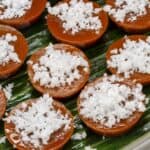
Kutsinta
A Filipino "kakanin" known for its chewy, jelly-like texture and vibrant orange color from annatto, topped with freshly grated coconut.
Servings 16
Calories 93kcal
Cost $2-$3
Equipment
- 16 kutsinta molds (also called muffin molds or puto molds)
- Fine-mesh Sieve
- Steamer
Ingredients
- ¾ cup all-purpose flour sub: rice flour (see note)
- ¼ cup tapioca starch sub: cassava flour or glutinous rice flour (see note)
- ¾ cup brown sugar light or dark
- 1 teaspoon annatto powder (see note)
- 1½ cups water
- 1 teaspoon lye water (see note)
- ¼ teaspoon pandan extract sub: 1 teaspoon vanilla extract (see note)
- Grated coconut for topping (see note)
- Oil to grease the molds
Instructions
- Combine Ingredients: In a bowl, combine the dry ingredients: all-purpose flour, tapioca flour, brown sugar, and annatto powder. Whisk them together until combined.Add the liquids: water, lye water, and pandan extract. Continue to whisk until the mixture is well incorporated and free of lumps.
- Strain the Mixture: Use a fine-mesh sieve to remove any remaining lumps. For easy pouring, transfer the strained mixture into a measuring cup with a spout before filling the molds.
- Prepare the Molds: Lightly grease the molds using coconut oil, any neutral oil, or a non-stick cooking spray. This helps the kutsinta release easily and maintain their shape.
- Transfer to Molds: Pour the mixture into the molds, continuously stirring to ensure all ingredients are fully dissolved and evenly incorporated. Fill each mold with about 2½ tablespoons of the mixture, adjusting more or less depending on your preferred thickness.
- Steam: Fill your steamer with water and bring it to a boil over medium-high heat. Wrap the lid with a cloth to prevent condensation from dripping onto the kutsinta. Arrange the molds in the steamer trays. Once the water is boiling, reduce the heat to medium and steam the kutsinta for 25-35 minutes, depending on the thickness. You’ll know they are ready once the tops are set and have achieved a glossy surface.
- Cool: Remove the kutsinta from the steamer and allow them to cool; this will help them set properly and make them easier to handle.
- Unmold: Gently release the kutsinta from the molds using a rubber spatula, an offset spatula, or even a butter knife. Carefully lift them out while maintaining their shape.
- Add Grated Coconut: Sprinkle the kutsinta generously with grated coconut on top. For variations, consider using toasted coconut, latik (caramelized coconut curds), or grated cheese as toppings.
Notes
- Flour: I'm using a combination of all-purpose flour for structure and stability, and tapioca flour for its chewy texture. For a gluten-free option, rice flour can replace all-purpose flour for a softer, lighter texture. Cassava flour or glutinous rice flour can replace tapioca flour for a different kind of chewiness and flavor.
- Annatto Powder (Atsuete): It's mainly used for its unique orange or reddish-brown color without impacting the flavor. You can choose to skip it if color doesn’t concern you.
- Lye Water: This alkaline solution, used in small quantities, provides a chewy, firm bite. It adds no flavor but can be bitter in excess. If unavailable, use equal parts of tapioca flour and all-purpose flour for that chewy texture, although the distinctive bite might not be fully replicated.
- Pandan flavor or extract (optional): This adds a light pandan flavor. Use clear pandan extract, not the bright green pandan flavoring. You can also use vanilla instead, or skip it.
- Grated Coconut: Freshly grated coconut is highly recommended. If unavailable, you can use frozen grated coconut, sold in Filipino or Asian supermarkets, or desiccated coconut, rehydrated by soaking in water.
Nutrition
Calories: 93kcal | Carbohydrates: 22g | Protein: 1g | Fat: 1g | Saturated Fat: 0.1g | Polyunsaturated Fat: 0.2g | Monounsaturated Fat: 0.4g | Trans Fat: 0.003g | Sodium: 5mg | Potassium: 25mg | Fiber: 0.1g | Sugar: 13g | Calcium: 13mg | Iron: 0.4mg