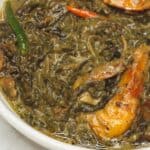
Laing
Dried taro leaves cooked in coconut milk with shrimp paste, pork, and chilies.
Servings 8
Calories 216kcal
Cost $12-$16
Equipment
- Wok or wide pan
Ingredients
- 3.5 ounces dried taro leaves
- 8 ounces shell-on shrimp deveined
- 8 ounces pork belly or shoulder sliced
- 3 tablespoons ginger cut into thin strips
- 6 garlic cloves minced
- 1 medium onion chopped
- Chili pepeprs to taste
- 2 tablespoons shrimp paste raw or sautéed
- 2 (13.5-oz) cans coconut milk
- 1 (13.5-oz) can coconut cream
- Fish sauce, salt, and pepper to taste
- Neutral oil
Instructions
- Prepare the taro leaves and handle them gently.
- Season the shrimp, then sear in a little oil over high heat until they change color.
- Add the sliced pork with a splash of water and cook over medium heat until browned.
- Sauté the ginger, garlic, onion, and chilies.
- Stir in the shrimp paste.
- Add the coconut milk and cream, then bring to a boil.
- Add the taro leaves and press down gently. Cover and simmer over medium heat for 30 minutes. Do not stir.
- Add the shrimp and cook for another 10 minutes.
- Season with fish sauce, salt, and pepper.
Notes
- Taro leaves: Also called gabi leaves. Use fresh or dried. Handle gently and cook well.
- Proteins: I used pork and shrimp, but smoked fish, dried fish, or chicken also work.
- Coconut milk: I use coconut milk and coconut cream for a thicker sauce.
- Shrimp paste: Adds the salty, savory flavor laing is known for. Raw or sautéed shrimp paste both work.
- Handle taro leaves gently and cook them well.
- Do not stir the leaves while they simmer.
- Once fully cooked, you can mix the laing gently.
- Let the sauce reduce slowly for better flavor.
Nutrition
Calories: 216kcal | Carbohydrates: 5g | Protein: 13g | Fat: 16g | Saturated Fat: 2g | Polyunsaturated Fat: 4g | Monounsaturated Fat: 10g | Trans Fat: 0.1g | Cholesterol: 95mg | Sodium: 667mg | Potassium: 299mg | Fiber: 1g | Sugar: 2g | Vitamin A: 758IU | Vitamin C: 24mg | Calcium: 59mg | Iron: 1mg