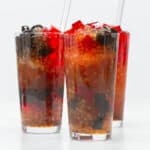
Sago at Gulaman
Also called samalamig, this sago gulaman drink or dessert features chewy sago, gulaman (agar-agar), herbal grass jelly, and pandan-infused brown sugar syrup.
Servings 4
Calories 345kcal
Cost $3-$5
Equipment
- Saucepan
- Container (as mold for gulaman)
- Tall glasses
Ingredients
For the brown sugar syrup (Arnibal)
- ⅔ cup dark brown sugar see note
- ⅔ cup water
- 2 pandan leaves rinsed and knotted; see note
- 1 teaspoon vanilla extract
Additional ingredients
- 1 cup red or green gulaman (agar-agar) cooked to package instructions & cut into cubes; see note
- 1 cup grass jelly drained and cut into cubes; see note
- 1 cup cooked sago see note
- Crushed or cubed ice
Instructions
- Gulaman: To make the gulaman, just follow the instructions on the package. After it sets, chop it into small cubes.
- Brown Sugar Syrup: In a pot, combine water, brown sugar, and knotted pandan leaves. Stir the mixture until the sugar dissolves.Simmer over medium heat for about 15 minutes until the syrup reaches a slightly thickened, caramelized consistency. Discard the pandan leaves and turn off the heat. Let the syrup cool before using.
- Sago: Cook the sago pearls according to the package instructions. Drain and rinse them under cold water. Add about 2 tablespoons of the brown sugar syrup to prevent sticking.
- Grass Jelly: Drain the liquid from the canned grass jelly and cut it into small cubes.
- Assemble: In a tall glass, alternate layers of sago, gulaman, and grass jelly cubes. Add a generous amount of crushed or cubed ice. You can also prepare this in a pitcher, if you’re serving a group.
- Pour the Syrup: Fill the glasses with brown sugar syrup, adjusting the sweetness to your taste. To make it less sweet, you can dilute with water.
Notes
- Gulaman: This is plant-based jelly derived from seaweed extract with a tender, gel-like texture. You can use either a package of gulaman powder or a stick of agar agar. If you need a substitute, gelatin works really well. It's similar but comes from animal collagen, with a softer, more delicate texture.
- Dark Brown Sugar: This contains more molasses, with a caramel flavor that is more pronounced. Light brown sugar or panutsa can be used as a substitutes.
- Pandan Leaves (Screwpine): These are flavorless, but their aroma is incomparable—grassy, nutty, and floral. You have to knot or bruise them to release their aroma. As alternatives, you can use pandan extract, vanilla extract, or banana essence.
- Sago: These are made from the starch extracted from the sago palm. It adds a fun, chewy texture to the drink. You can use tapioca pearls as an alternative, as they are very similar in texture and appearance.
- Grass Jelly: This comes from the aged and slightly oxidized leaves and stalks of the Chinese Mesona plant, which is part of the mint family. Its herbal flavors and a hint of bitterness balance out the sweetness of the drink nicely.
Nutrition
Calories: 345kcal | Carbohydrates: 89g | Protein: 4g | Fat: 0.2g | Saturated Fat: 0.04g | Polyunsaturated Fat: 0.1g | Monounsaturated Fat: 0.01g | Sodium: 82mg | Potassium: 680mg | Fiber: 5g | Sugar: 37g | Vitamin C: 0.4mg | Calcium: 382mg | Iron: 12mg