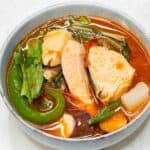
Sinigang na Salmon
A hearty tamarind-based soup with salmon, aromatics, and a variety of vegetables in a tangy broth.
Servings 6
Calories 257kcal
Cost $12-$15
Equipment
- Dutch oven or a heavy-bottomed pot
Ingredients
- 1½ pounds salmon steaks cut into pieces, large bone removed; see note
- 1 small piece ginger peeled and sliced
- 4 cloves garlic smashed
- 1 small onion sliced
- 2-3 ripe tomatoes cut into wedges
- 1 packet sinigang mix see note
- 6 cups water
- 1-2 taro (gabi) peeled and cut into large chunks; see note
- 1 small radish cut into large chunks; see note
- 1-2 chili peppers
- 1 eggplant cut into large chunks; see note
- 1 bunch yardlong beans cut into 2-inch sections; see note
- 1 bunch kang kong (water spinach) cut into 2-inch sections; see note
- Fish sauce to taste
- Salt to taste
- Neutral oil for sautéing
Instructions
- Cut the salmon steak into desired pieces, removing the large central bone and any large bones for easier eating. You can also choose to keep the steak whole if preferred.
- In a large pot, heat oil over medium-high heat. Sauté the ginger until aromatic, then add garlic, onions, and tomatoes. Cook until the softened and slightly caramelized.
- Empty the contents of the sinigang mix into the pot, then add 6 cups of water, slightly less than the packet's usual recommendation for a more concentrated broth. Cover and let it come to a boil.
- Add the radish and taro, then simmer over medium heat for about 10 minutes
- Add the salmon, chili pepper, and eggplant, then continue to simmer for another 5 minutes.
- Season with fish sauce or salt, if necessary. Add the sitaw and kangkong, then let it cook for another 1-2 minutes. Turn off the heat and allow the residual heat to finish cooking them.
- Serve your Sinigang na Salmon with a side of steamed white rice and a sawsawan (dipping sauce) of fish sauce and calamansi.
Notes
- Salmon: I've used salmon steaks cut into large pieces, with the middle bone removed. You can also use the salmon head or just the belly, or go for other fish like bangus (milkfish) or pompano as substitutes.
- Sinigang mix: For convenience, I've used a store-bought mix to create the broth, which is available in various flavors. You can use other souring agents like tamarind pulp or paste, fresh sour fruits, or even calamansi or lemons combined with tomatoes for a more homemade approach.
- Vegetables: I've used daikon radish, gabi (taro), eggplant, sitaw (yardlong beans), and kangkong (water spinach). You can also include okra, ampalaya (bitter melon), napa cabbage, or other leafy greens like bok choy or spinach. Consider adding lemongrass for a citrusy, herbal note.
Nutrition
Calories: 257kcal | Carbohydrates: 13g | Protein: 24g | Fat: 12g | Saturated Fat: 2g | Polyunsaturated Fat: 4g | Monounsaturated Fat: 5g | Trans Fat: 0.02g | Cholesterol: 62mg | Sodium: 107mg | Potassium: 954mg | Fiber: 4g | Sugar: 5g | Vitamin A: 449IU | Vitamin C: 10mg | Calcium: 46mg | Iron: 1mg