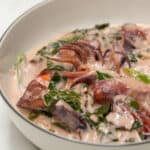
Ginataang Pusit
Squid simmered in coconut milk with shrimp paste, chilies, and malunggay.
Servings 6
Calories 504kcal
Cost $14-$16
Equipment
- Wok or wide pan
Ingredients
- 2 pounds small squid cleaned; ink sac removed
- 1 tablespoon vinegar
- 1 thumb-size ginger sliced into thin strips
- 4 cloves garlic minced
- 1 medium onion chopped
- 1 stalk lemongrass (minced or smashed) optional
- 1 tablespoon shrimp paste raw or sautéed
- 3 cups coconut milk adjust to taste
- 2-4 green or red chilies (sliced or whole) adjust to taste
- 3 cups malunggay leaves
- A small bunch of watercress roughly chopped
- Fish sauce, salt, and pepper to taste
- Neutral oil
Instructions
- Remove the innards, beak, cartilage, and ink sac. Cut larger squid into smaller pieces.
- Over high heat (without oil), sauté the squid for a few minutes or just until it releases some liquid. Add a splash of vinegar, if using. Drain any excess liquid and set the squid aside.
- In the same pan over medium heat, add a little oil. Cook the ginger until fragrant. Add the garlic, onion, lemongrass, and chilies. Sauté for a few minutes.
- Add the shrimp paste and cook for a minute. Pour in the coconut milk and stir. Season to taste with fish sauce or salt and black pepper. Simmer uncovered until slightly thickened.
- Return the squid to the pan. Simmer over low heat for about 15 minutes, stirring occasionally, until tender.
- Add the malunggay and watercress, if using. Cook for about 2 minutes, just until wilted. Taste and adjust the seasoning.
Notes
- Squid: Baby or regular squid will work. Cut larger squid into smaller pieces. Remove the ink to keep the sauce light in color.
- Coconut milk: Use full-fat coconut milk. Add a little water for a thinner sauce.
- Malunggay: I used fresh malunggay and added some watercress. You can also use spinach, chili leaves, mustard greens, or pechay—any leafy veg that softens but doesn’t fall apart in the sauce.
- Shrimp paste: It adds a savory umami flavor that goes so well with coconut dishes. You can also use fish sauce, smoked fish, or dried fish.
- Lemongrass: An optional ingredient that adds a nice, citrusy aroma.
Nutrition
Calories: 504kcal | Carbohydrates: 28g | Protein: 37g | Fat: 28g | Saturated Fat: 22g | Polyunsaturated Fat: 1g | Monounsaturated Fat: 1g | Cholesterol: 381mg | Sodium: 643mg | Potassium: 1066mg | Fiber: 1g | Sugar: 2g | Vitamin A: 194IU | Vitamin C: 292mg | Calcium: 614mg | Iron: 6mg