
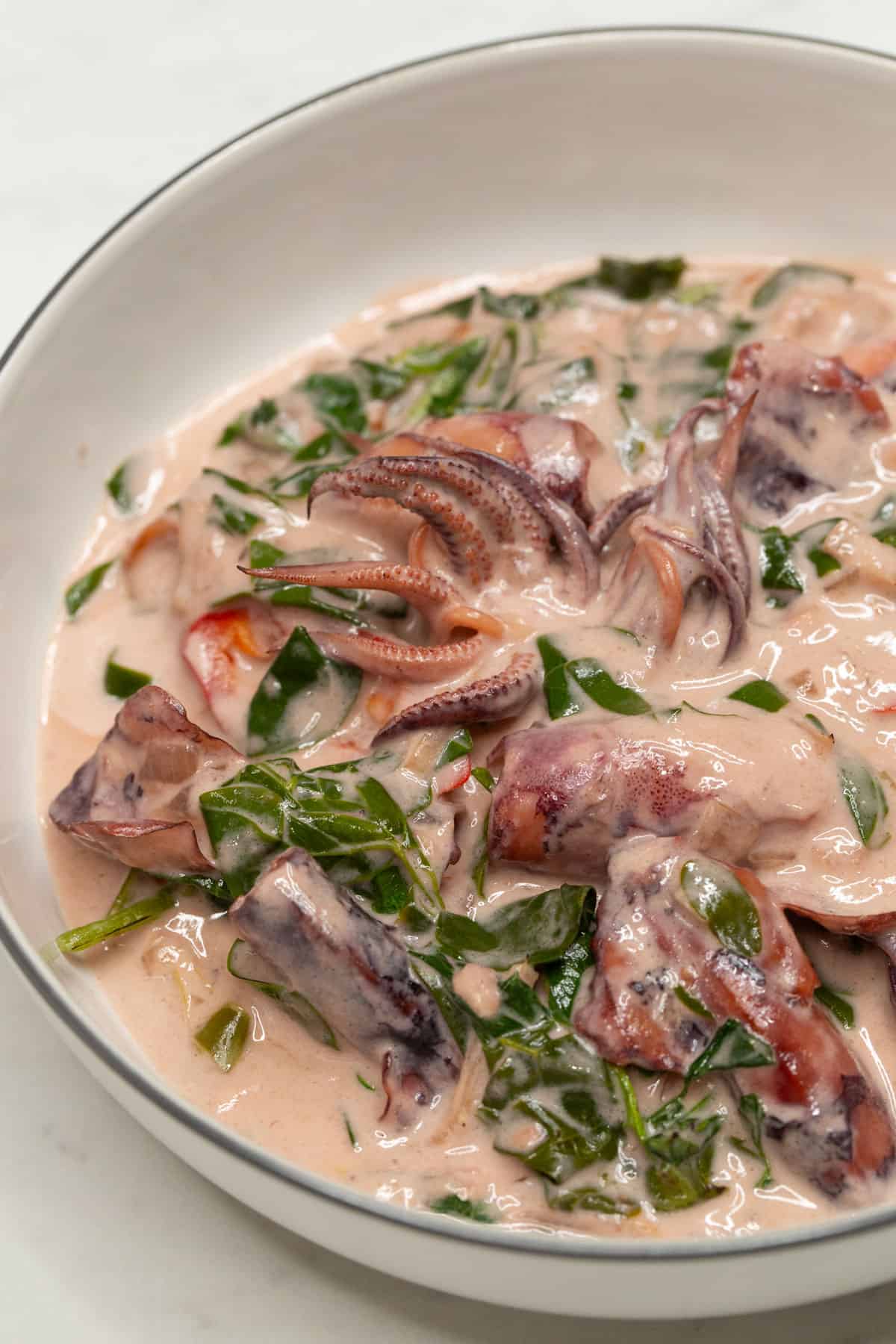
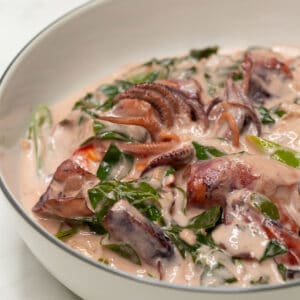
Ginataang pusit is a Filipino dish made with squid cooked in coconut milk.
This version uses baby squid, chilies, malunggay (moringa leaves), and watercress.
It is creamy, slightly spicy, and best served with rice.
Jump to:
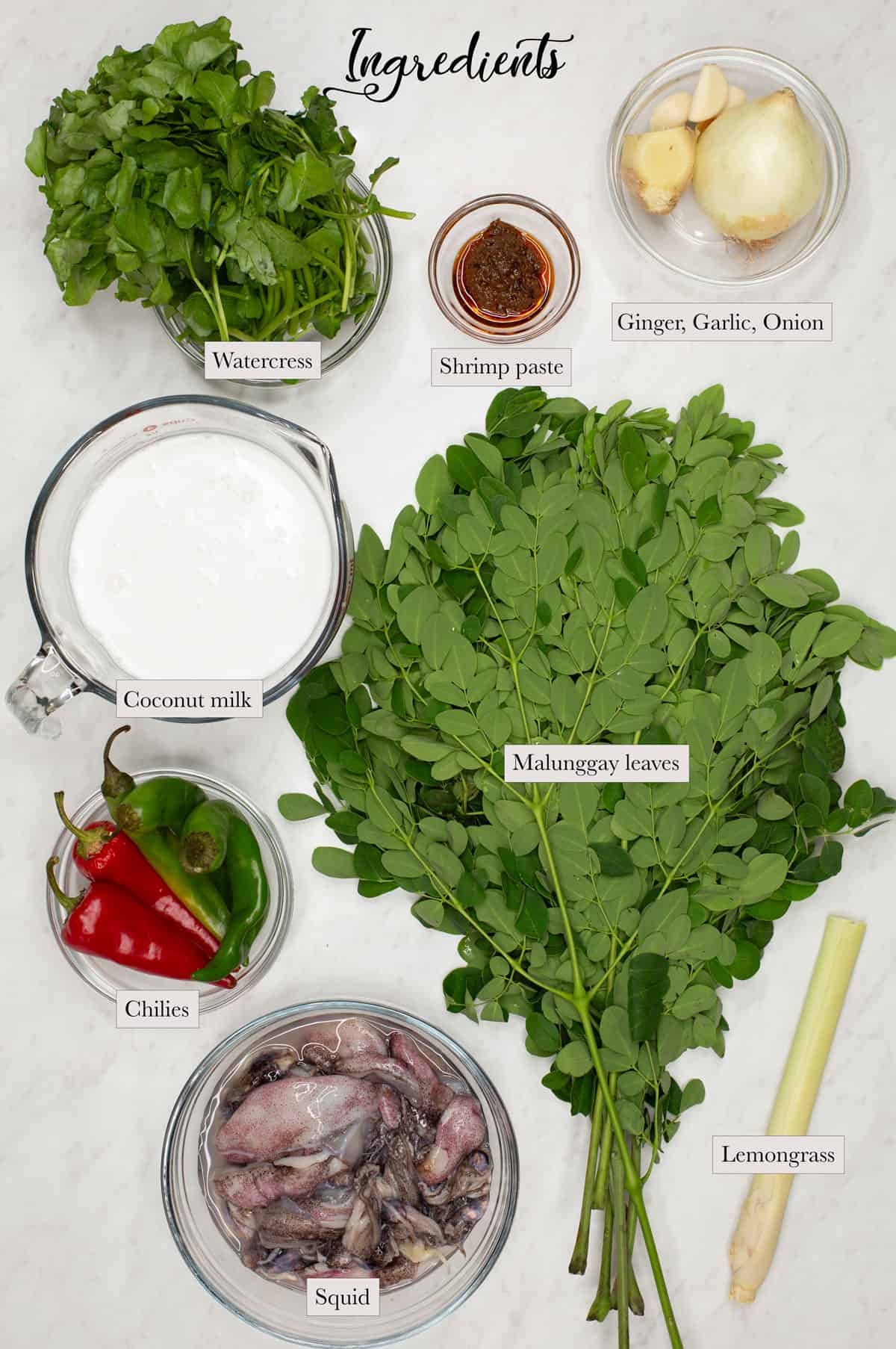
Ingredients You'll Need
Notes and Substitutions
- Squid (pusit): I used baby squid, but regular squid works too. Just cut it into smaller pieces. I removed the ink to keep the coconut sauce creamy and light in color.
- Coconut milk: Use full-fat coconut milk (gata) for a rich, creamy sauce. Add a little water if you prefer a thinner sauce.
- Malunggay leaves : Fresh moringa leaves cook quickly and have a mild, earthy taste. I also added watercress because I had some on hand. You can also use spinach, chili leaves, mustard greens (mustasa), or pechay. Any leafy vegetable that softens but doesn't fall apart in the sauce.
- Shrimp paste (bagoong alamang): I like using shrimp paste in coconut-based dishes. You can use fish sauce, flaked smoked fish (tinapa), or even dried fish if that's what you have. Any of those will help bring out the savory flavor of the dish.
- Lemongrass: I used it along with the usual ginger, garlic, and onion. If you have some, add it in for a fresh and citrusy aroma.
How to Make Ginataang Pusit
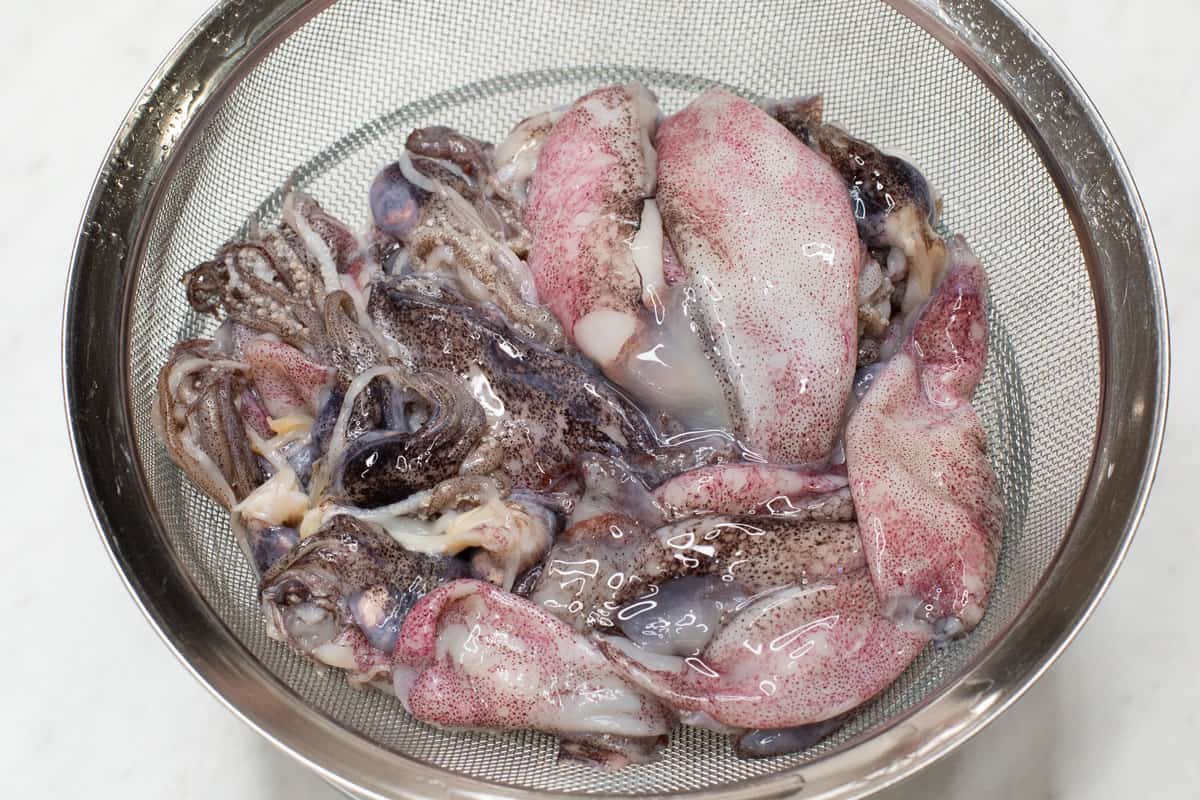
Step 1: Clean the squid
Remove the innards, beak, cartilage, and ink sac.
For small squid, you can leave the eyes attached so the tentacles stay together. I also removed the ink to keep the sauce light and creamy.
See my step-by-step guide if you need help cleaning squid.
Step 2: Quickly sauté the squid
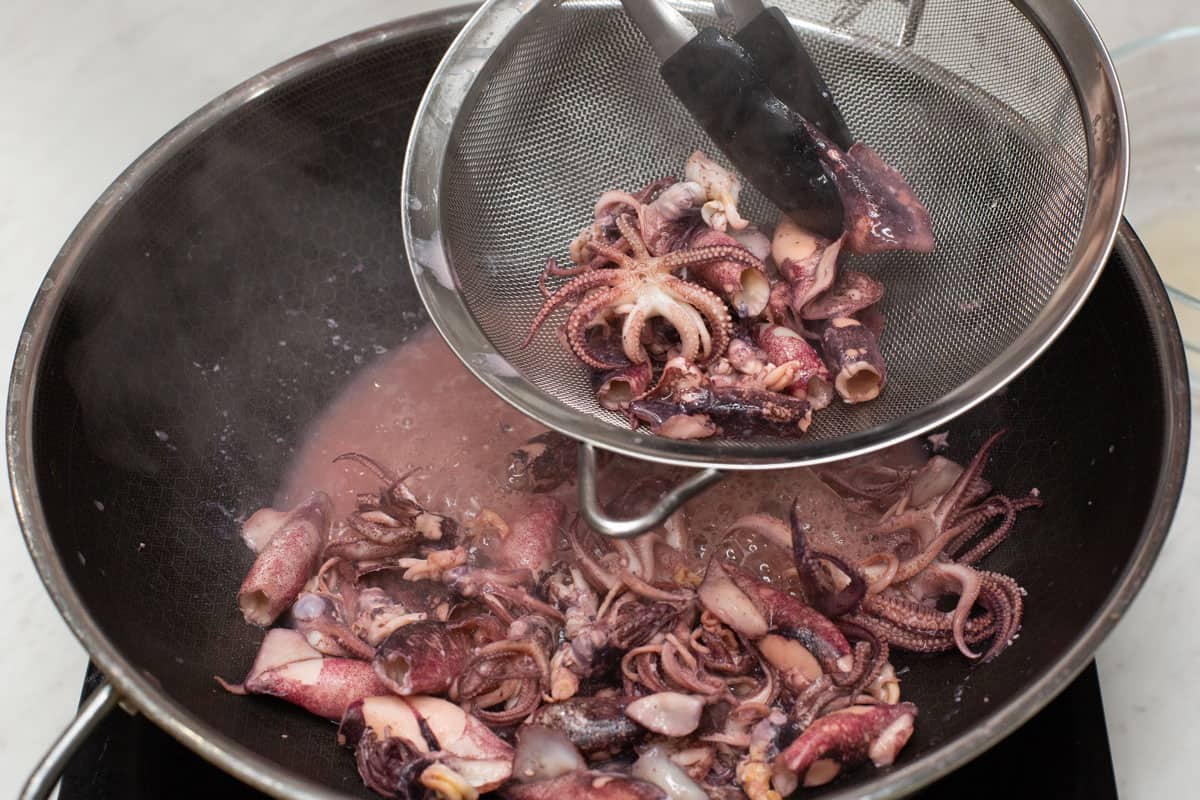
Heat a wok or wide pan over high heat until very hot. No oil is needed.
Add 2 pounds of squid and cook for a few minutes, just until it releases some liquid.
Add a splash of vinegar to help reduce the strong smell and slimy texture.
Squid tends to get watery as it cooks. If there is a lot of liquid, strain it out and set the squid aside.
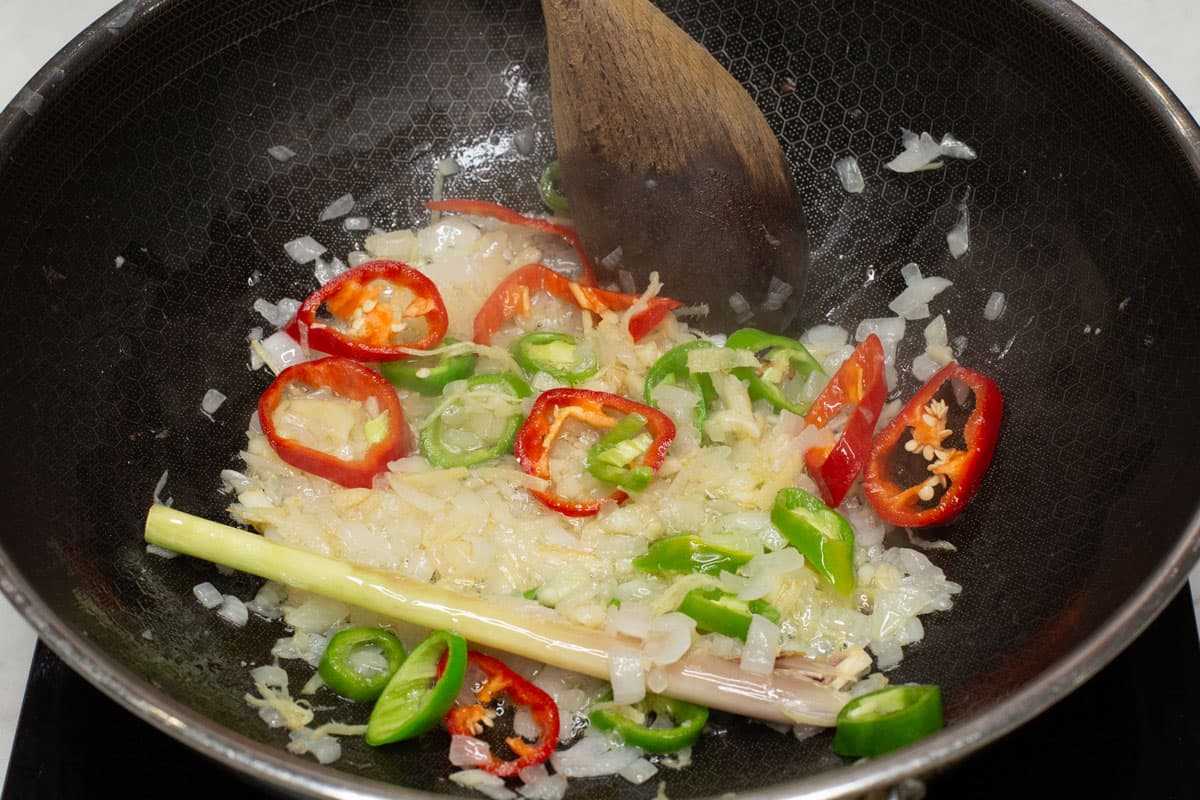
Step 3: Sauté the aromatics
In the same pan over medium heat, add a little oil.
Sauté 1 thumb-size ginger (sliced into thin strips) until fragrant.
Then, add 4 garlic cloves (minced) and 1 medium onion (chopped).
If available, add 1 stalk lemongrass (minced or smashed) and as many sliced chilies as you like.
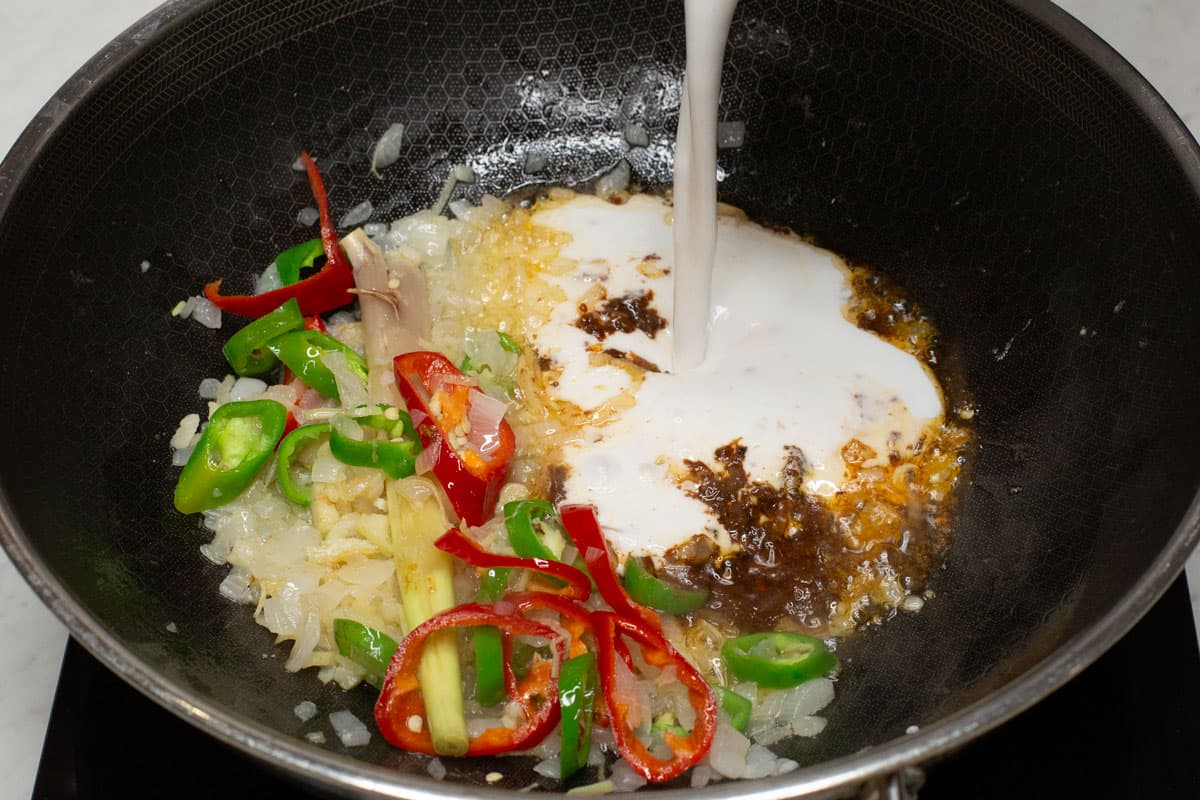
Step 4: Add the shrimp paste and coconut milk
Add 1 tablespoon shrimp paste and cook for a minute.
Pour in 3 cups coconut milk and stir well.
Season to taste with fish sauce or salt and black pepper.
Let the sauce simmer until the sauce slightly thickens. Add a little water if it becomes too thick.
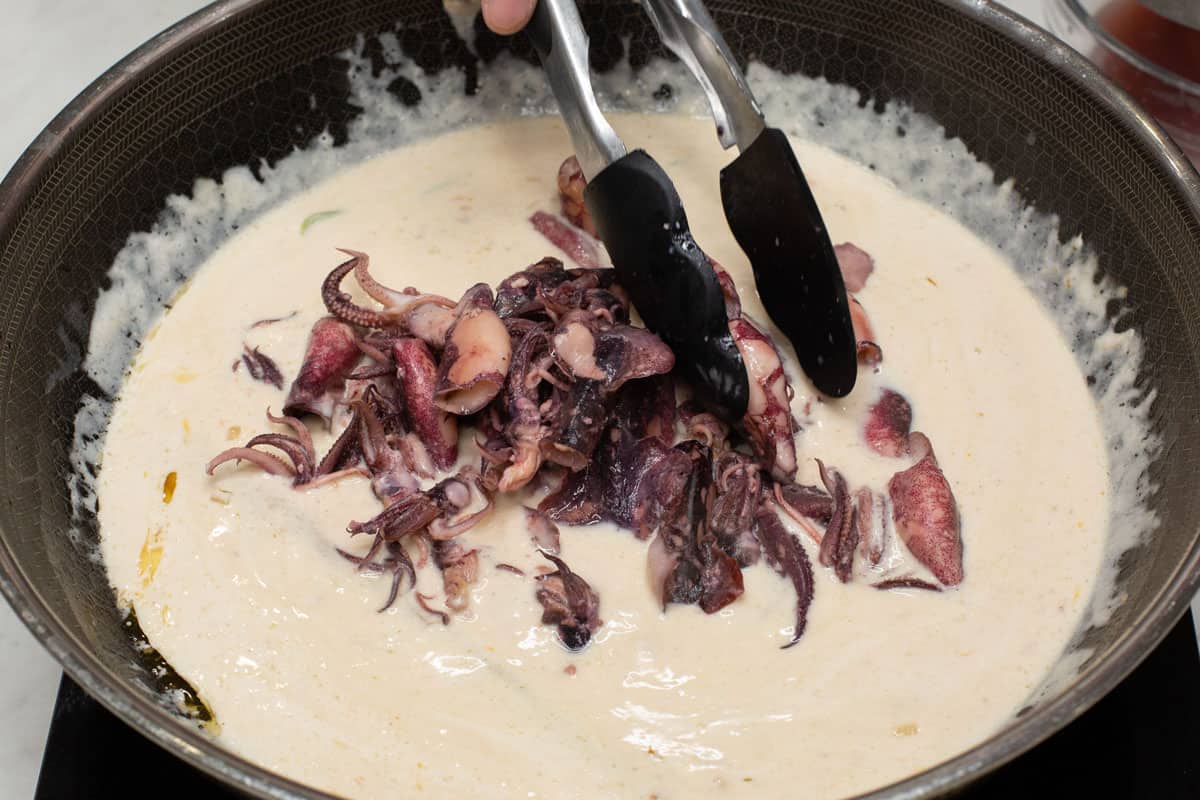
Step 5: Simmer
Return the squid to the pan.
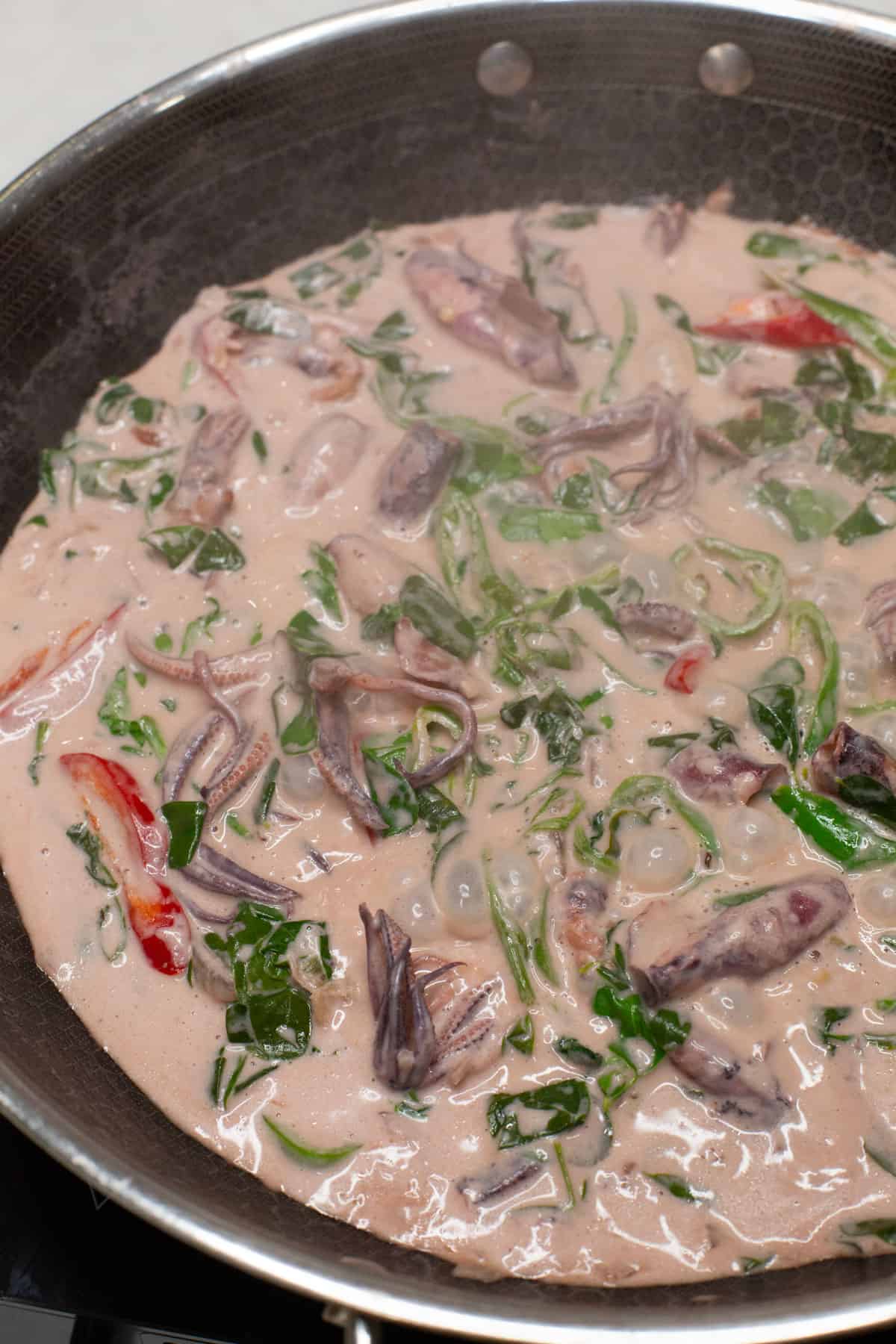
Simmer over low heat for about 15 minutes, until the squid is tender and the sauce slightly thickens.
Stir occasionally and don't let it boil too hard.
Step 6: Add the greens
Add the malunggay leaves and cook for about 2 minutes, just until wilted.
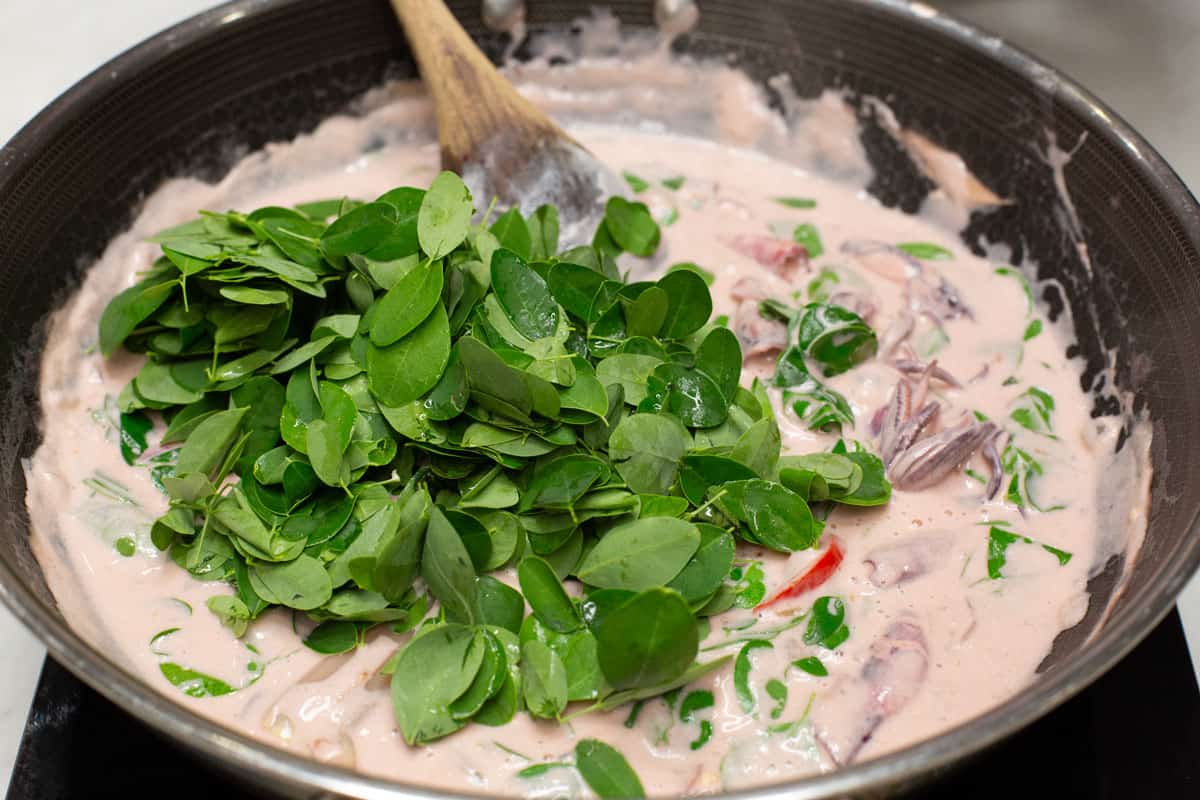
Then add the watercress and cook just until wilted.
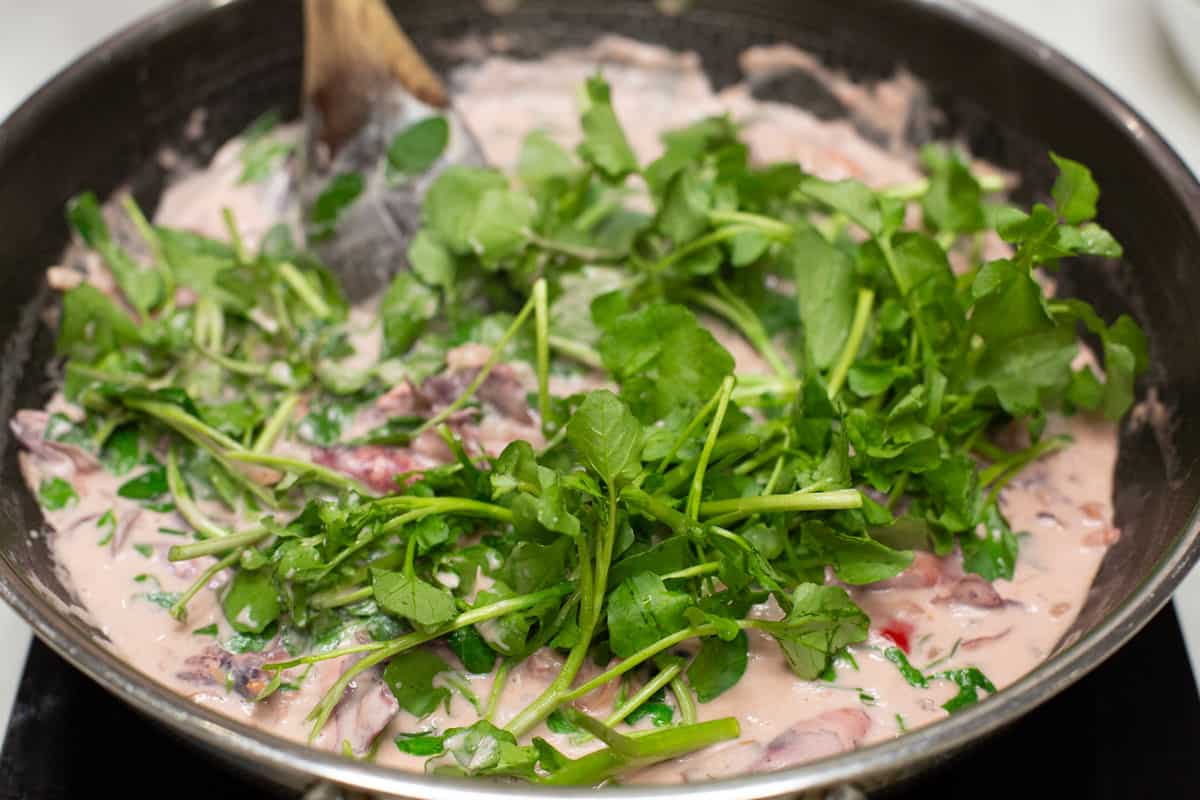
Taste and adjust the seasoning.
Add more sliced chilies if you like, then turn off the heat.
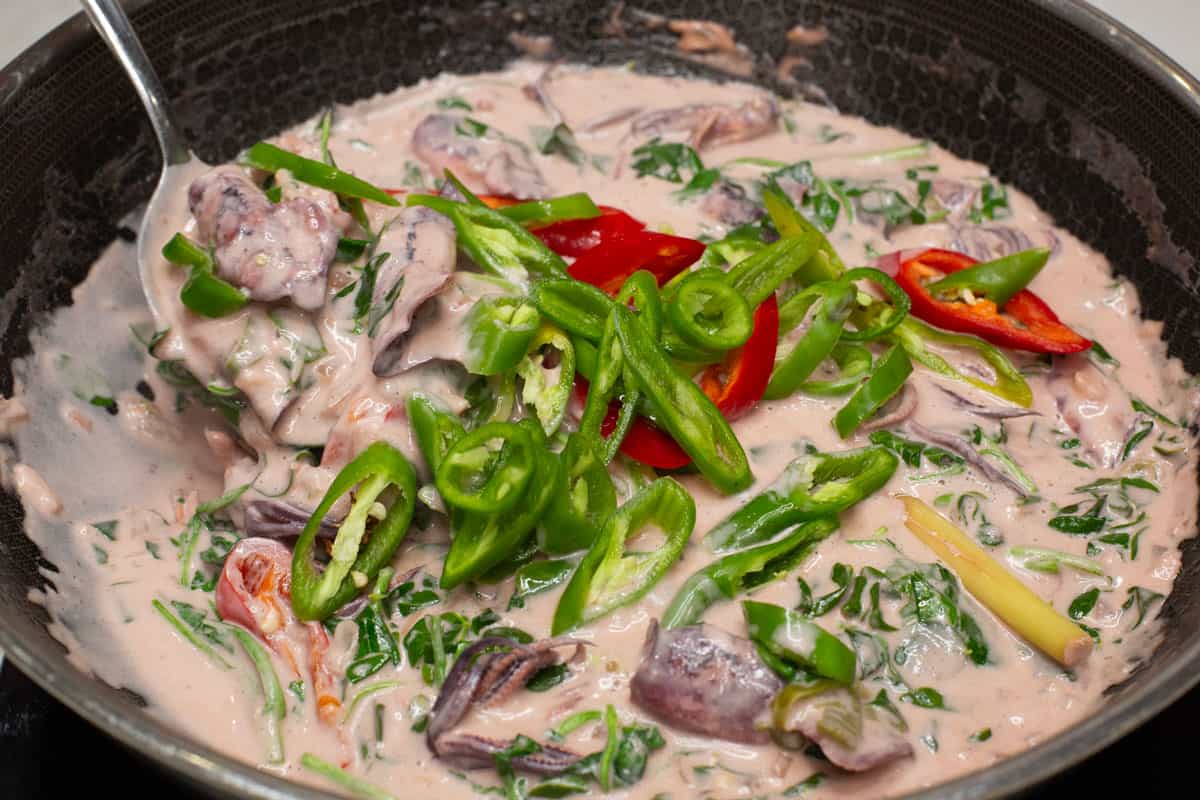
Serve your ginataang pusit warm and enjoy with rice.
Recipe FAQs
Ginataang pusit is a Filipino dish made with squid cooked in coconut milk. It is savory, creamy, and often made spicy with chilies.
Yes, regular squid works too - just cut it into smaller pieces so it cooks evenly. I like using baby squid because it's naturally more tender and has a slightly sweeter flavor.
For this recipe, yes. Removing the ink keeps the coconut sauce light and creamy. But if you prefer a darker sauce, you can leave it in.
Fish sauce, flaked smoked fish (tinapa), or even crumbled dried fish are great alternatives. They all add that deep umami flavor that complements the coconut milk.
More Filipino Coconut Milk Recipes
- Ginataang kalabasa at sitaw: Squash and yardlong beans cooked in coconut milk.
- Laing: Taro leaves cooked in coconut milk and chilies.
- Bicol express: Pork cooked in coconut milk with shrimp paste and chilies.
- Ginataang alimango: Crab cooked in coconut milk, often with malunggay.
- Ginataang manok: Chicken cooked in coconut milk with green papaya and chili leaves.
- Ginataang langka: Young jackfruit cooked in coconut milk.
- Gising-gising: Spicy winged beans cooked in coconut milk.
Seafood Recipes You May Like

Did you make this recipe? I would love to know! Your feedback helps me make better recipes. Please rate, review, or comment below. Questions about this recipe are welcome, too!
Let's connect on Facebook, Instagram, Pinterest, TikTok, Twitter, and Youtube. Be sure to tag me when you try any of my recipes @recipesbynora!
📖 Recipe
Ginataang Pusit
Equipment
- Wok or wide pan
Ingredients
- 2 pounds small squid cleaned; ink sac removed
- 1 tablespoon vinegar
- 1 thumb-size ginger sliced into thin strips
- 4 cloves garlic minced
- 1 medium onion chopped
- 1 stalk lemongrass (minced or smashed) optional
- 1 tablespoon shrimp paste raw or sautéed
- 3 cups coconut milk adjust to taste
- 2-4 green or red chilies (sliced or whole) adjust to taste
- 3 cups malunggay leaves
- A small bunch of watercress roughly chopped
- Fish sauce, salt, and pepper to taste
- Neutral oil
Instructions
- Remove the innards, beak, cartilage, and ink sac. Cut larger squid into smaller pieces.
- Over high heat (without oil), sauté the squid for a few minutes or just until it releases some liquid. Add a splash of vinegar, if using. Drain any excess liquid and set the squid aside.
- In the same pan over medium heat, add a little oil. Cook the ginger until fragrant. Add the garlic, onion, lemongrass, and chilies. Sauté for a few minutes.
- Add the shrimp paste and cook for a minute. Pour in the coconut milk and stir. Season to taste with fish sauce or salt and black pepper. Simmer uncovered until slightly thickened.
- Return the squid to the pan. Simmer over low heat for about 15 minutes, stirring occasionally, until tender.
- Add the malunggay and watercress, if using. Cook for about 2 minutes, just until wilted. Taste and adjust the seasoning.
Notes
- Squid: Baby or regular squid will work. Cut larger squid into smaller pieces. Remove the ink to keep the sauce light in color.
- Coconut milk: Use full-fat coconut milk. Add a little water for a thinner sauce.
- Malunggay: I used fresh malunggay and added some watercress. You can also use spinach, chili leaves, mustard greens, or pechay-any leafy veg that softens but doesn't fall apart in the sauce.
- Shrimp paste: It adds a savory umami flavor that goes so well with coconut dishes. You can also use fish sauce, smoked fish, or dried fish.
- Lemongrass: An optional ingredient that adds a nice, citrusy aroma.

Ryan says
Yum!!!
Nora Reyes says
Thank you, Ryan!