
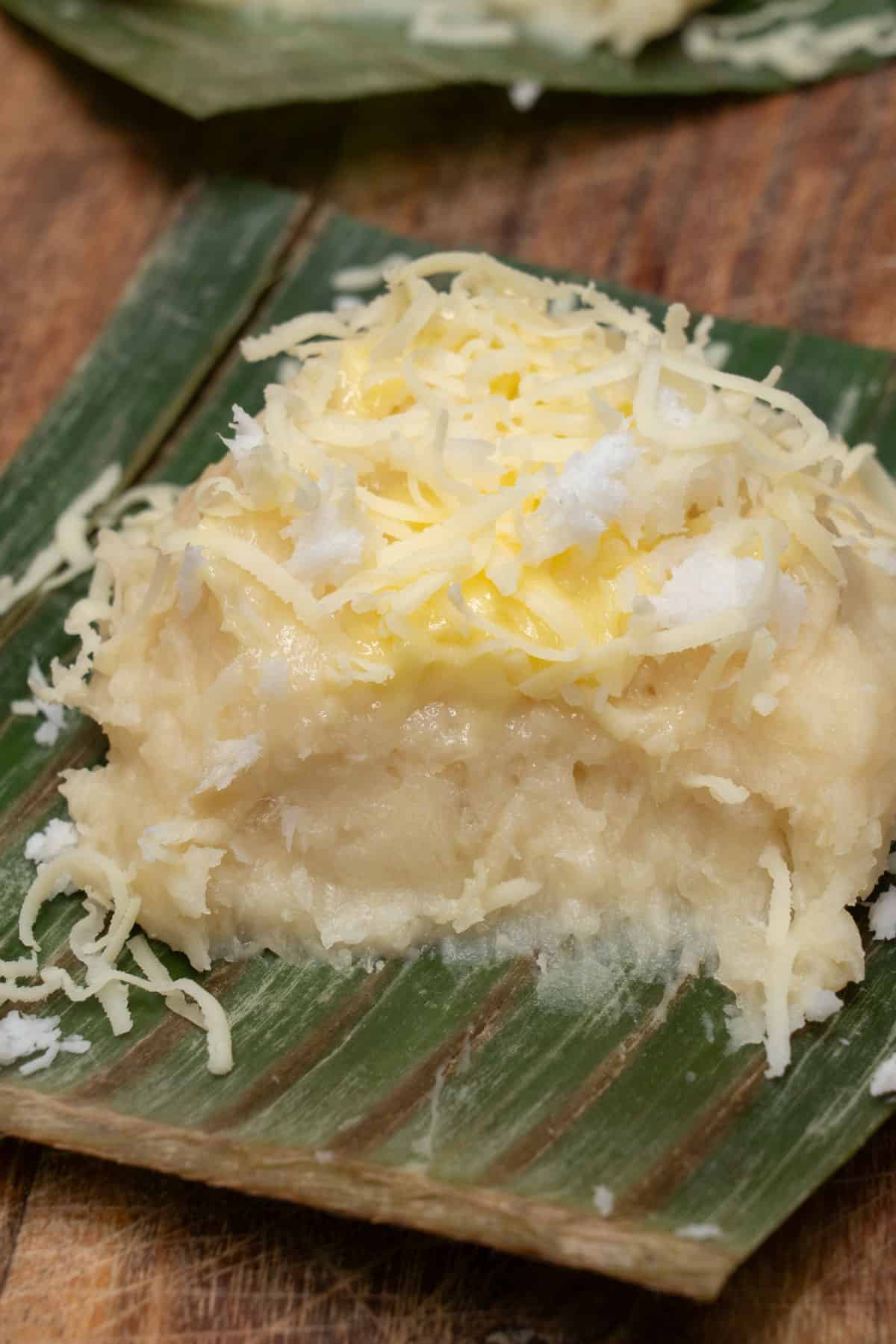
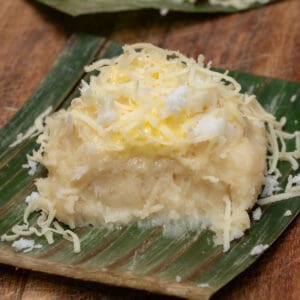
Nilupak na kamoteng kahoy is a simple Filipino snack made with boiled cassava that's mashed until thick and slightly sticky.
This version is simple and easy with just basic ingredients. You can top it with grated coconut, cheese, or more butter.
That thick, slightly sticky texture is what makes nilupak so good.
Jump to:
What is Nilupak na Kamoteng Kahoy?
Nilupak na kamoteng kahoy is made with boiled cassava that's mashed mashed until soft with a slightly chunky texture.
It is mixed with butter and something sweet like sugar or condensed milk.
The word nilupak means "to mash or pound," which is how it's traditionally made using a mortar and pestle (lusong and halo).
This version uses cassava (kamoteng kahoy), also known as balinghoy.
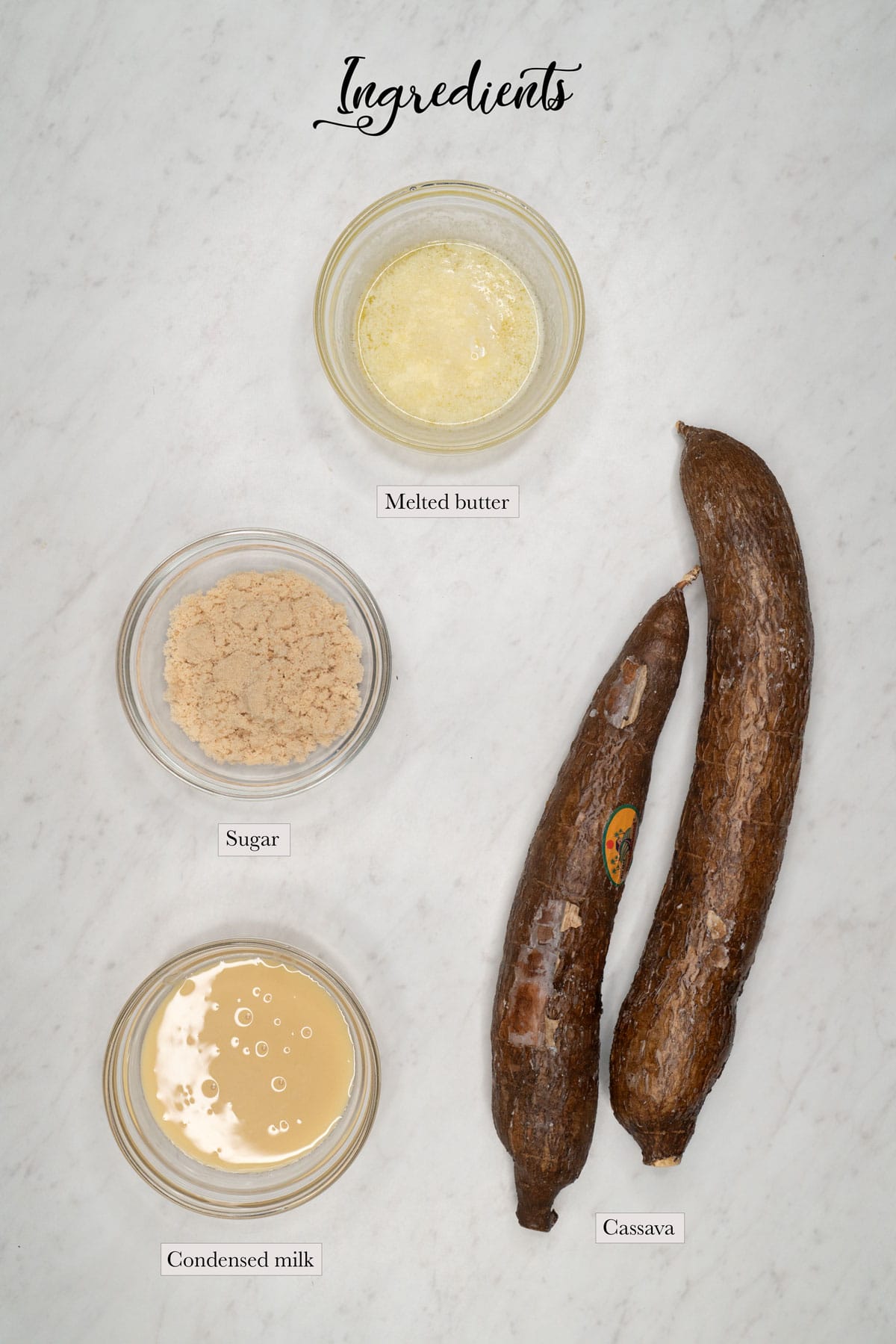
Ingredients You'll Need
Notes and Substitutions
- Cassava: Use fresh or frozen cassava. Make sure to remove the tough core and boil until very soft. Don't use grated cassava here as it can turn out too soft and pasty.
- Condensed milk: Adds sweetness and helps bring everything together. Adjust it to your taste.
- Light brown sugar: Adds extra sweetness and a bit of color, or skip it if the condensed milk is enough for you.
- Butter: Adds flavor and helps smooth everything out. Margarine works as a substitute.
- Toppings: Use whatever you like - softened butter, grated coconut, grated cheese, or all of them.
How to Make Nilupak na Kamoteng Kahoy (Step-by-Step)
Step 1: Prepare the cassava
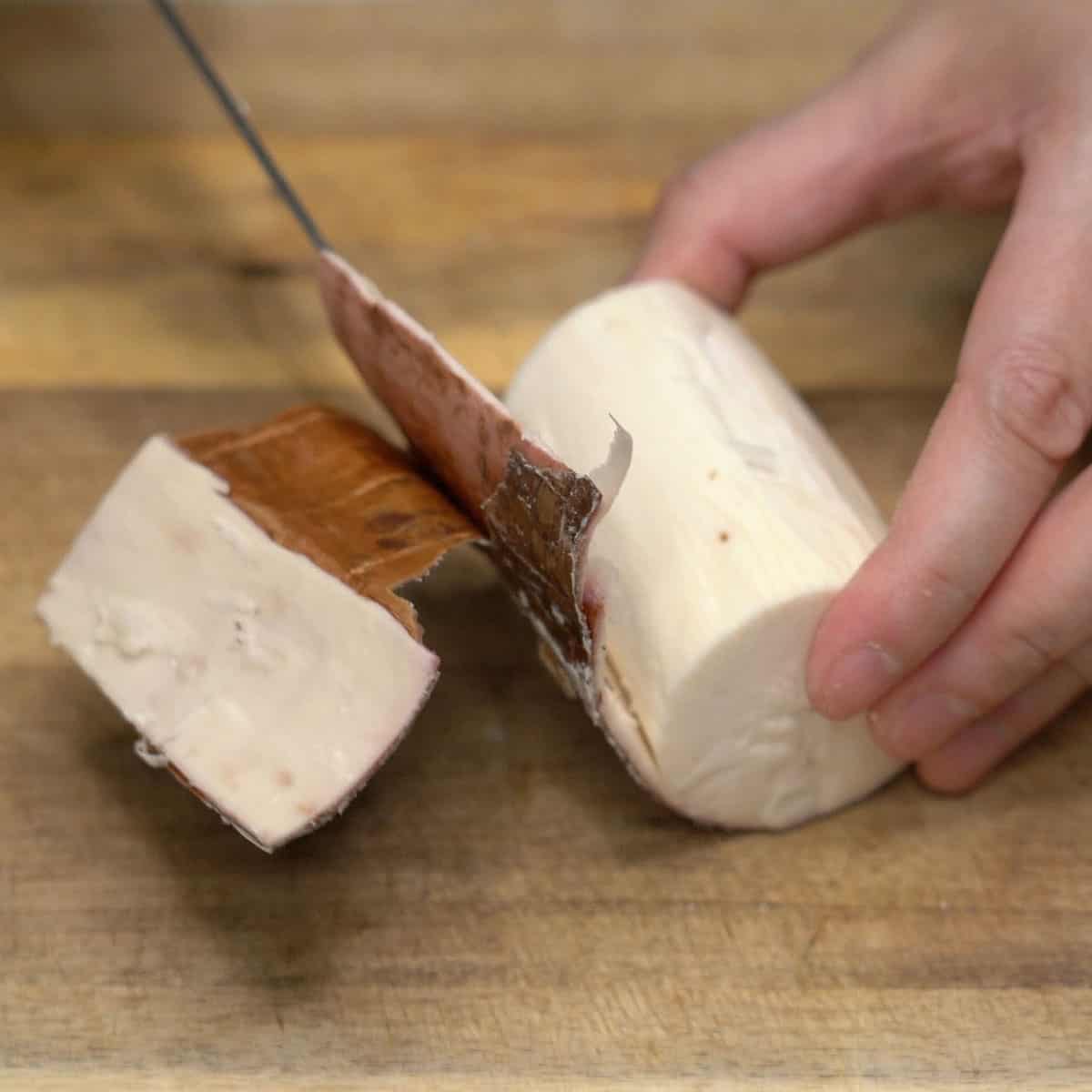
Peel the cassava, then cut it into 3-inch pieces. Cut into quarters lengthwise, then remove the tough core in the center.
Smaller pieces cook faster and are easier to mash.
If you're new to cassava, you can check out my guide on how to prepare it.
Step 2: Boil until very soft
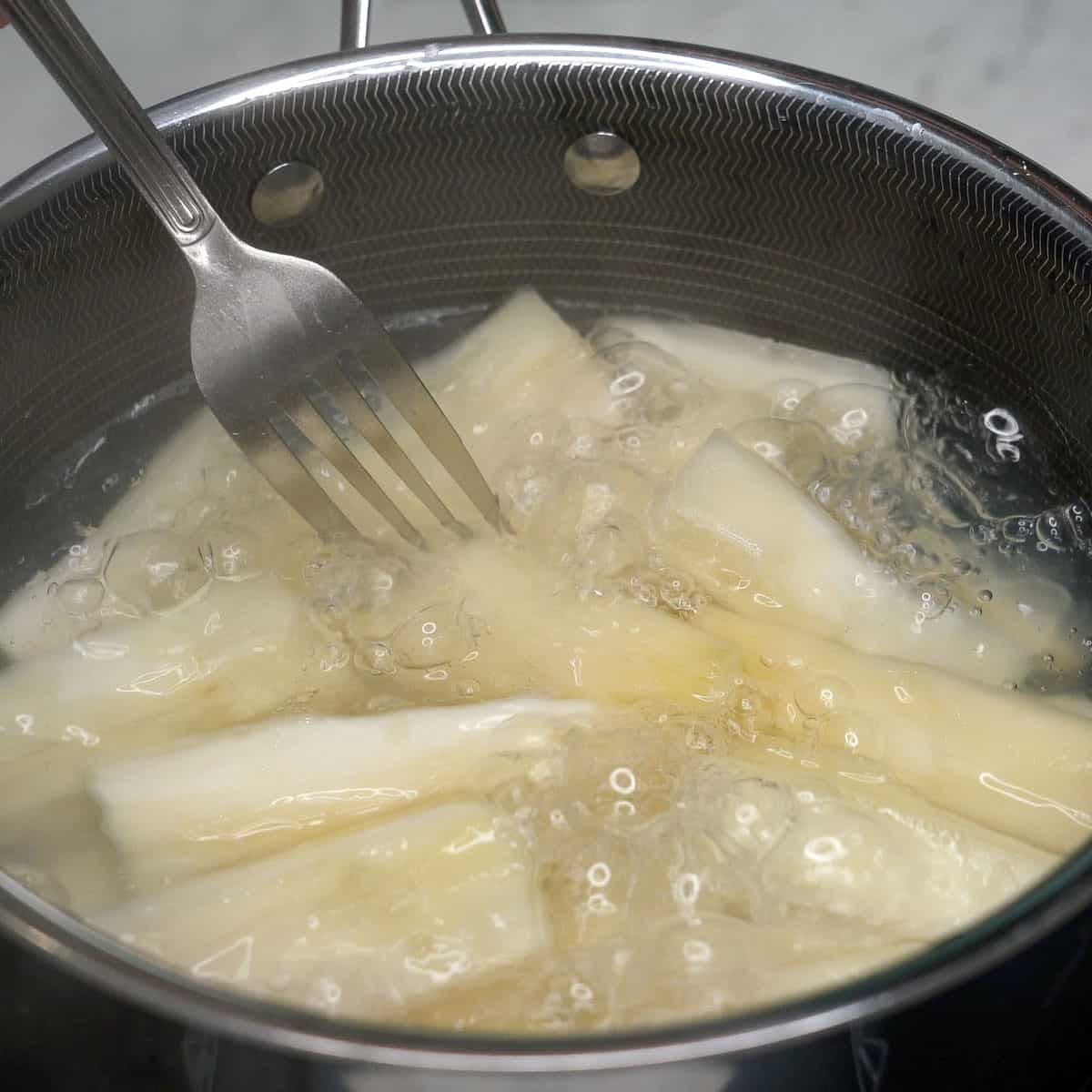
Place the cassava in a pot and cover with water.
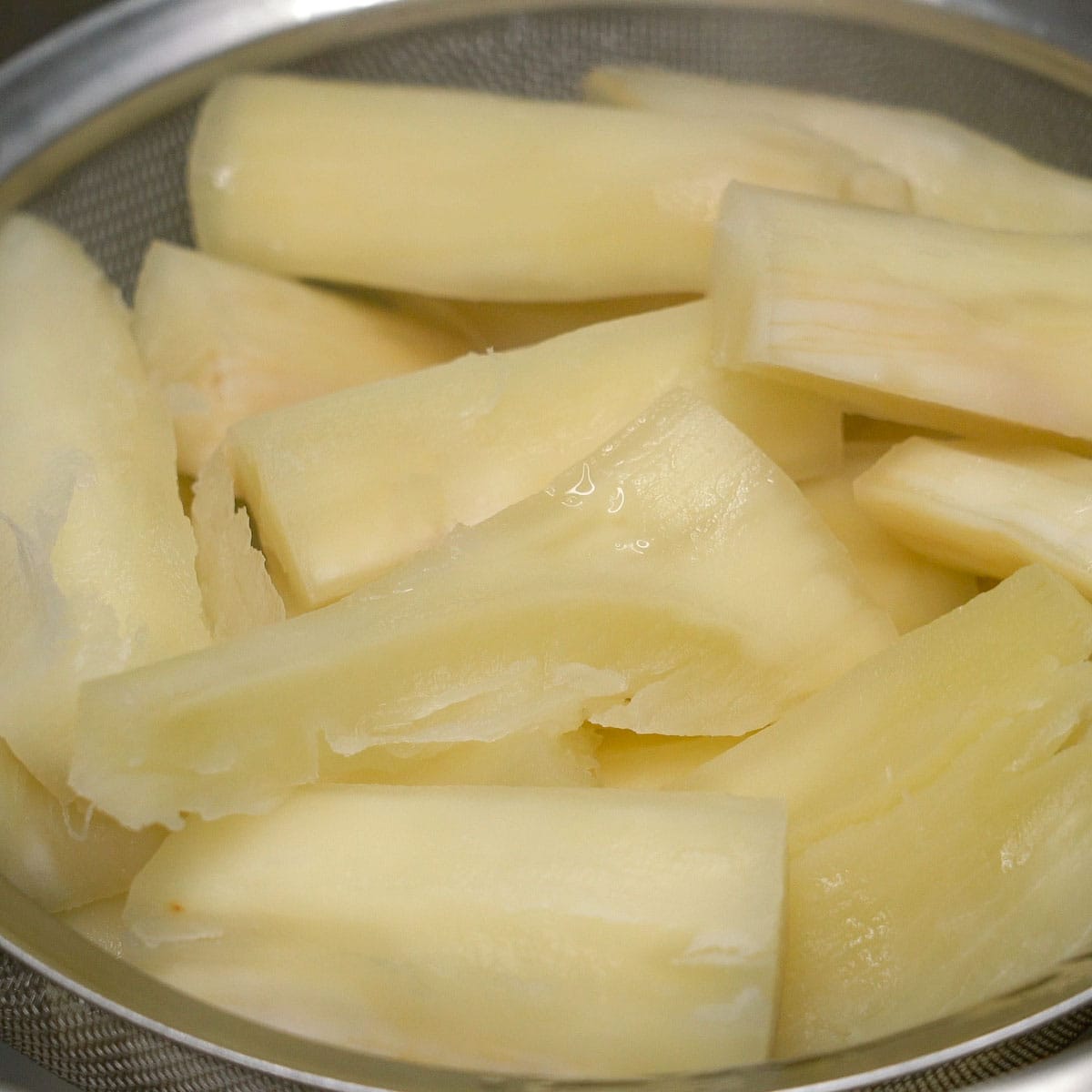
Boil for 10 to 15 minutes (depending on size) until very soft and fully cooked through. It should break apart easily.
Cassava needs to be fully cooked to be safe to eat.
Drain well.
Step 3: Mash
Transfer the cassava to a large bowl. Mash while still warm (but not too hot to handle).
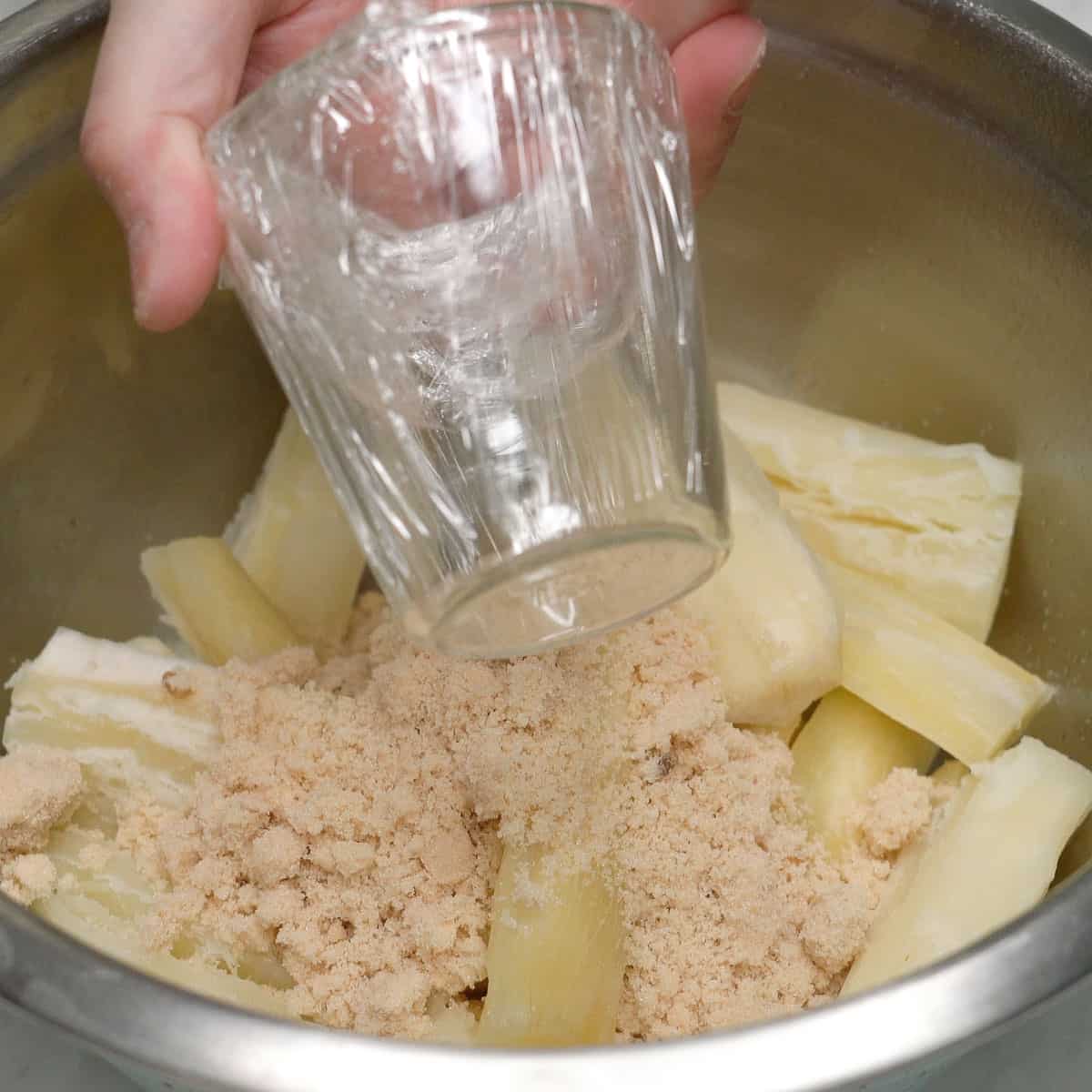
Use a fork or potato masher, or press with a glass wrapped in cling wrap like I did.
Add a pinch of salt and ¼ cup light brown sugar. Mash until mostly smooth with some texture.
Step 4: Add the condensed milk and butter
Add ⅓ cup condensed milk and ¼ cup melted butter.
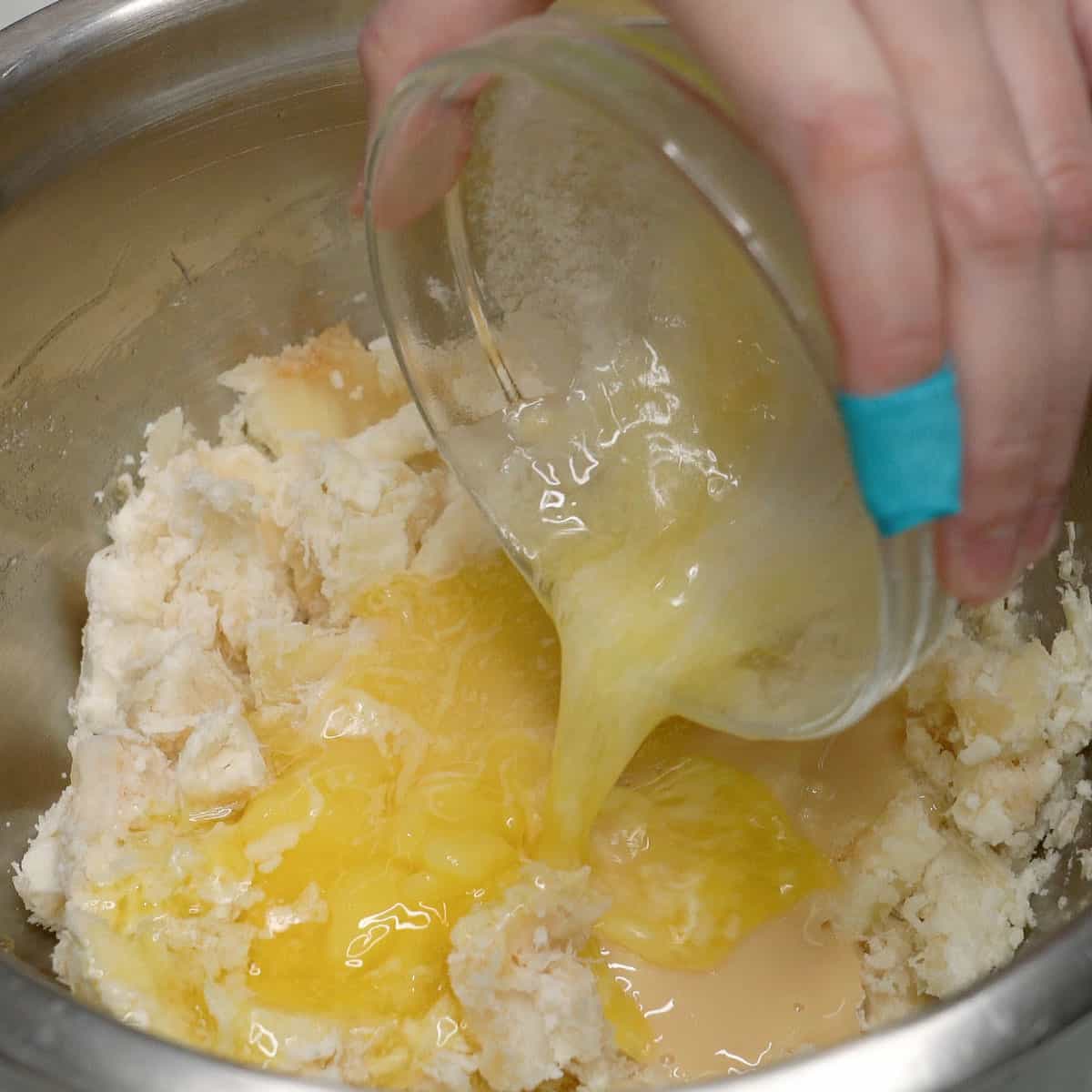
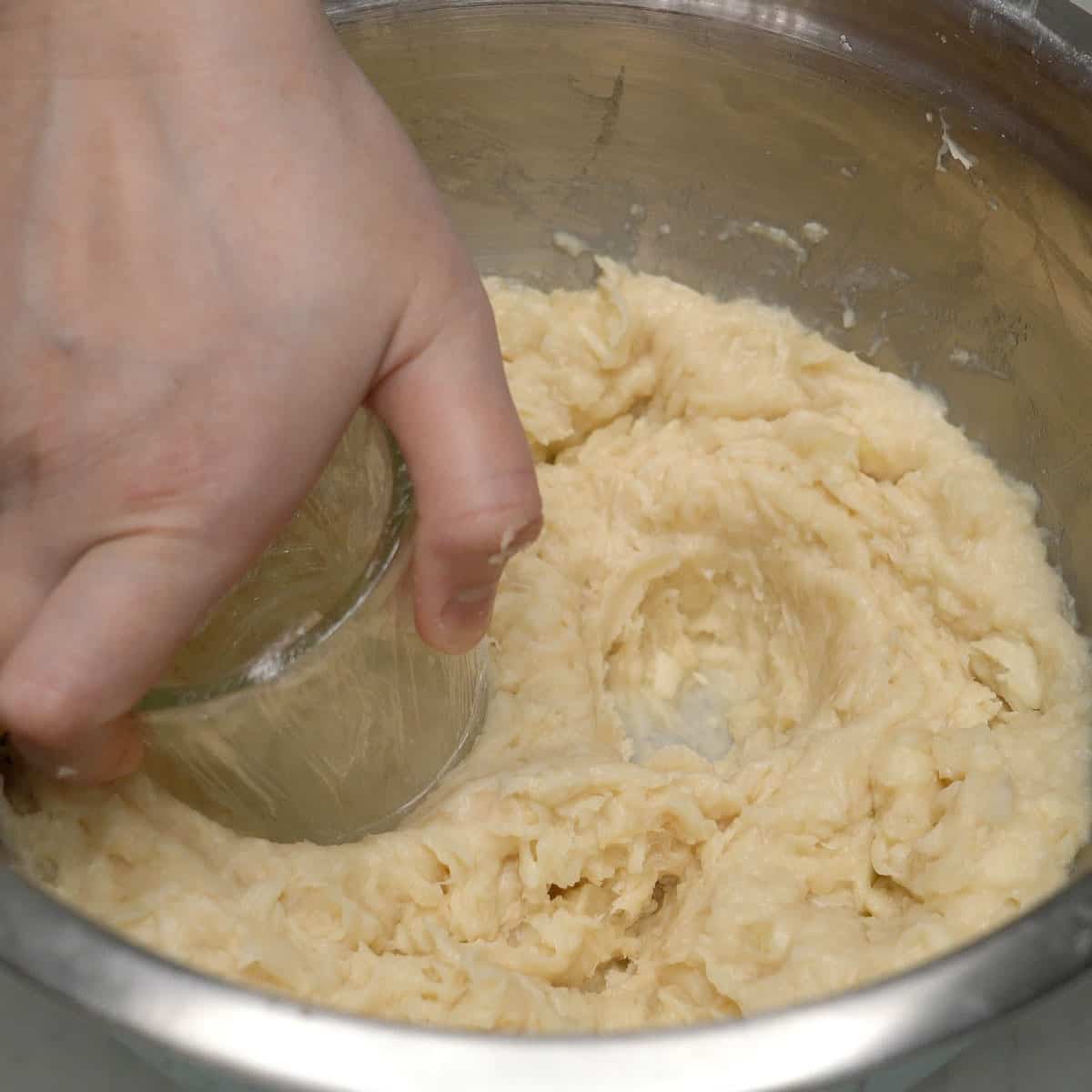
Keep mashing until everything comes together, scraping the sides as you go.
Taste and add more condensed milk or sugar if you want it sweeter or softer.
Step 5: Shape
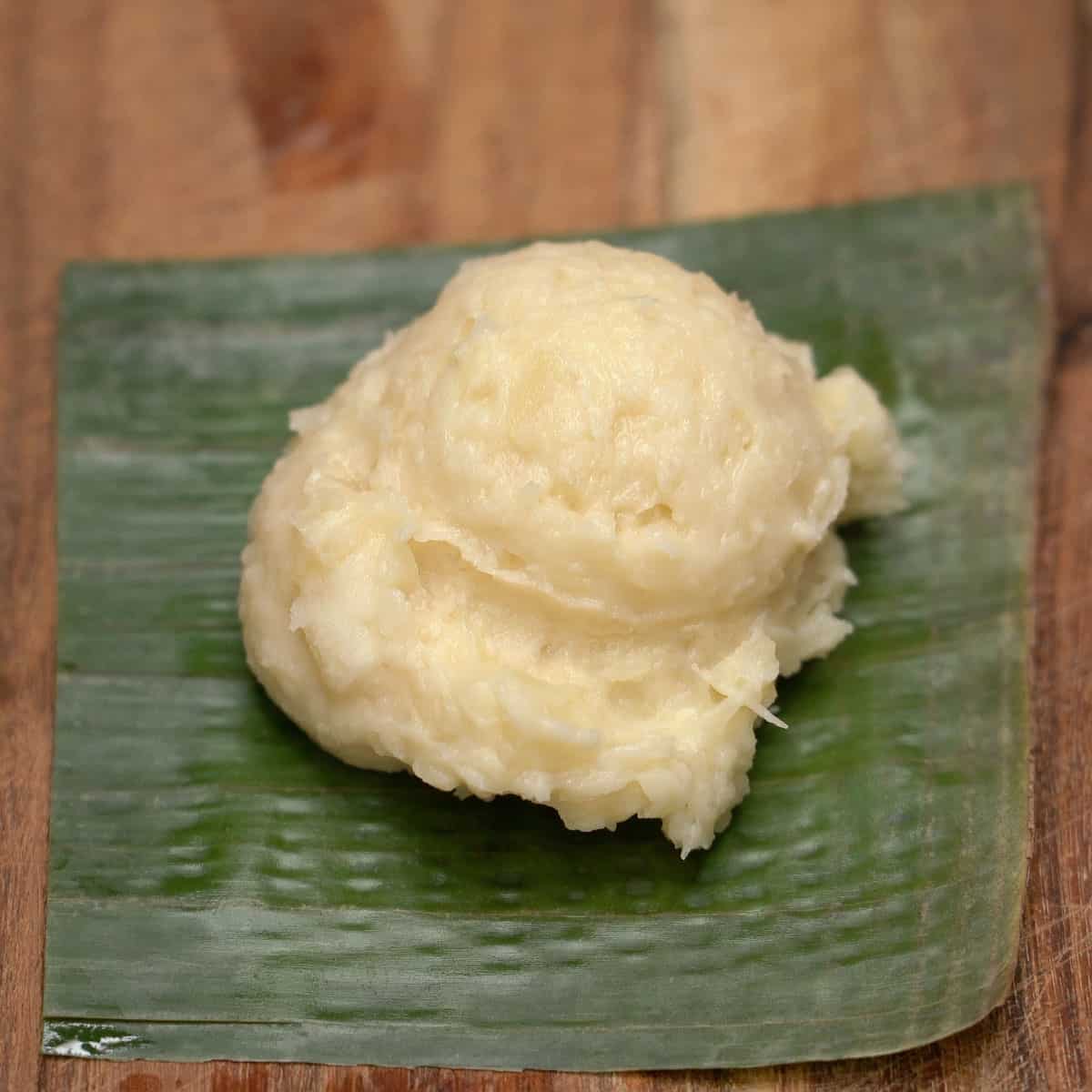
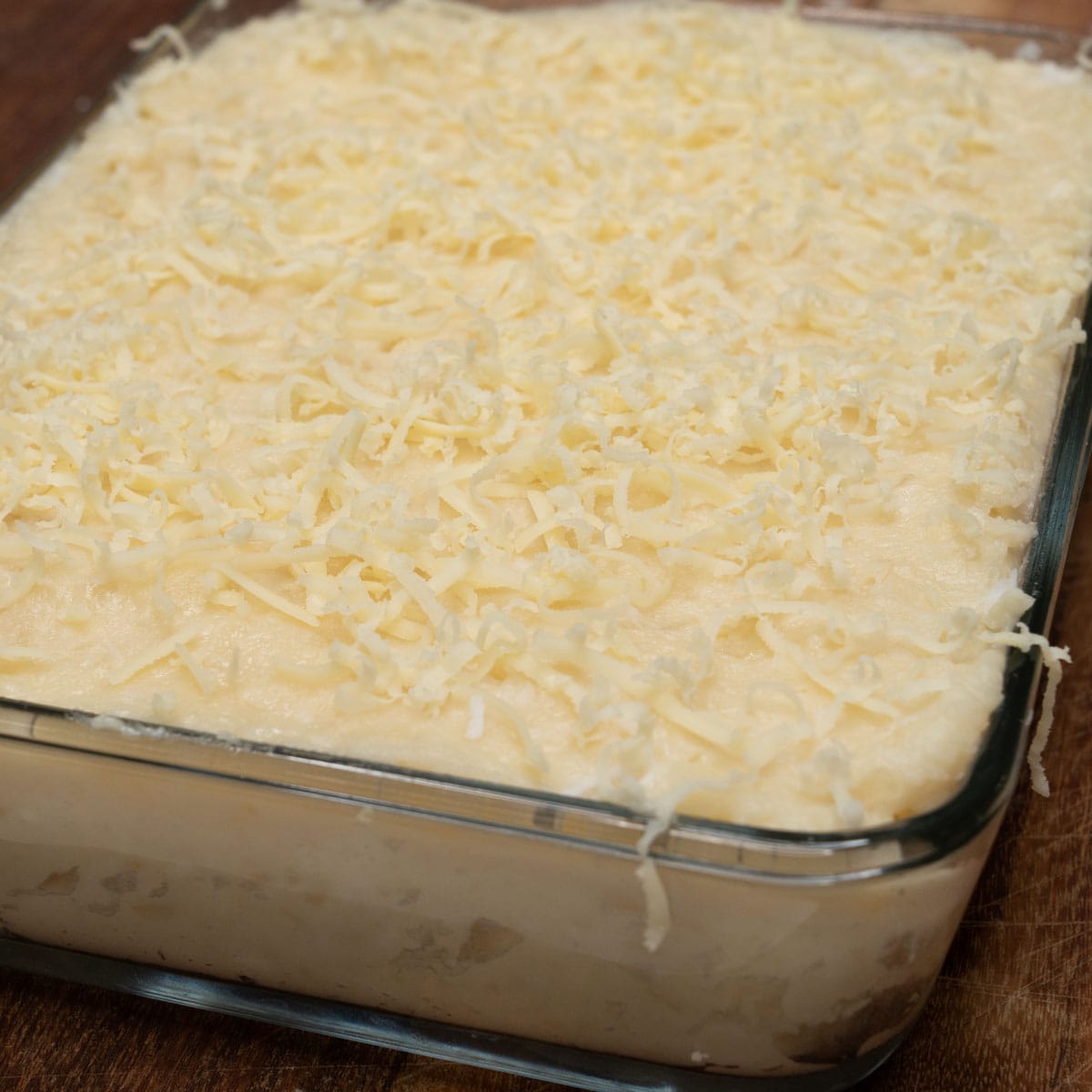
Shape into individual portions, or press into a greased dish or pan and slice.
You can also use an ice cream scoop. I used one and it worked well.
Step 6: Serve
Serve your nilupak na kamoteng kahoy warm or at room temperature.
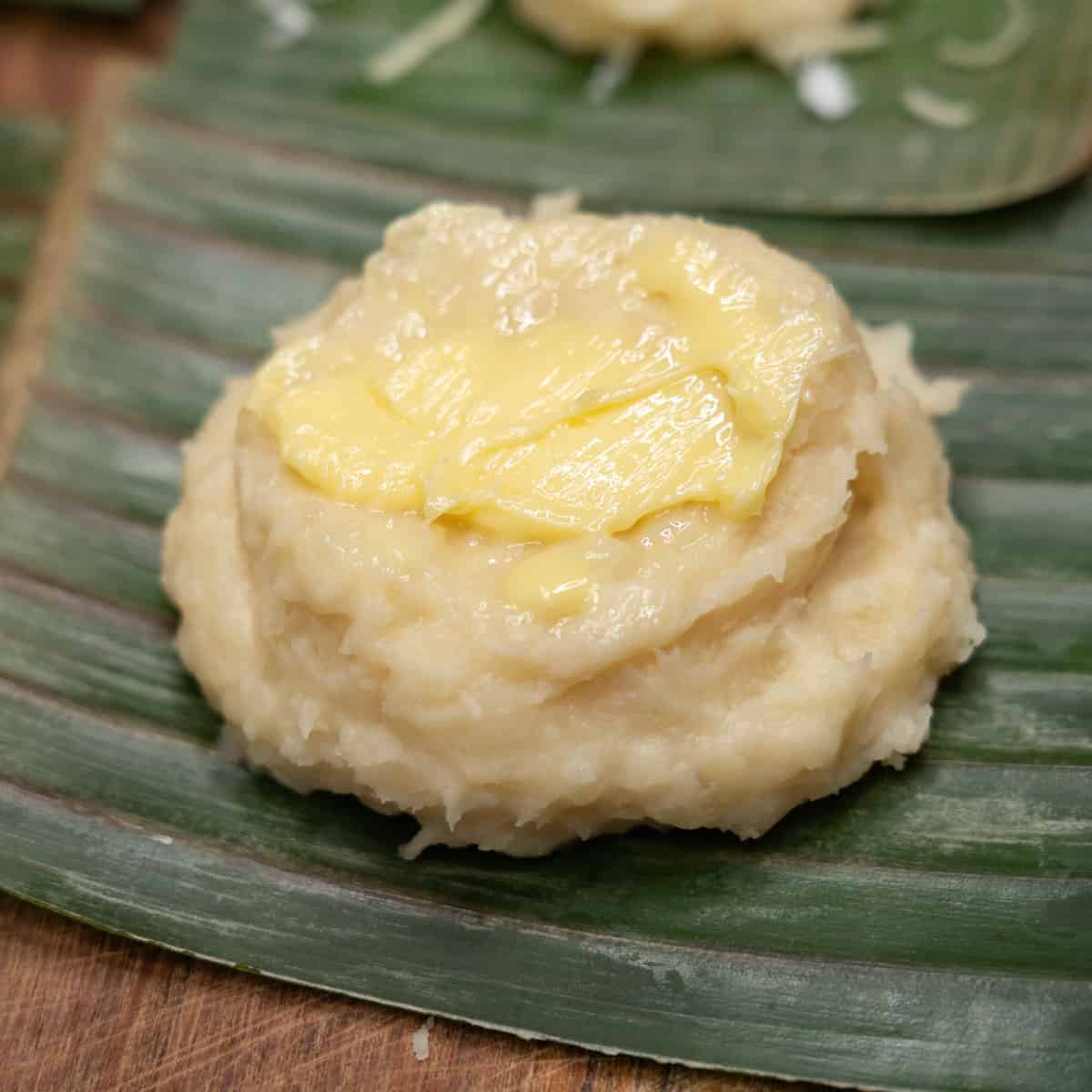
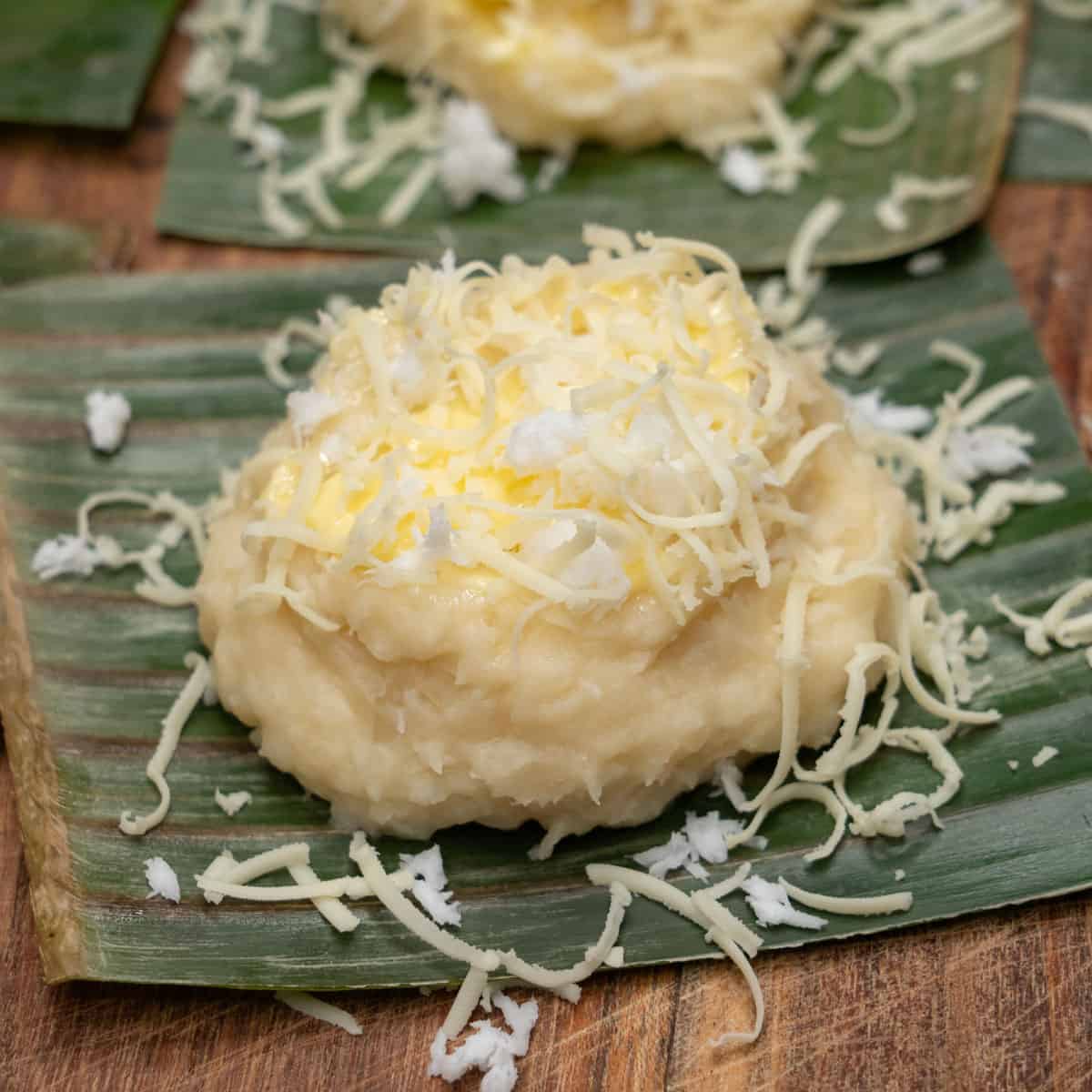
Top with softened butter, grated coconut, cheese, or all three. You can enjoy it as is, scoop it with a spoon, or slice it into pieces.
Store any leftovers in an airtight container in the fridge for up to 3 days.
Cooking Tips
- Boil until very soft: It should break apart easily. Don't eat undercooked cassava.
- Remove the core: The center is tough and fibrous. Take it out for a better texture.
- Mash while warm: It's easier to mash and mixes better with the other ingredients.
- Adjust sweetness at the end: Taste and add more condensed milk or sugar if needed.
- Add a pinch of salt: It balances the sweetness and brings out the flavor.
Recipe FAQs
Nilupak is made with boiled and mashed ingredients like cassava, bananas, or sweet potatoes, mixed with butter and sugar or condensed milk.
Nilupak is mashed and thick, while cassava cake is baked and softer with a custard-like texture.
Yes. You can use fresh or frozen cassava - just don't use grated cassava.
It usually means there's too much liquid. Add less condensed milk next time, or mash it more to help it hold together.
It may need more butter or condensed milk. Add a little at a time and mash until it softens.
If the cassava wasn't cooked long enough, it can also turn out firm or grainy, so make sure it's very soft before mashing.
More Cassava Recipes to Try
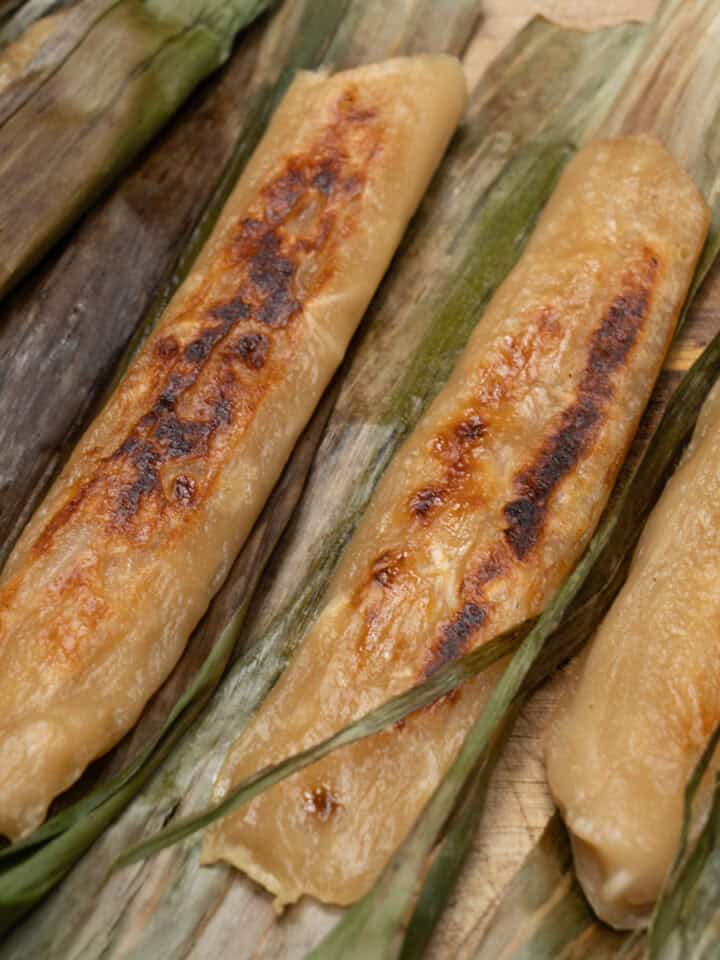
- Cassava cake: Baked cassava with coconut and condensed milk. Budin is a simpler version from Quezon.
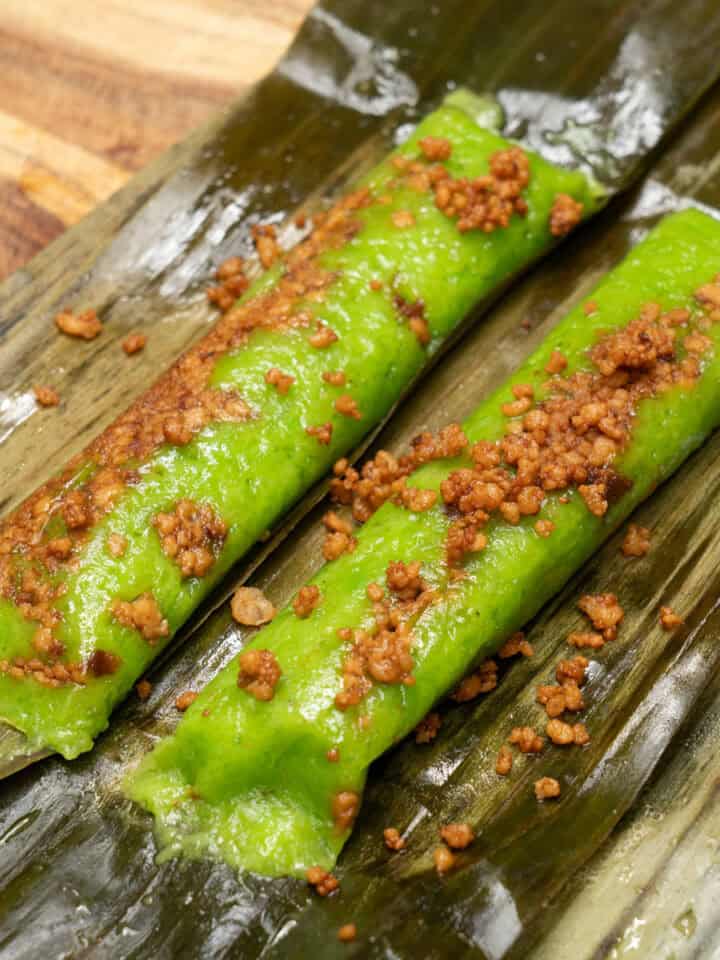
- Pichi-pichi: Steamed cassava with lye water, coated in grated coconut.
- Cassava suman: Cassava with coconut milk, wrapped in banana leaves.
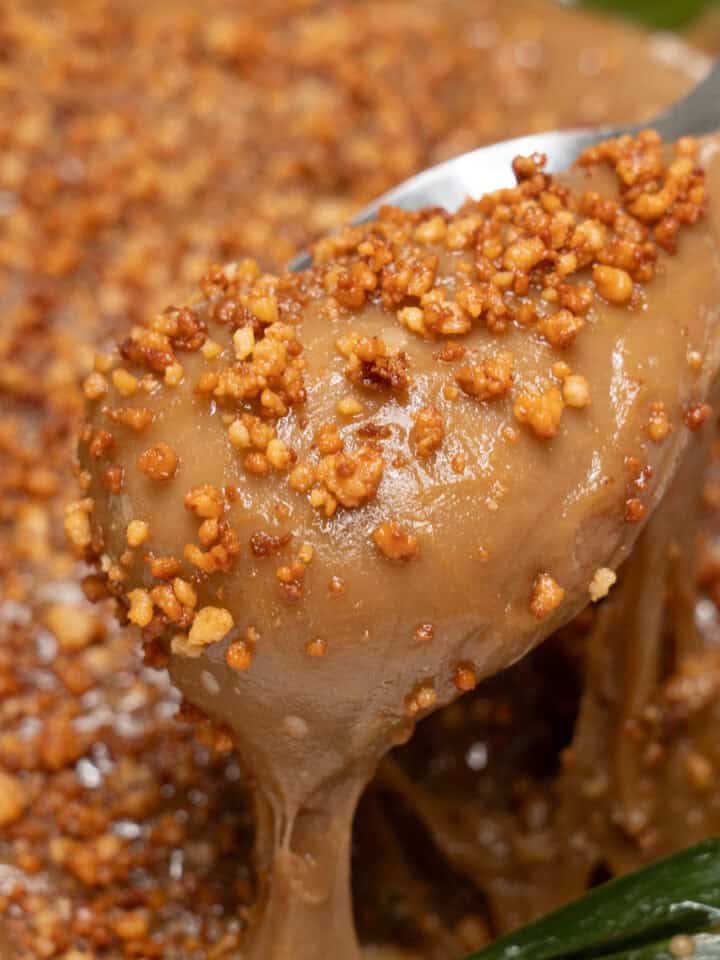
- Ginataang kamoteng kahoy: Cassava cooked in coconut milk until soft and creamy.
- Ginataang bilo-bilo: A coconut milk dessert with chewy rice balls and chunks of sweet potato and cassava.
Merienda Recipes You May Like

Did you make this recipe? I would love to know! Your feedback helps me make better recipes. Please rate, review, or comment below. Questions about this recipe are welcome, too!
Let's connect on Facebook, Instagram, Pinterest, TikTok, Twitter, and Youtube. Be sure to tag me when you try any of my recipes @recipesbynora!
📖 Recipe
Nilupak na Kamoteng Kahoy (Mashed Cassava Recipe)
Equipment
- Pot
- Fork, potato masher, or a glass (for mashing)
Ingredients
- 2 pounds cassava peeled and cut into chunks
- ¼ cup light brown sugar more to taste
- ⅓ cup condensed milk more to taste
- ¼ cup melted butter
- A pinch of salt
Instructions
- Peel and cut into chunks. Remove the tough core.
- Place in a pot and cover with water. Boil for 10-15 minutes, depending on size, until very soft and fully cooked through. Drain well.Cassava needs to be fully cooked to be safe to eat.
- Transfer to a bowl. Mash while still warm until mostly smooth with some texture.
- Add salt and brown sugar. Mash to combine.
- Add condensed milk and melted butter. Mash until well combined.Taste and adjust if needed.
- Shape into portions or press into a greased dish and slice.You can also use an ice cream scoop, like I did.
- Top with softened butter, grated coconut, cheese, or all three.
Notes
- Cassava: Use fresh or frozen (thawed). Do not use grated cassava - it can turn out too soft.
- Condensed milk: Adjust to taste.
- Light brown sugar: Optional. Adjust to taste.
- Butter: Margarine works as a substitute.
- Toppings: Butter, grated coconut, cheese, or any combination.
- Boil until very soft. Don't eat undercooked cassava.
- Remove the tough core for better texture.
- Mash while warm so it mixes easily.
- Taste and adjust sweetness as needed.
- Add a pinch of salt to balance the flavor.
Issa says
This is one of my favorite. Didn't know this was so easy to make. Thank you for this recipe.
Nora Reyes says
Hi Issa! Thank you so much!
Nene says
I remember making this with my mother. You made it look so easy. Thank you for the recipe.
Nora Reyes says
Hi Nene, That's so special. Thank you so much for sharing.