
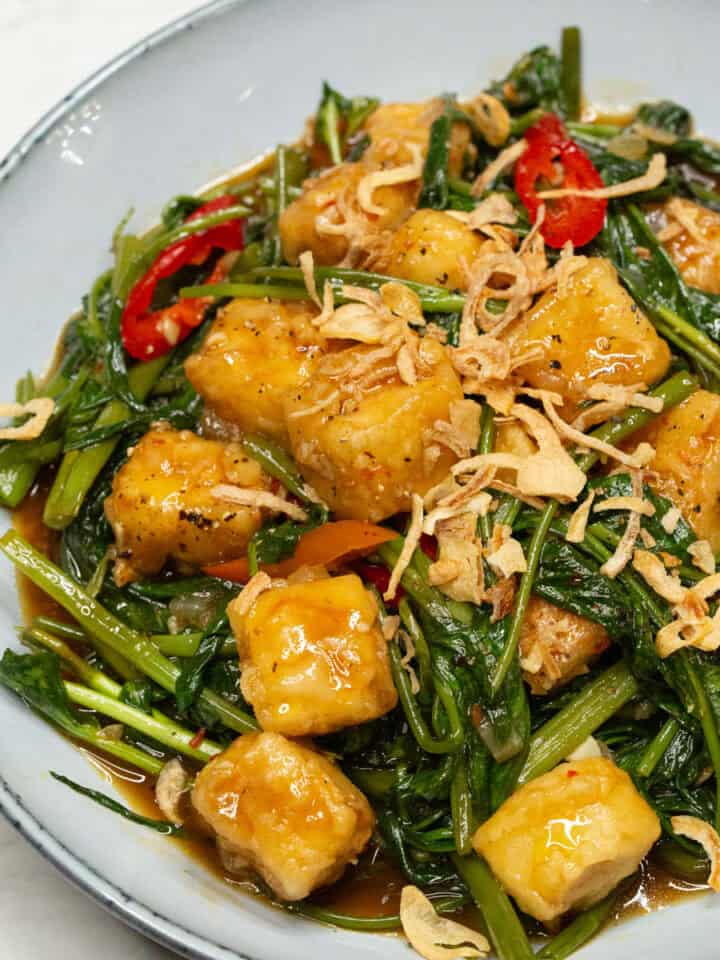
Stir-fried kangkong with garlic, also called ginisang kangkong, is one of the easiest Filipino vegetable dishes you can make.
Fresh kangkong is quickly cooked with garlic until tender and just wilted.
It's simple, flavorful, and ready in under 10 minutes.

Jump to:
Ingredients You'll Need

Notes and Substitutions
- Kangkong: Also called water spinach, kangkung, or ong choy. It has hollow stems and tender leaves, and is common in Filipino and Southeast Asian cooking.
- Oil: I used extra virgin olive oil, but any neutral oil works. Add a little sesame oil if you want a mild nutty flavor.
How to Make Stir-Fried Kangkong with Garlic
Step 1: Prepare the kangkong
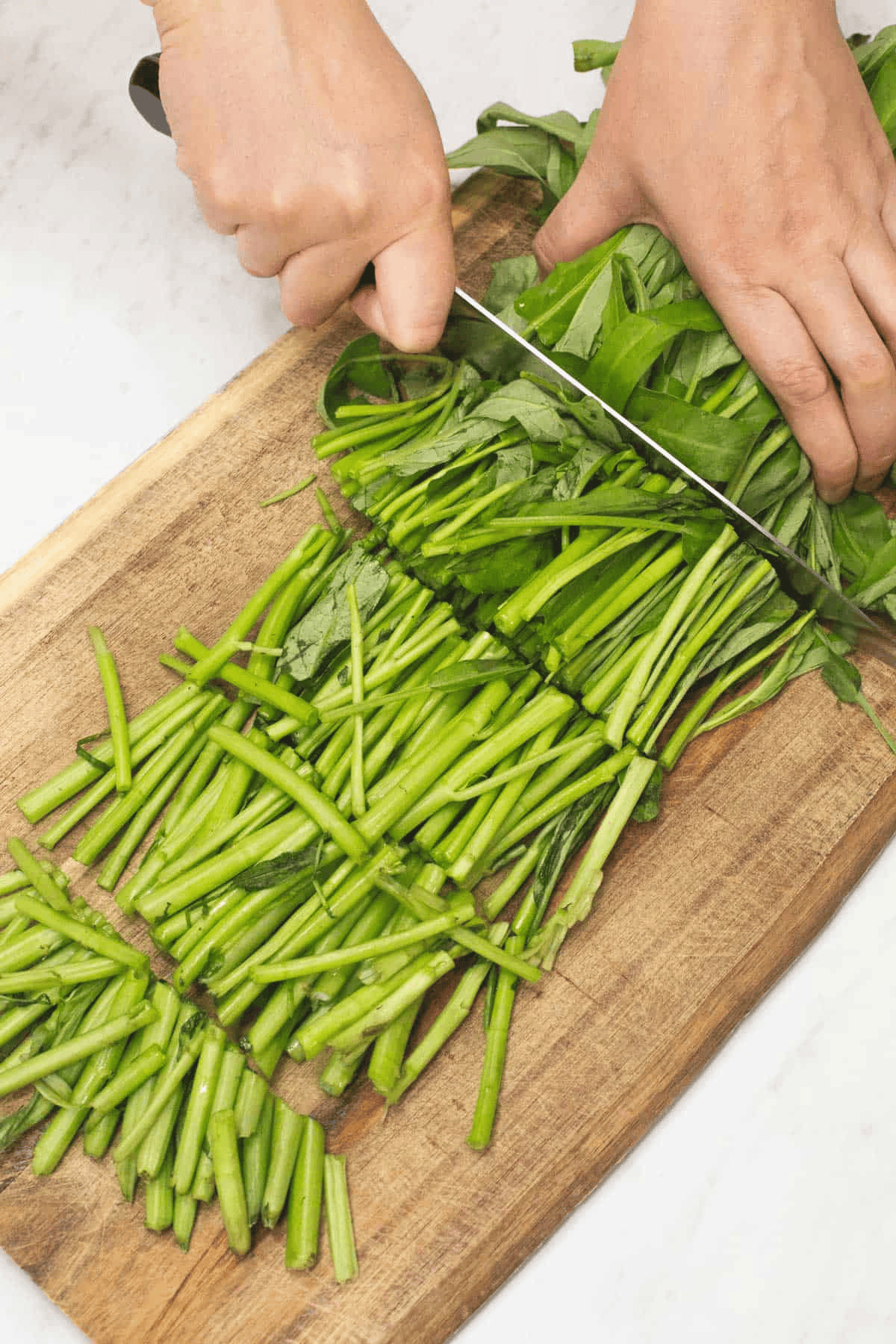
Rinse 1 pound kangkong well under running water to remove any dirt or grit.
Cut into 2-inch pieces, then separate the stems from the leaves.
Step 2: Sauté the garlic
Heat about 2 tablespoons oil in a wok or large pan over medium-high heat.
Add 8 cloves garlic (minced) and sauté just until it smells good, but don't let it brown too much.

Step 3: Cook the stems
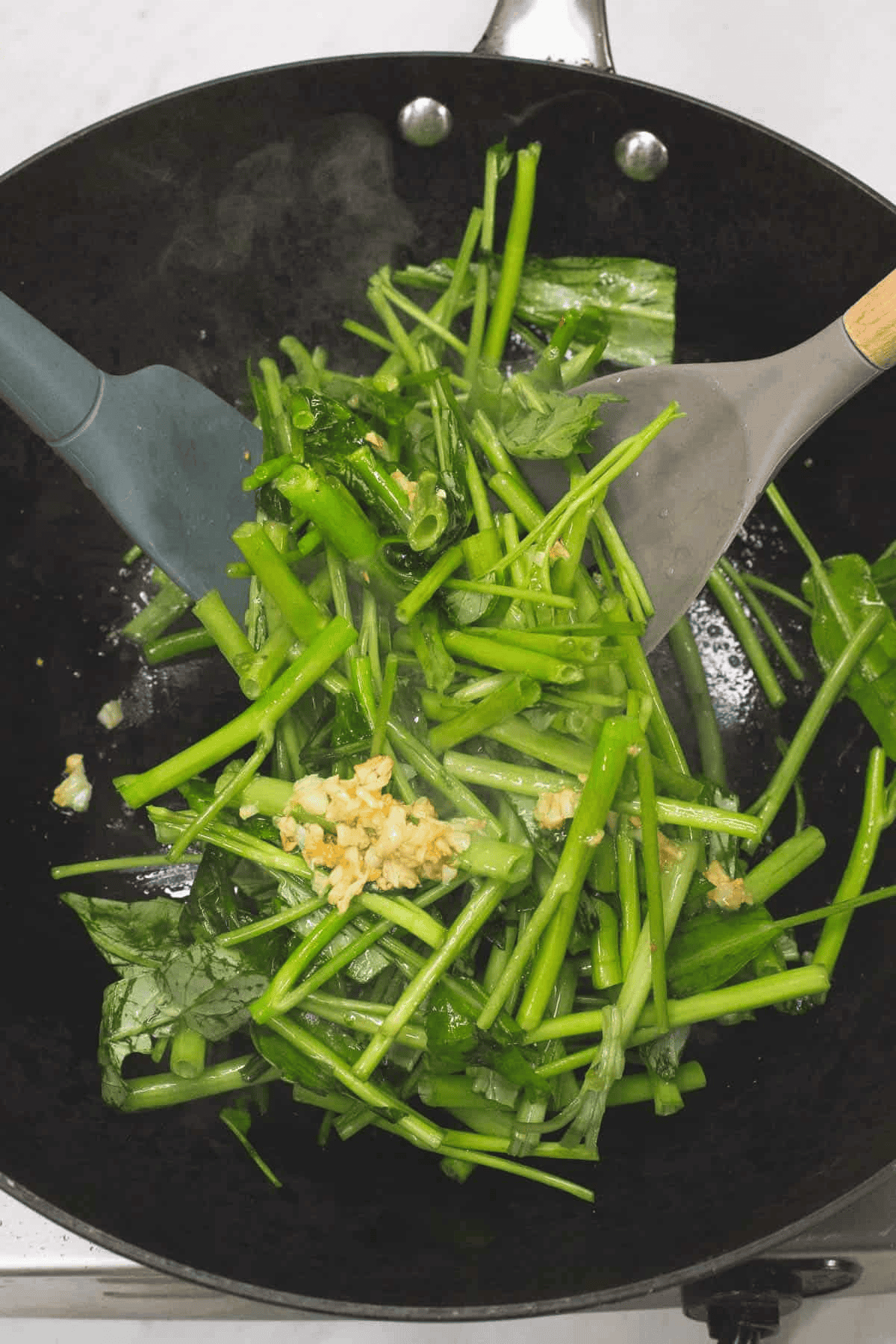
Add the kangkong stems first since they take longer to soften.
Stir-fry for about 1 minute, or until they start to soften.
You can add a splash of water to help them cook through.
Step 4: Add the leaves
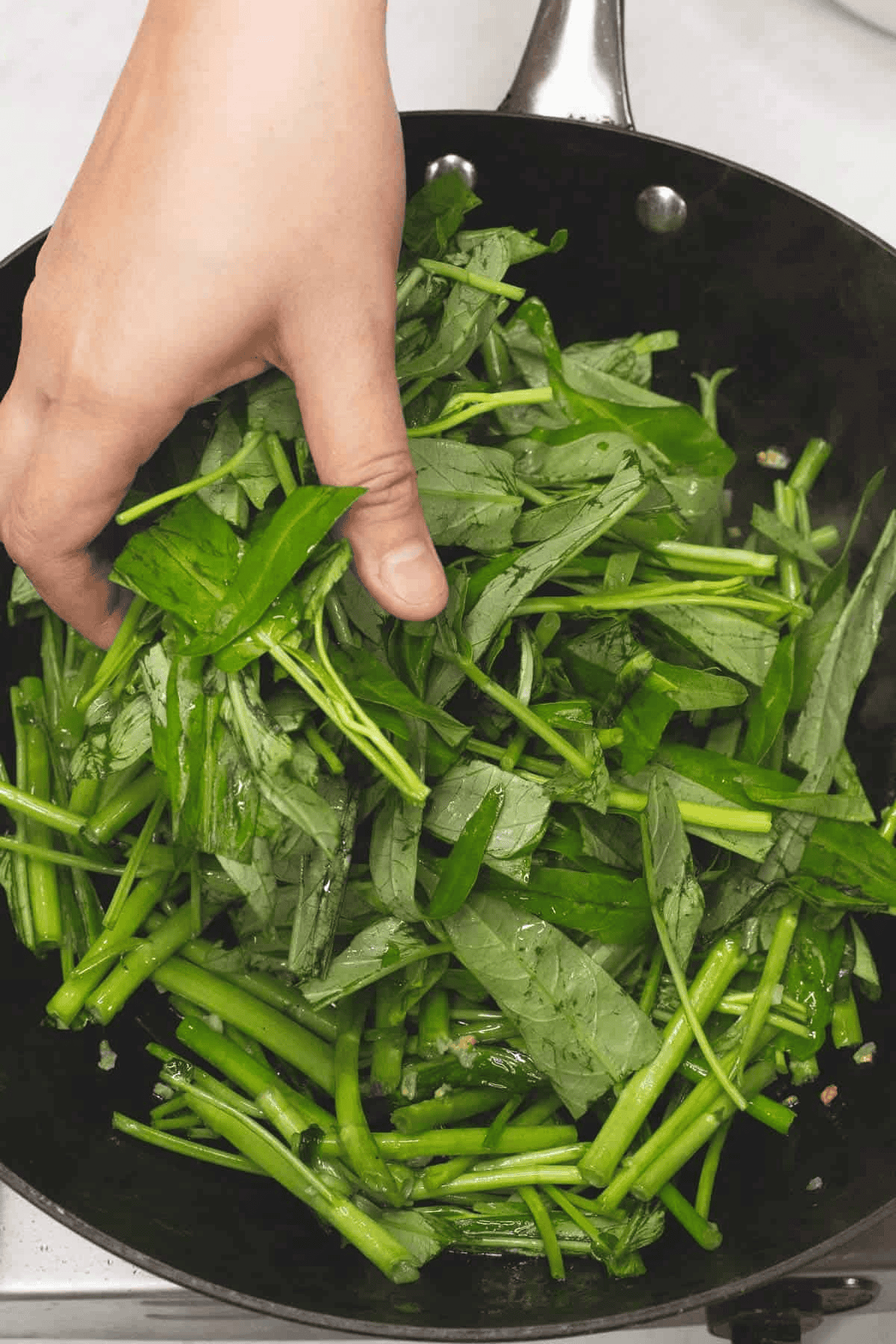
Add the kangkong leaves and stir-fry for another 1 to 2 minutes, until wilted.
Step 5: Season
Season with salt and pepper, then toss everything together.
For extra flavor, you can also add a splash of soy sauce, oyster sauce, or fish sauce.
Turn off the heat once the leaves are wilted.

Serve your stir-fried kangkong with garlic while hot.
Add fried garlic or shallots on top if you like.

Recipe FAQs
Kangkong is a leafy green vegetable also called water spinach, kangkung, or ong choy. It has long, hollow stems and tender leaves.
Yes. You can add tofu, shrimp, chicken, or mushrooms. Other vegetables like bell peppers or carrots work too - just cook them first before adding the kangkong.
You can use spinach, bok choy, Swiss chard, or broccoli rabe instead. The flavor and texture will be a little different, but they all work well in a simple garlic stir-fry.
More Kangkong Recipes
- Adobong kangkong: Water spinach with soy sauce, vinegar, and garlic.
- Kangkong with bagoong: Stir-fried kangkong with fermented shrimp paste.
- Sinigang: Sour tamarind soup with pork or shrimp and vegetables.
- Fried kangkong: Crispy battered kangkong leaves served with dipping sauce.
- Ginataang kangkong: Kangkong cooked in coconut milk, usually with chilies.
Vegetable Recipes You May Like


Did you make this recipe? I would love to know! Your feedback helps me make better recipes. Please rate, review, or comment below. Questions about this recipe are welcome, too!
Let's connect on Facebook, Instagram, Pinterest, TikTok, Twitter, and Youtube. Be sure to tag me when you try any of my recipes @recipesbynora!
📖 Recipe

Stir-Fried Kangkong with Garlic
Equipment
- Wok or wide pan
Ingredients
- 1 pound kangkong rinsed and cut into 2-inch sections
- 8 garlic cloves minced
- 2 tablespoons extra virgin olive oil
- Salt and pepper
- Fried garlic or shallots optional
Instructions
- Rinse kangkong well. Cut into 2-inch pieces and separate the stems from the leaves.
- Heat oil in a wok or large pan. Add garlic and cook until fragrant.
- Add the stems and stir-fry for about 1 minute, until they start to soften.
- Add the leaves and stir-fry for 1-2 minutes, just until wilted.
- Season with salt and pepper, or add soy sauce, oyster sauce, or fish sauce if you like. Top with fried garlic or shallots and serve hot.
Notes
- Kangkong: Also called water spinach, kangkung, or ong choy. Use the stems and leaves.
- Oil: Any neutral oil works. Add a little sesame oil for a mild nutty flavor.
Anon says
Hello, I tried to make this and the kangkong stalks were chewy and kind of hard. How do i fix this?
Nora Reyes says
Hello! I'm sorry to hear the kangkong stalks were chewy and hard. Cook the stalks first since they need more time to soften up. Try cutting them smaller and let them cook a while before you toss in the leaves. That should help them get nice and tender. I hope this makes a difference! Thank you!
Nora Reyes says
Blanching can also help soften the kangkong stalks, especially if they're a bit on the tougher side. Sometimes they're tougher simply because they're a bit older, or just naturally firmer.
Jan says
This is one delicious side dish! Gotta make it!!!
Nora Reyes says
Thank you! Happy cooking!