
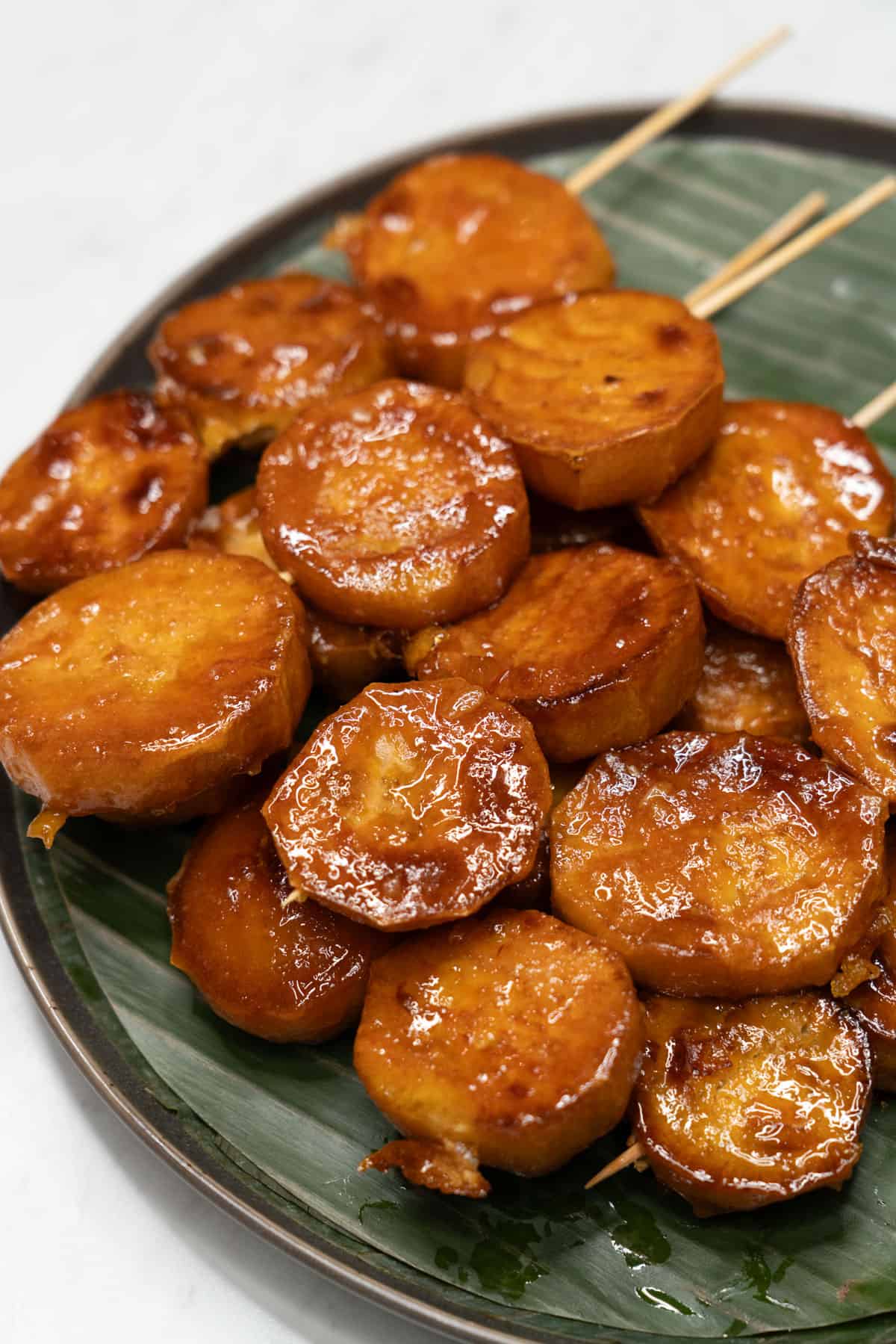
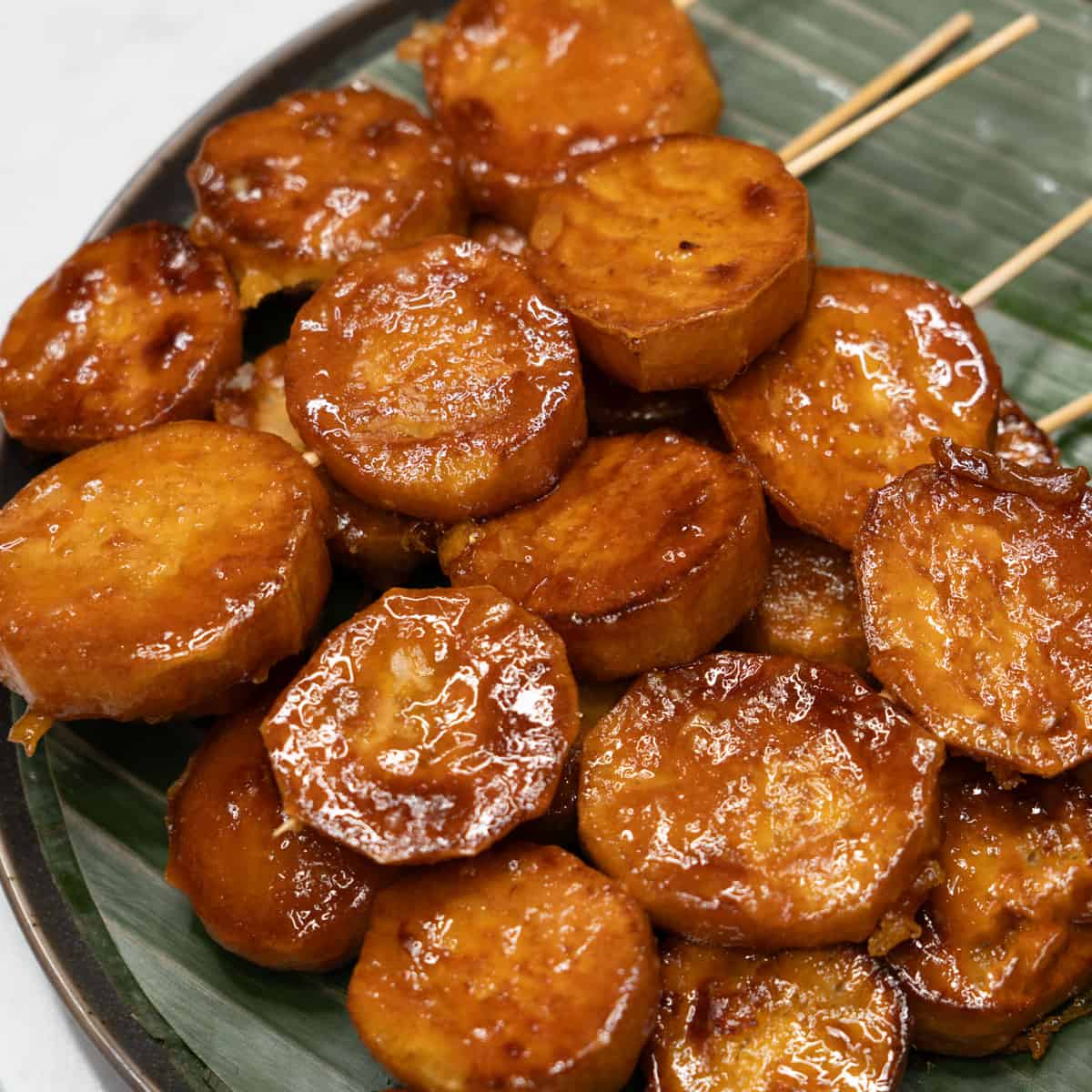
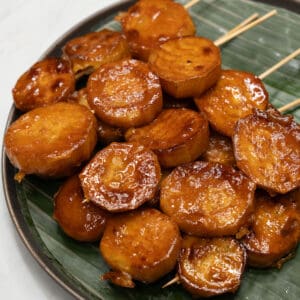
Kamote cue is a classic Filipino street snack made with fried sweet potatoes coated in caramelized sugar.
It's crispy on the outside and soft on the inside, with a thin layer of caramel. If you grew up eating it from a street vendor, this recipe will bring back those memories.
It only takes a few ingredients and is easy to make at home. Perfect for merienda or a sweet snack anytime.
Jump to:
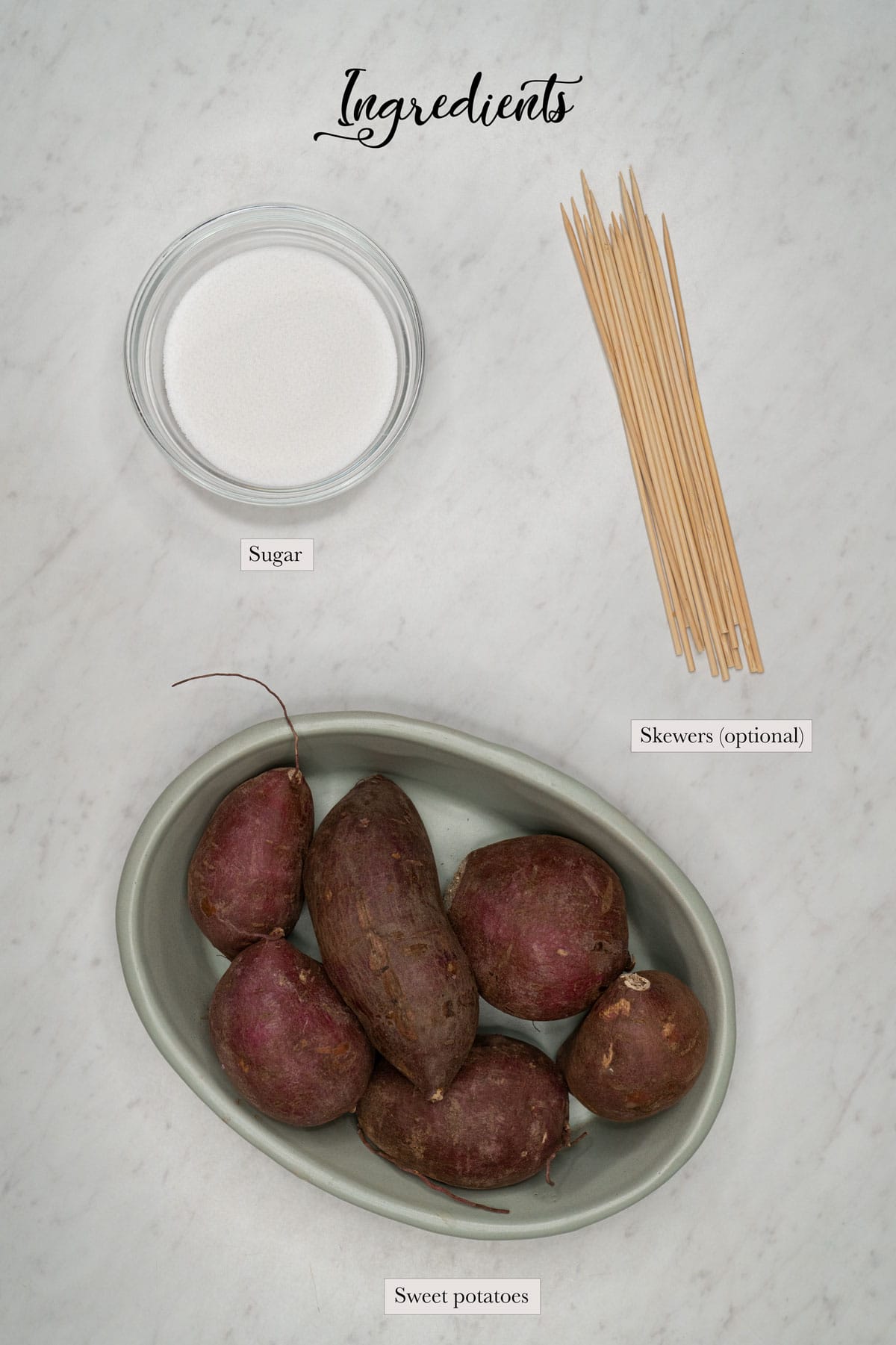
Ingredients You'll Need
Notes and Substitutions
- Sweet potatoes (kamote): I like using Japanese or Korean sweet potatoes (the ones with pale yellow flesh) because they stay firm when fried and don't get mushy. They also caramelize really nicely. If you can't find those, any firm sweet potato works - just slice them thick so they don't fall apart.
- Sugar: I usually use white sugar because it melts clean and coats the kamote evenly. Brown sugar works too if that's what you have.
- Oil: Use a neutral oil with a high smoke point so the sugar doesn't burn too fast. Vegetable oil, canola oil, or avocado oil all work well.
- Skewers: Totally optional. Street-style kamote cue is skewered, but you can also serve it straight on a plate.
How to Make Kamote Cue (Step-by-Step)
Step 1: Fry the kamote
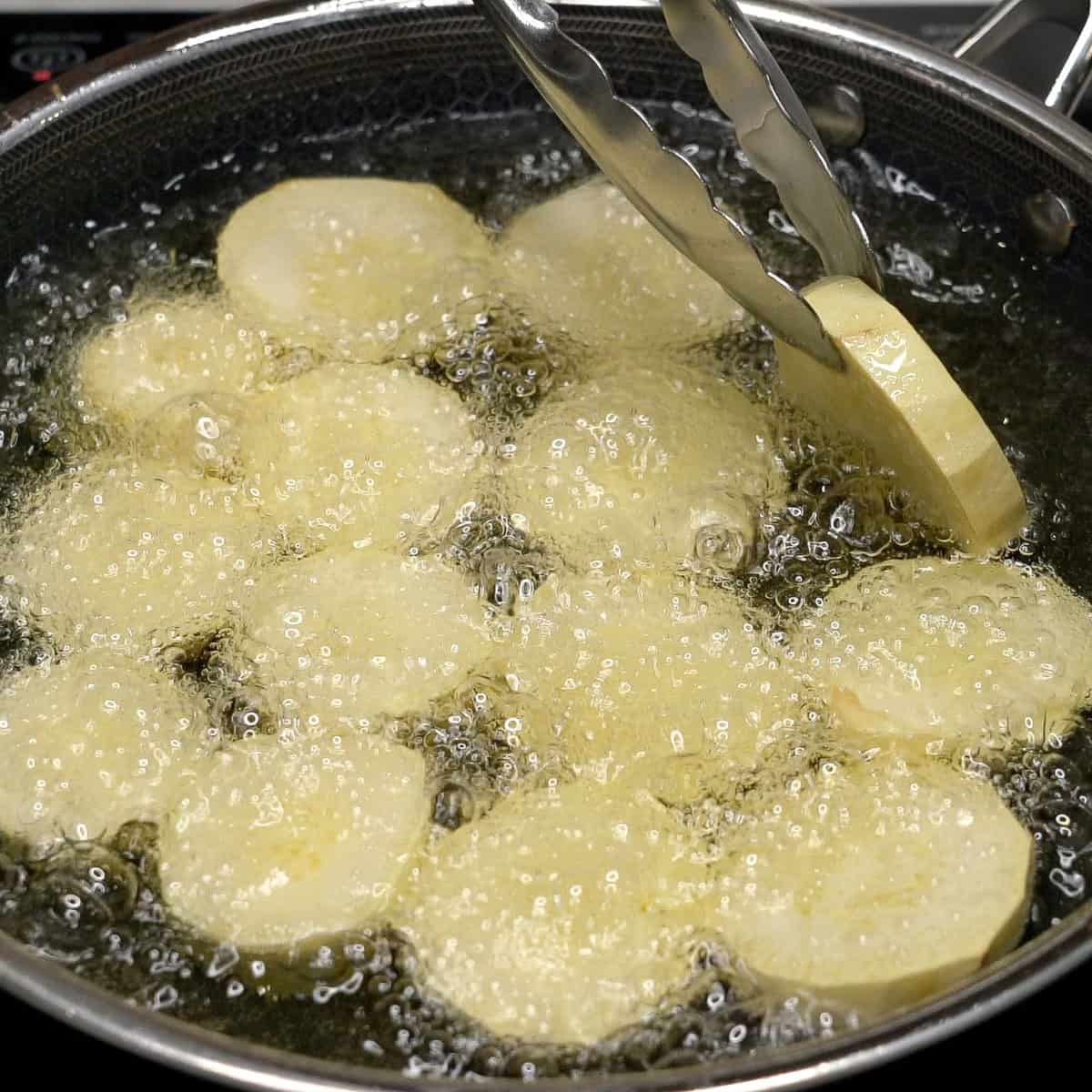
Heat about ½ inch of oil in a pan over medium-high heat.
Add the sweet potatoes in a single layer (work in batches if needed).
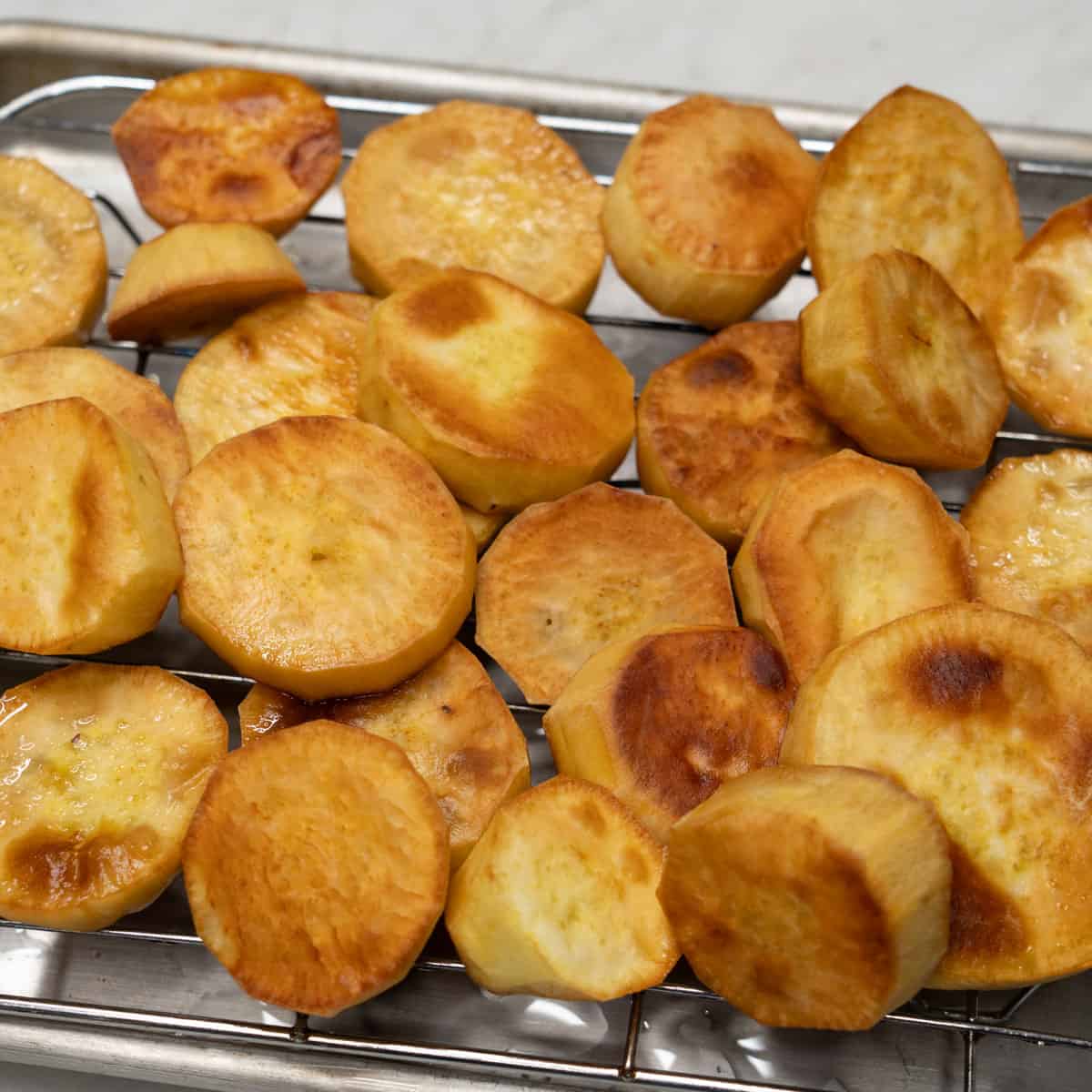
Fry for about 6-8 minutes, flipping halfway through, until they're tender inside and lightly golden on both sides.
Transfer to a wire rack or a plate lined with paper towels to drain.
Step 2: Melt the sugar
In the same pan, add 1 cup white sugar to the remaining oil and lower the heat to medium.
Do not stir. Let the sugar melt on its own. Just watch it closely.
Once you see the sugar start to caramelize, add the fried kamote right away.
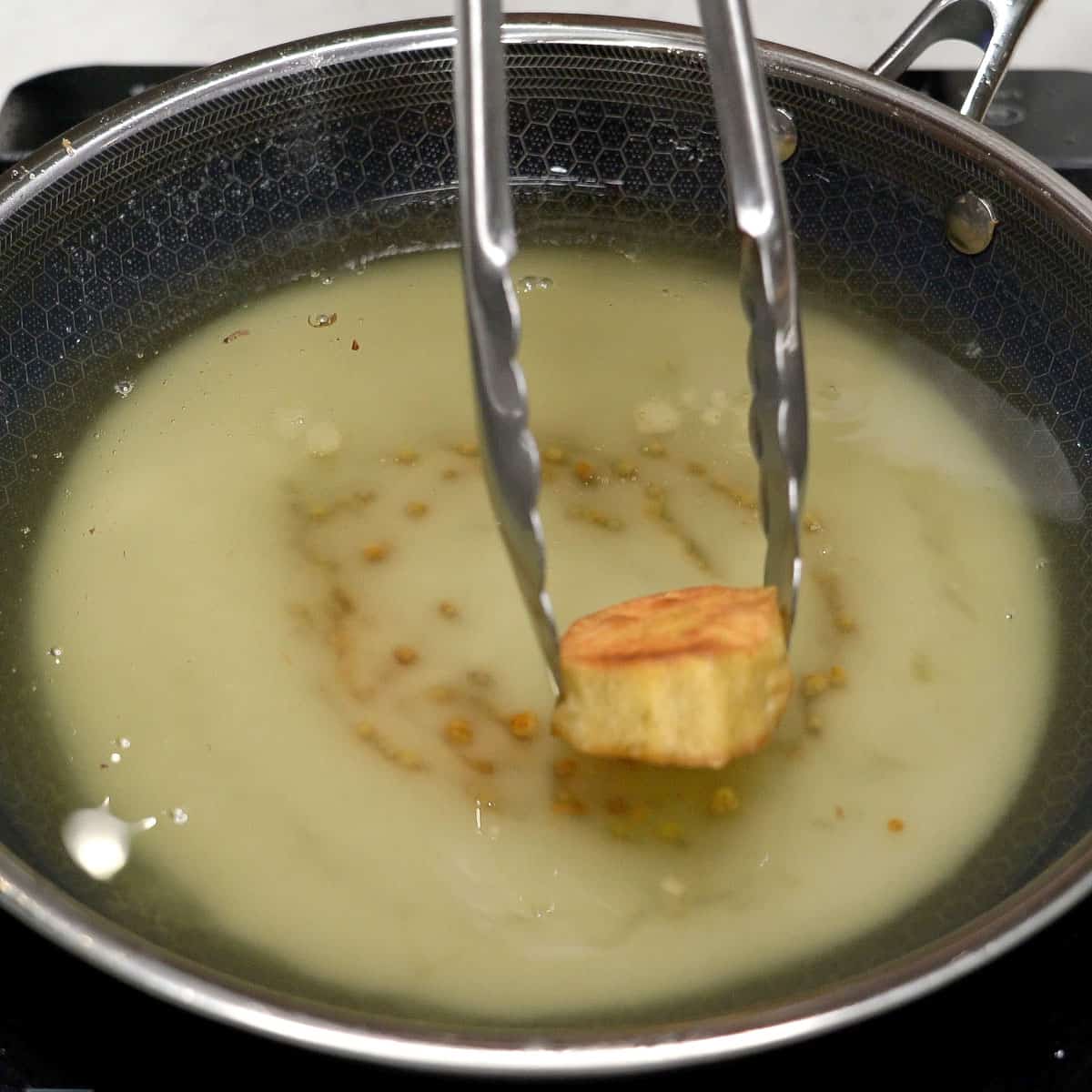
The sugar will continue to caramelize and darken as it cooks.
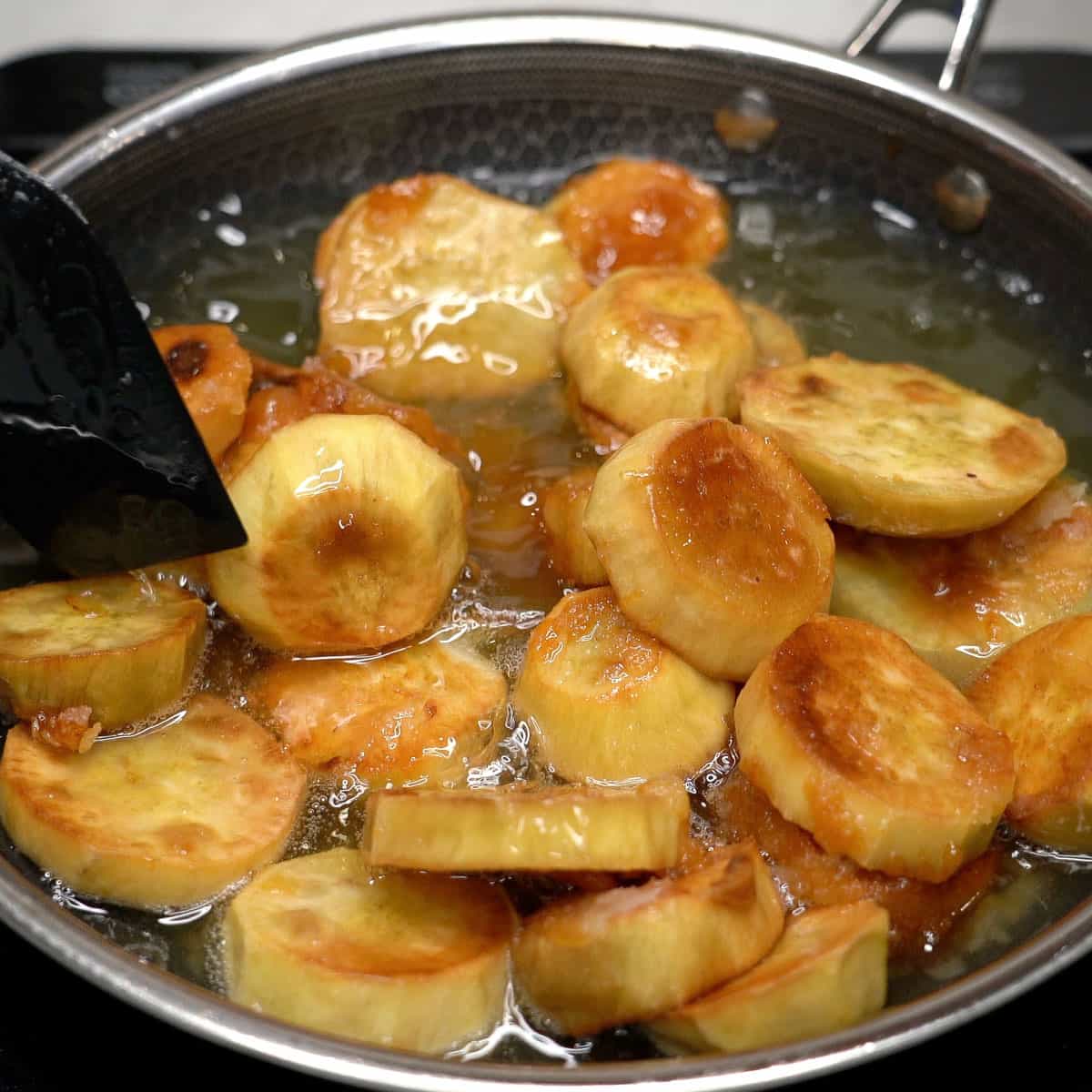
Step 3: Coat with sugar
Gently turn the sweet potatoes until they're coated with the caramel. Keep turning them so they don't stick together.
At first, the sugar may look grainy. It will melt into a smooth, shiny caramel as it cooks.
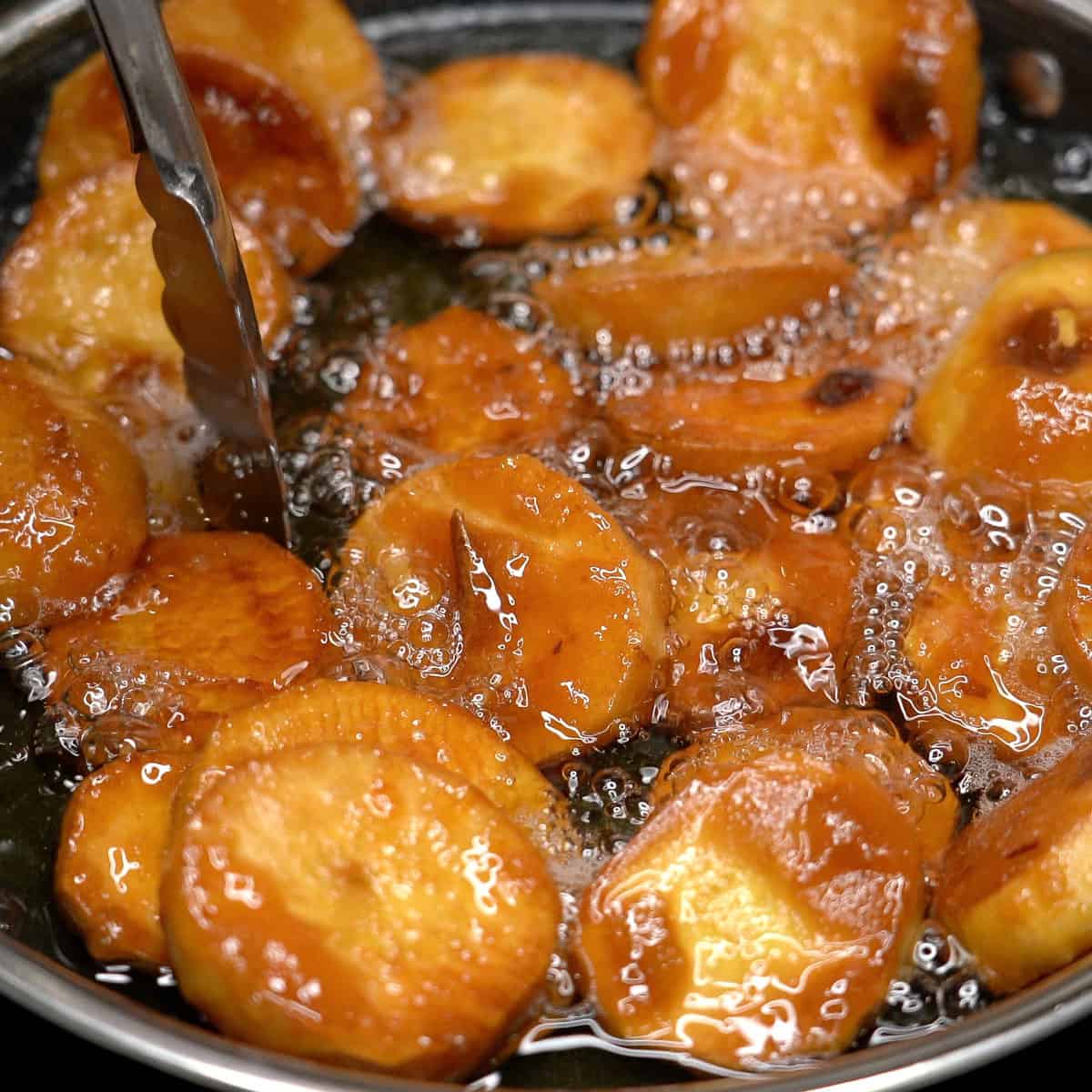
As soon as a piece is coated with caramel, use tongs to transfer it to a wire rack. Keep the pieces slightly apart so they don't stick together.
Continue until all the sweet potatoes are coated, then turn off the heat.
Let them cool for a few minutes until the caramel hardens.
⚠️ Caution: The caramel is very hot and can burn. Let it cool for a few minutes.
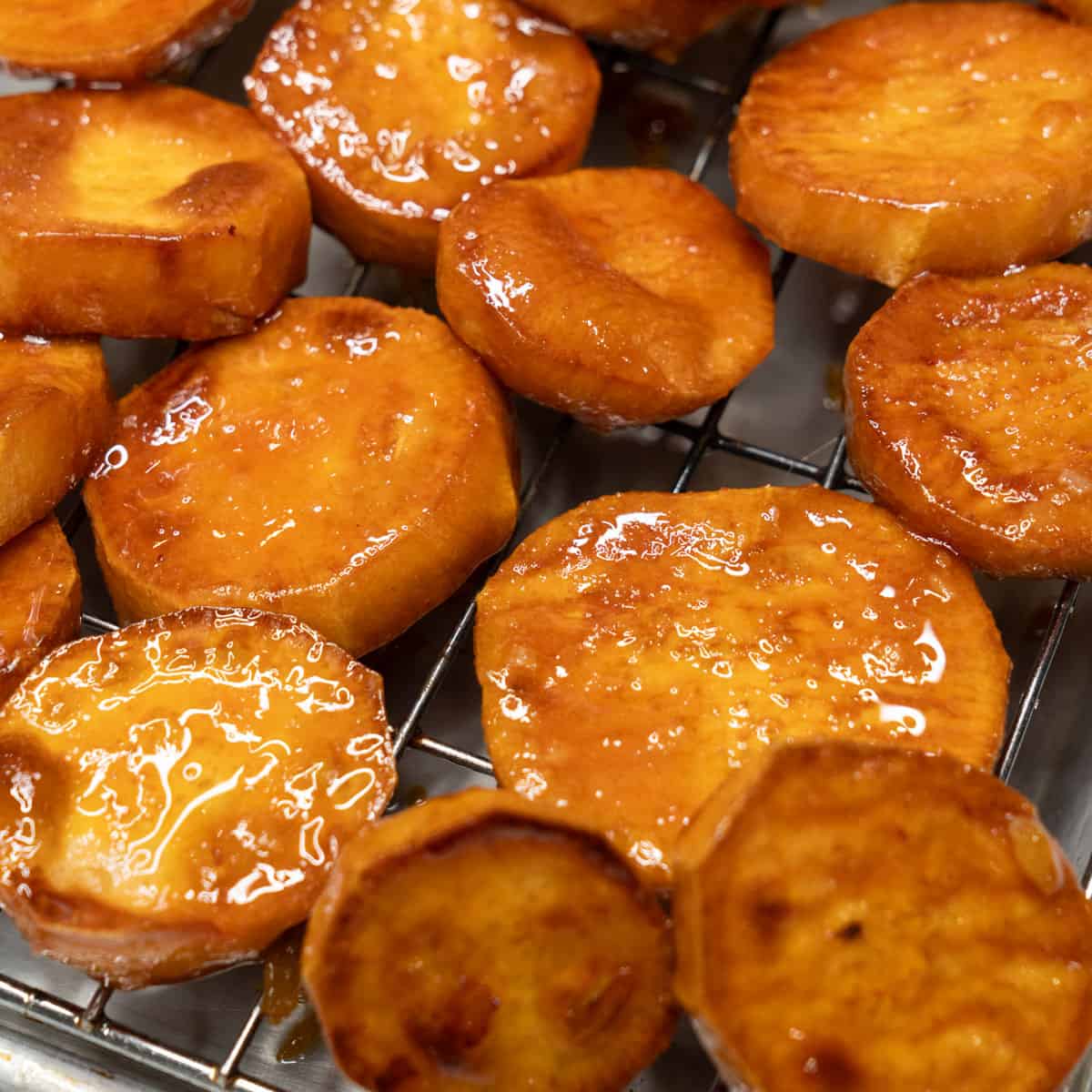
Step 4: Skewer
If using skewers, insert them while the coating is still slightly soft.
Hold the sweet potatoes steady with tongs as you slide the skewer through.
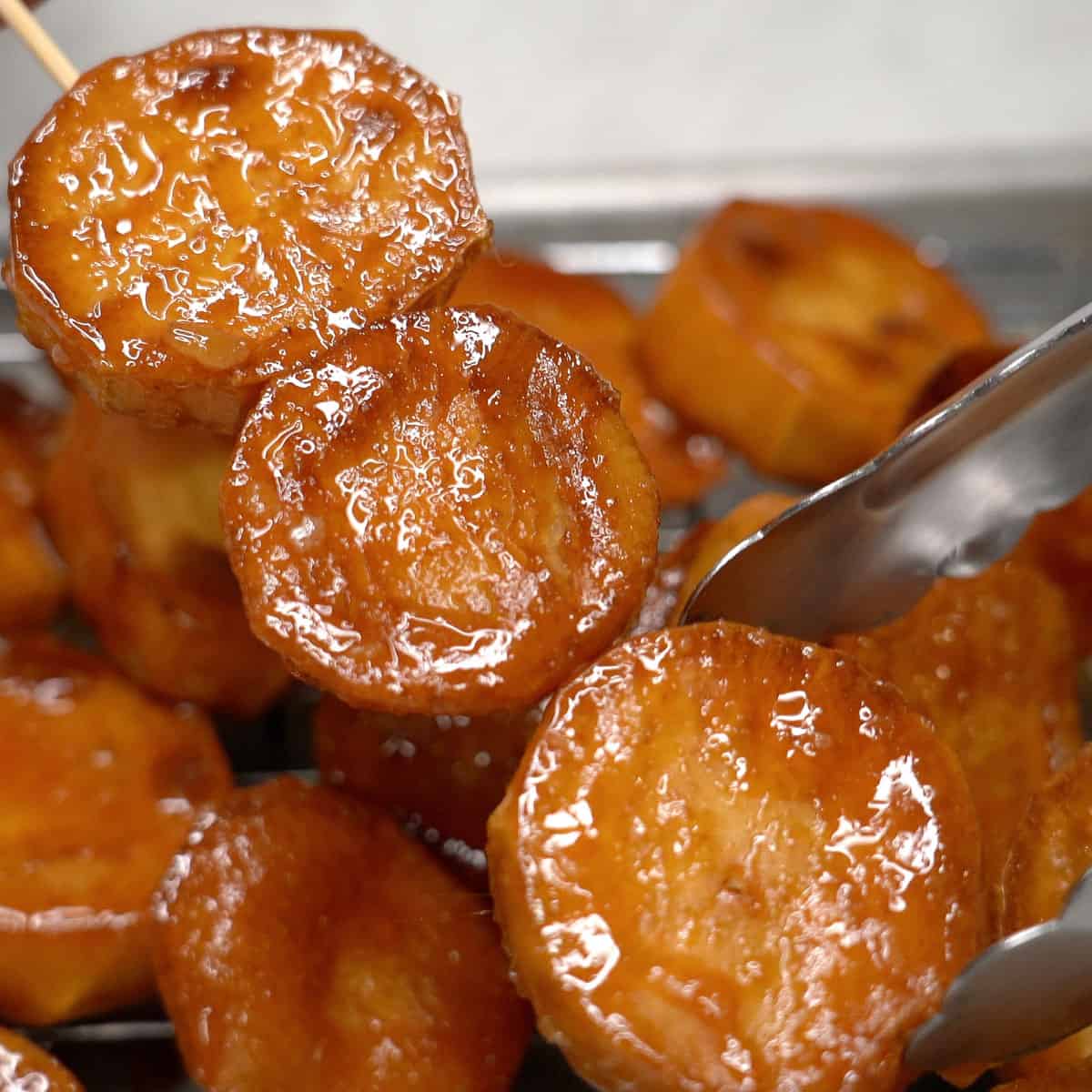
Let the sugar fully set before serving.
Cooking Tips
- Let the sugar melt before stirring so it doesn't clump.
- Keep turning so the pieces coat evenly and don't stick together.
- Cool them on a wire rack, leaving a little space between each piece.
- Work quickly once the sugar starts browning - it darkens fast.
- The caramel gets very hot. Let it cool before handling.
Recipe FAQs
Kamote cue is a Filipino street snack made by frying sweet potatoes and coating them in caramelized sugar, usually served on skewers.
Japanese or Korean sweet potatoes (the pale yellow kind) work best because they stay firm when fried. Orange sweet potatoes are softer and can get mushy, but they still work if that's what you have.
Yes. I actually prefer white sugar because it melts clean and coats the kamote evenly. Brown sugar works too and gives a deeper caramel flavor.
It may have been stirred too much while melting. Let it melt on its own.
More Filipino Merienda to Try
- Turon: Fried saba bananas wrapped in lumpia wrappers.
- Maruya: Banana fritters dipped in rice flour batter.
- Maruya na kamote: Sweet potato fritters with rice flour coating.
- Banana cue: Fried bananas coated in caramelized sugar.
- Biko: Sticky rice with coconut milk and sugar, topped with latik.
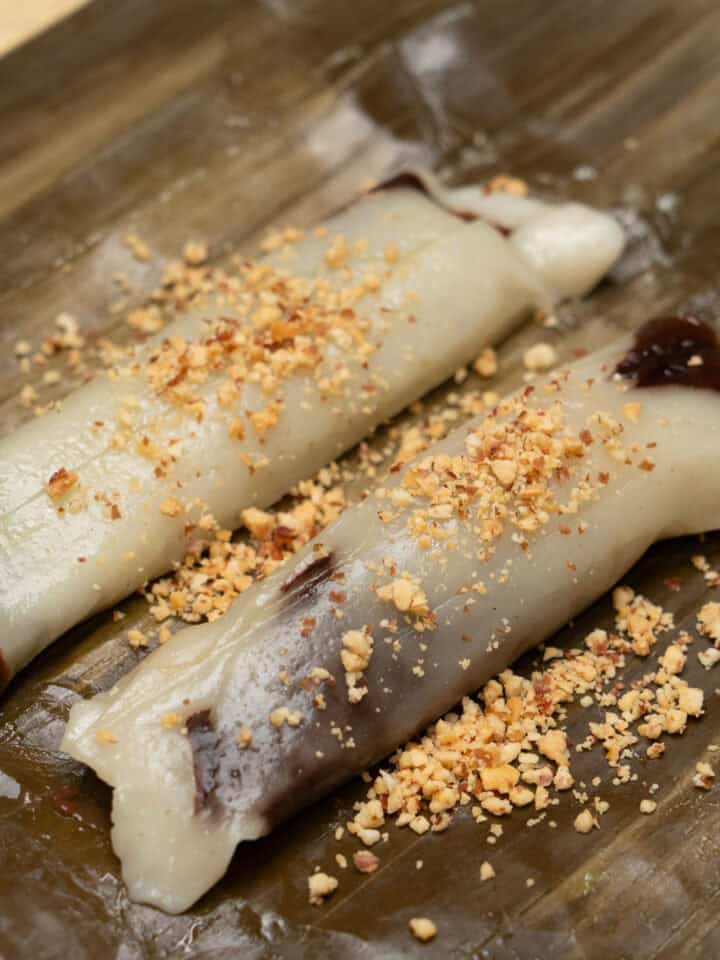
- Cassava suman: Steamed cassava cakes wrapped in banana leaves.
- Minatamis na saging: Saba bananas cooked in brown sugar syrup.
Street Food Recipes You May Like

Did you make this recipe? I would love to know! Your feedback helps me make better recipes. Please rate, review, or comment below. Questions about this recipe are welcome, too!
Let's connect on Facebook, Instagram, Pinterest, TikTok, Twitter, and Youtube. Be sure to tag me when you try any of my recipes @recipesbynora!
📖 Recipe
Kamote Cue Recipe (Caramelized Sweet Potatoes)
Equipment
- wide pan or wok
- Tongs
- Wire rack
- Skewers (optional)
Ingredients
- 2 pounds sweet potatoes peeled and cut into ½-inch thick slices
- 1 cup white sugar
- Neutral oil
Instructions
- Heat about ½ inch of oil in a pan over medium-high heat.
- Fry the sweet potatoes for 6 to 8 minutes, turning halfway, until tender and lightly golden. Work in batches if needed.
- Transfer to a wire rack or paper towel-lined plate.
- Lower the heat to medium. Add the sugar to the remaining oil. Do not stir.
- Once it melts and turns light golden, add the sweet potatoes. Gently turn to coat. At first, the sugar may look grainy. Keep turning until it melts into a smooth, shiny caramel. Separate any pieces that stick together.
- Transfer to a wire rack, leaving a little space between each piece. Let cool for a few minutes. The caramel is very hot, so let it cool before handling.
- If using skewers, insert them while the caramel is still soft. Let the caramel harden before serving.
Notes
- Sweet potatoes: Japanese or Korean sweet potatoes work best, but any firm sweet potato will do. Cut into thick pieces.
- Sugar: Granulated sugar gives the smoothest coating. Brown sugar works but caramelizes faster.
- Oil: Use a neutral oil with a high smoke point.
- Melted sugar is extremely hot - handle carefully.
- Don't stir the sugar while it melts.
- Add the sweet potatoes as soon as the sugar turns light golden.
- Keep turning so the coating stays smooth and doesn't clump.
- Work quickly as the caramel darkens fast.
Ryan says
This is my favorite.
Nora Reyes says
Yaay!