
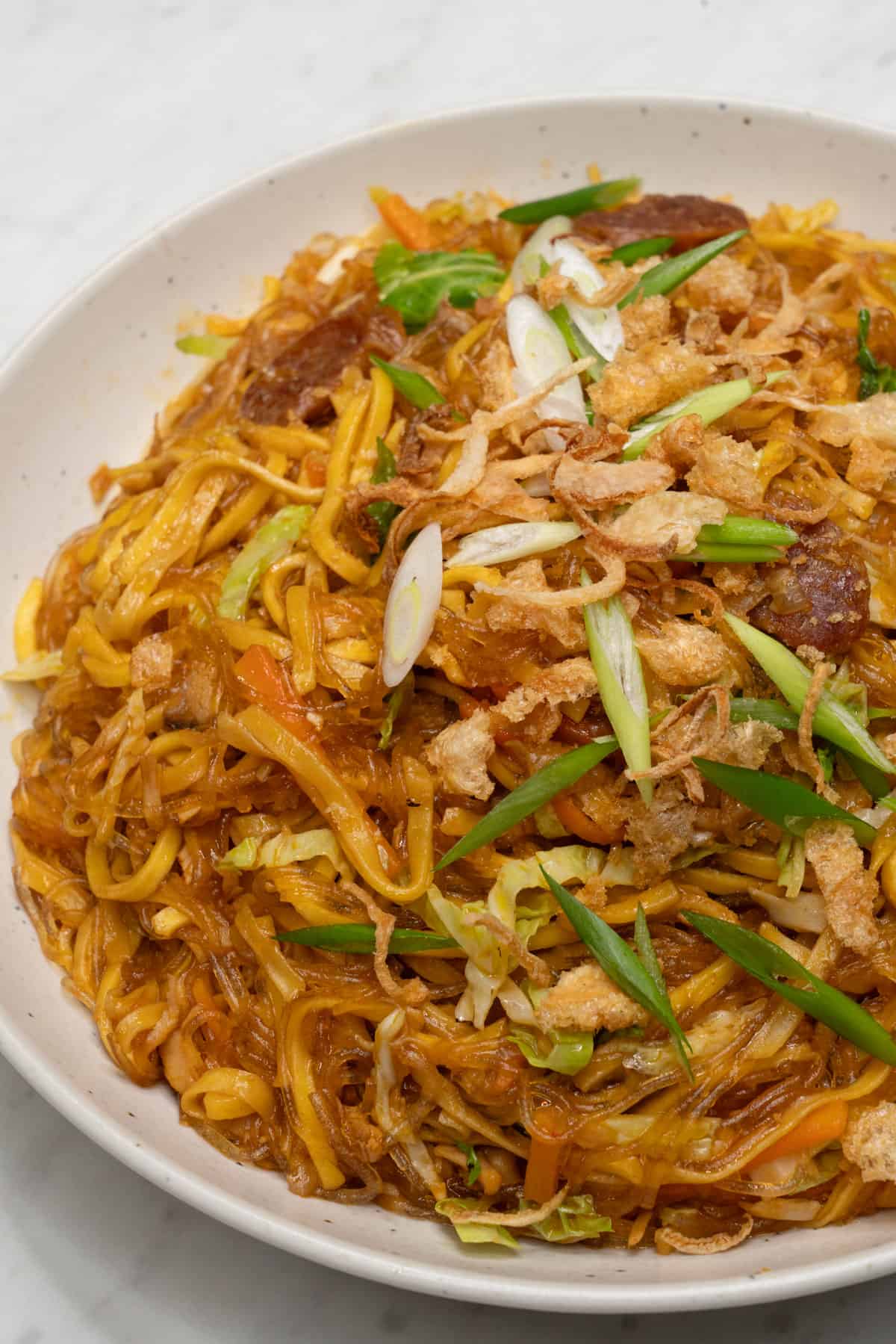
Pancit bam-i, sometimes spelled bami, is a Filipino noodle dish made with a mix of canton and sotanghon noodles.
This version keeps it simple with chicken, a few vegetables, and a savory sauce that brings everything together.
Jump to:
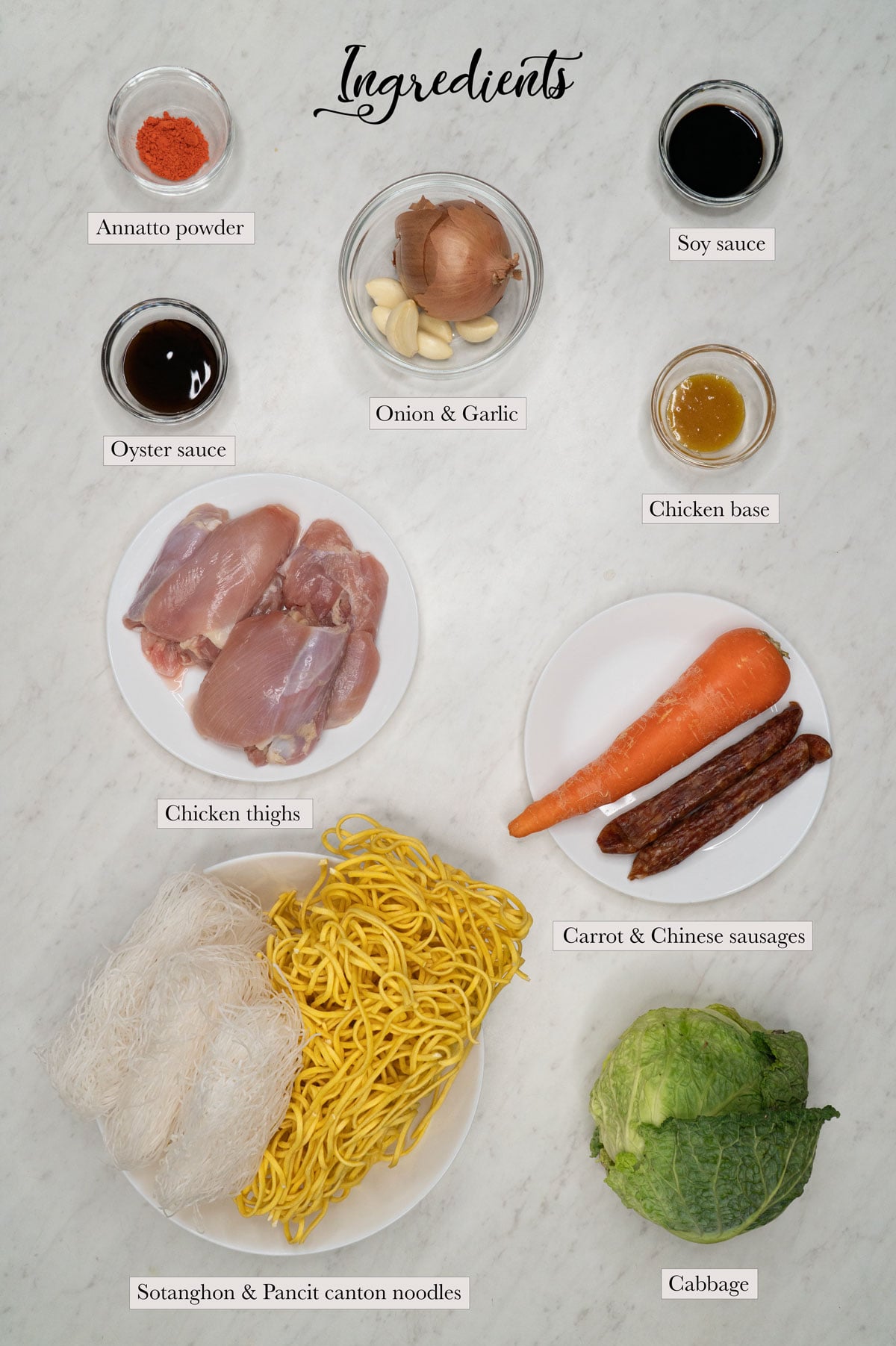
Ingredients You'll Need
Notes and Substitutions
- Pancit canton noodles: These are wheat noodles usually sold dried. They have a chewy texture and hold up well in stir-fries. You can also use fresh lo mein noodles.
- Sotanghon noodles: Also called glass noodles, these are made from mung bean starch. They're soft and slippery and soak up a lot of the sauce. Soak them first so they don't overcook in the pan.
- Chicken: I used chicken thighs because they stay juicy and flavorful. Chicken breast or leftover cooked chicken also work. You can also use pork, shrimp, or tofu.
- Chinese sausage: This is optional, but it adds extra flavor.
- Vegetables: I kept it simple with carrots and cabbage. You can also use green beans, snow peas, celery, or bok choy.
- Sauce: I used dark soy sauce, oyster sauce, chicken base, and annatto powder. Add more hot water or broth as needed if the noodles need more time to cook.
- Crushed chicharon: This is optional, but I like adding it on top for a little crunch and extra savory flavor.
How to Make Pancit Bam-I (Step-by-Step)
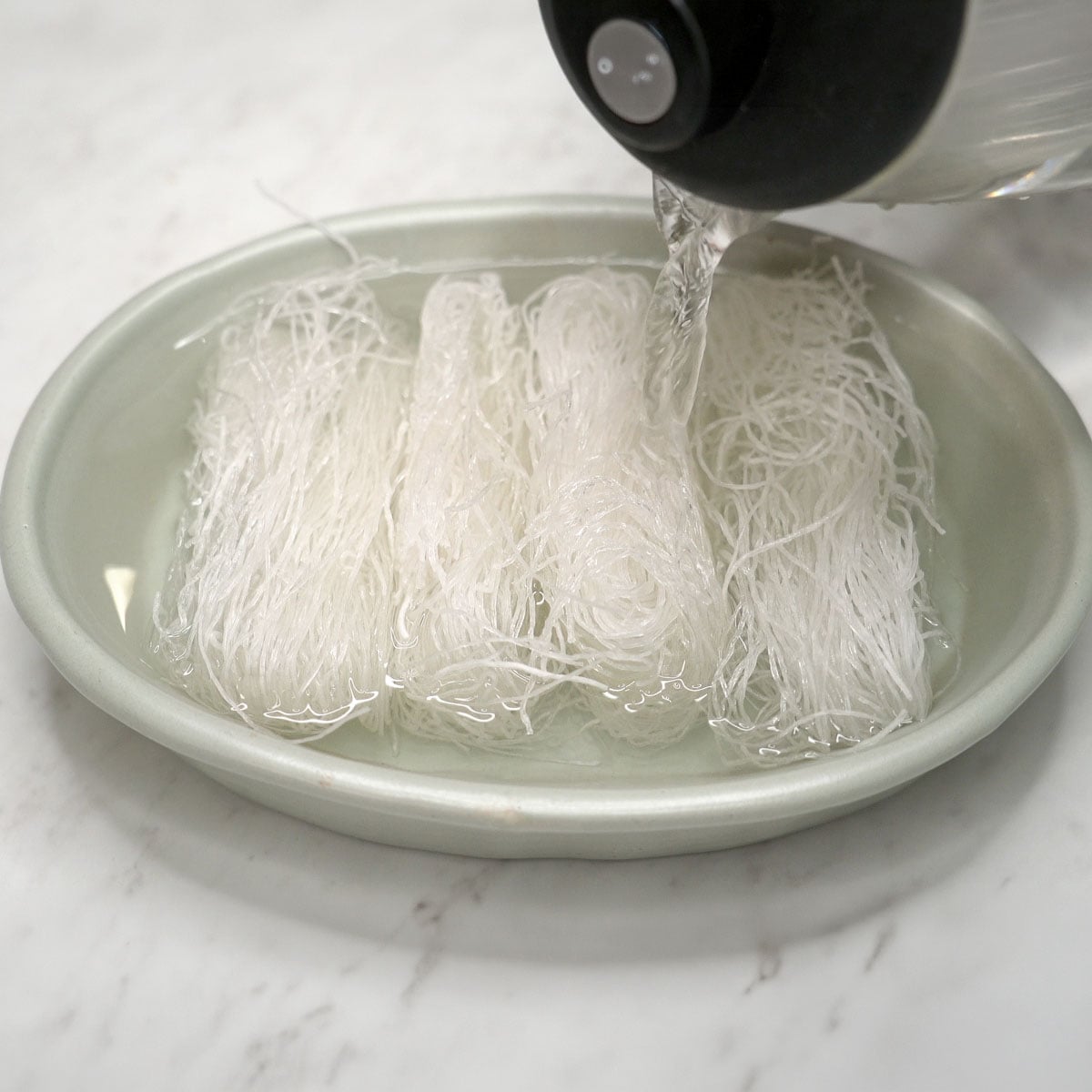
Step 1: Soak the sotanghon
Place 5 ounces sotanghon in a bowl and cover with warm water.
Let it soak for about 10 minutes, or until softened. Drain and set aside.
Step 2: Make the sauce
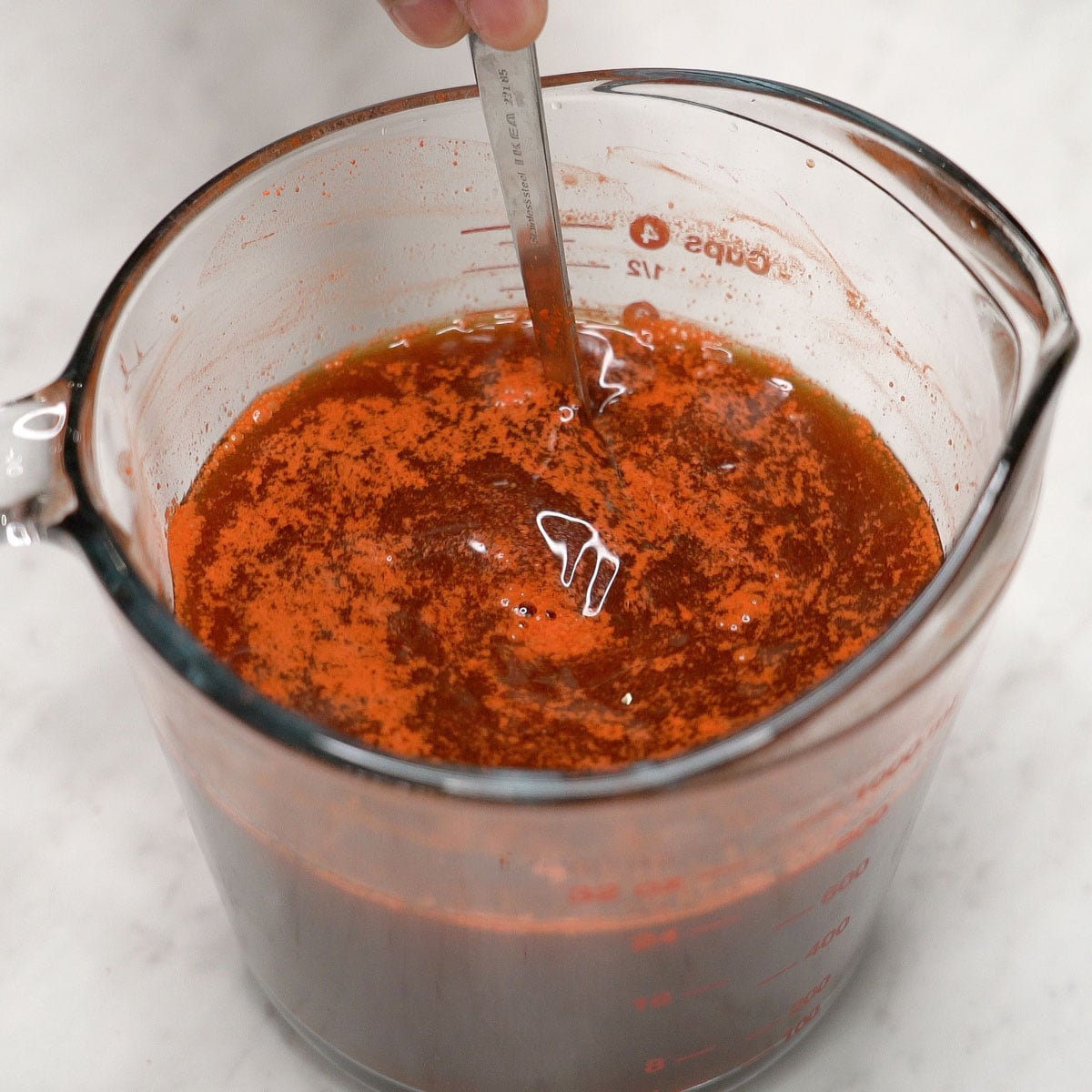
In a bowl, combine:
- 3 cups hot water (plus 1 to 2 more cups for later, as needed)
- 2 tablespoons dark soy sauce
- 2 tablespoons oyster sauce
- 2 teaspoons chicken base or bouillon
- 1 teaspoon annatto powder
Stir until everything is dissolved. Set aside.
Step 3: Cook and shred the chicken
Season 1 pound chicken thighs with salt and pepper.
Sear in a little oil over medium-high heat until lightly browned and cooked through.
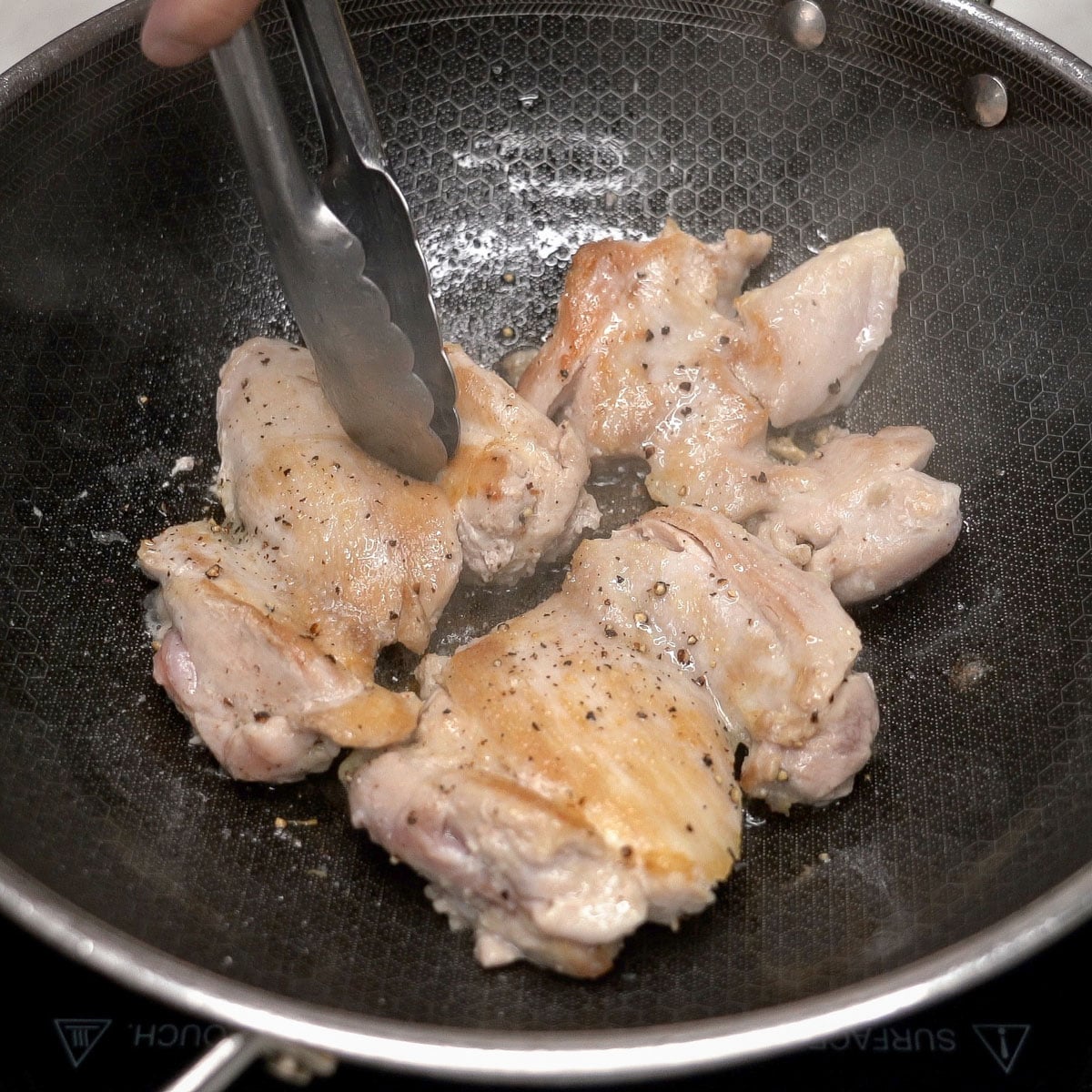
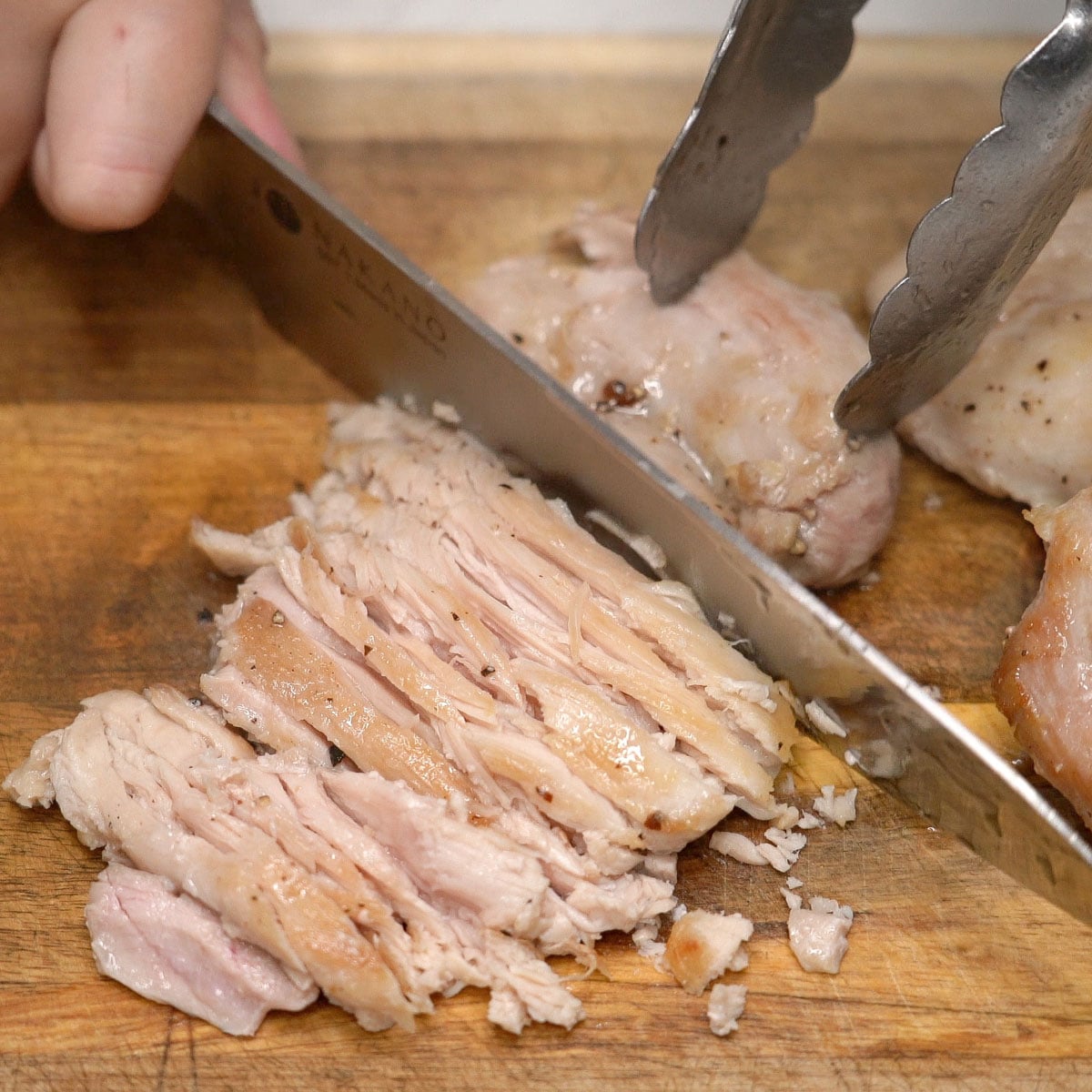
Transfer to a plate, then shred into bite-sized pieces.
Step 4: Cook the Chinese sausage
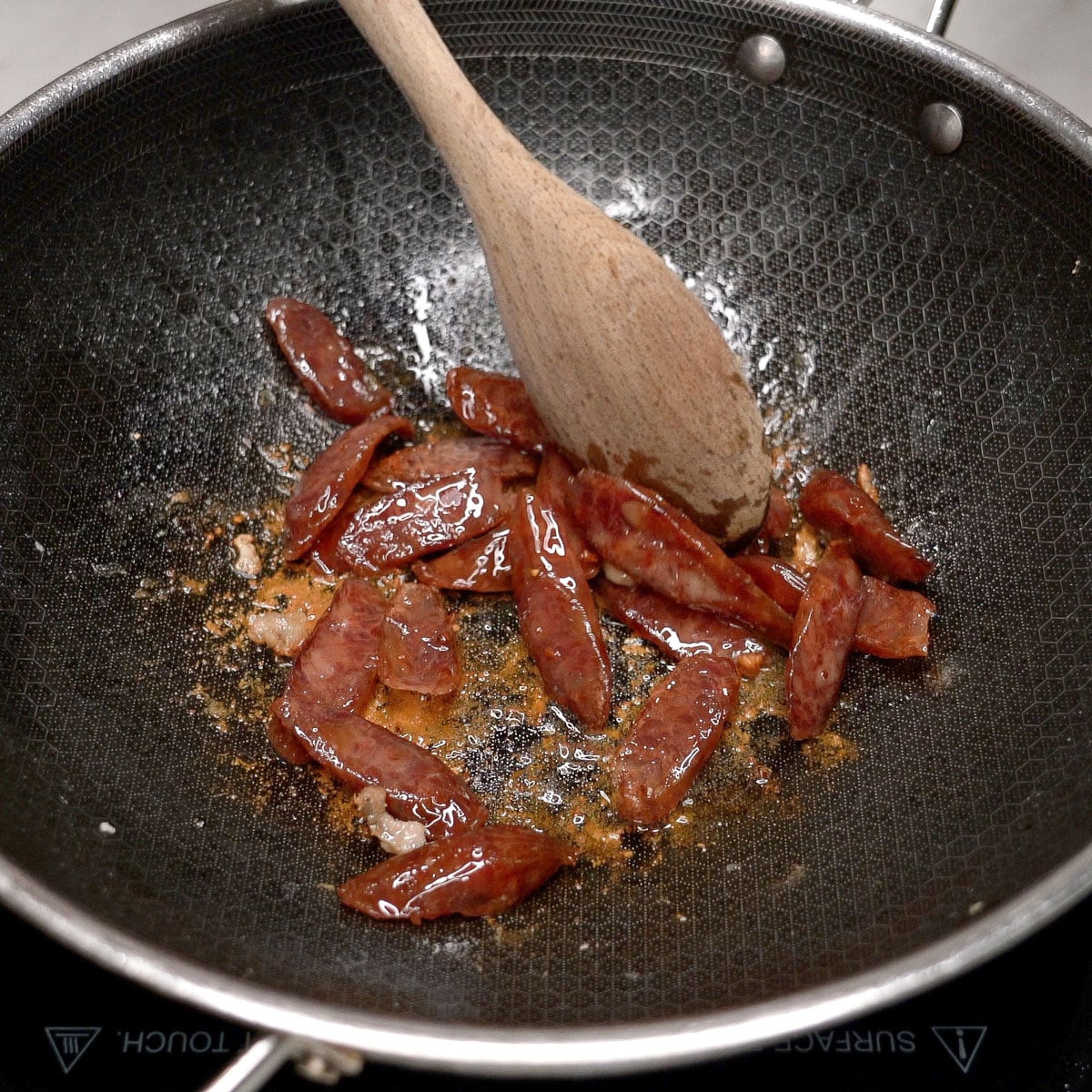
In the same pan, cook 2 Chinese sausages (sliced) over medium heat until lightly browned.
Then, push them to one side of the pan.
Step 5: Sauté the aromatics
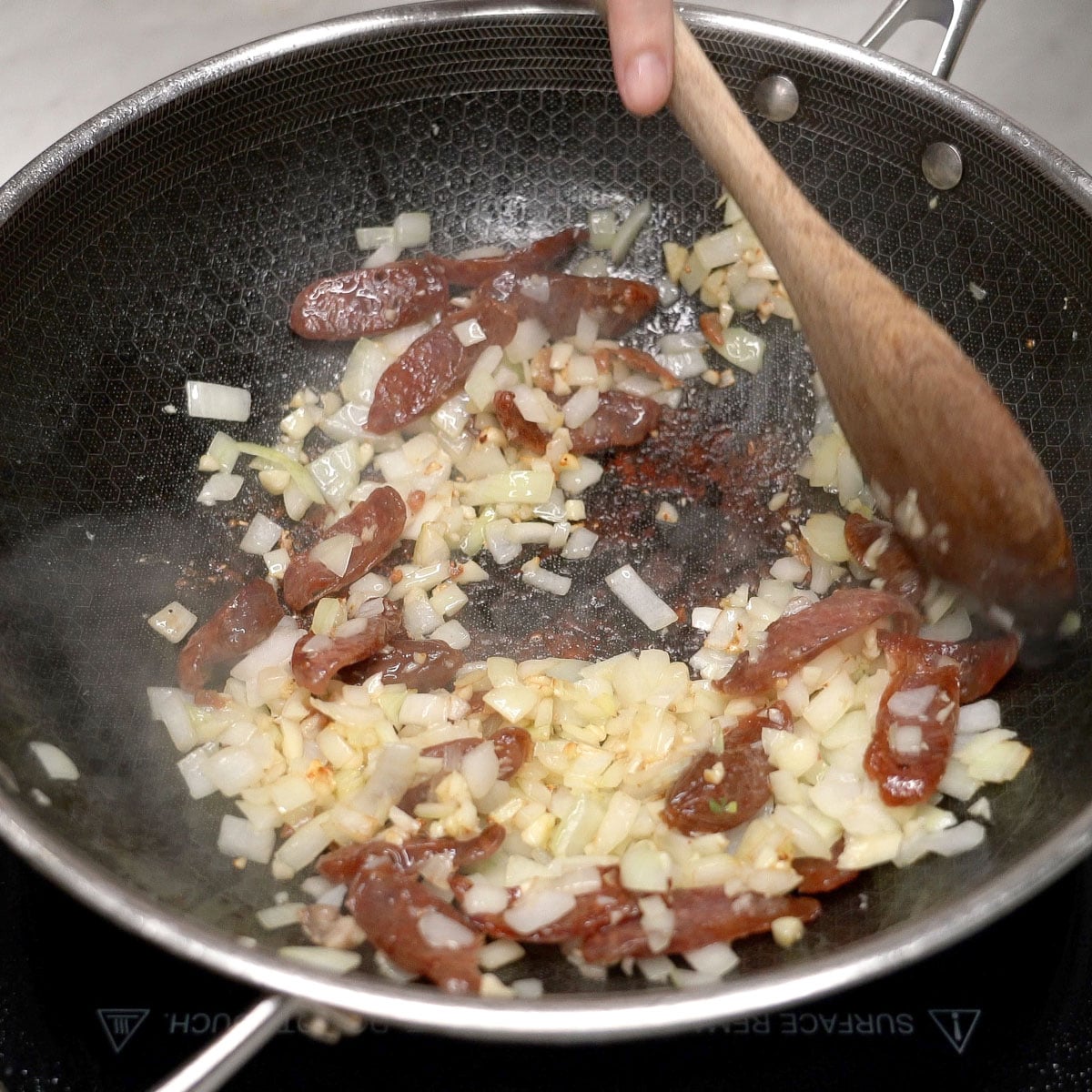
If needed, add a little more oil.
Sauté 6 garlic cloves (minced) and 1 small onion (finely chopped) over medium heat until softened and fragrant.
Step 6: Add the chicken and carrots
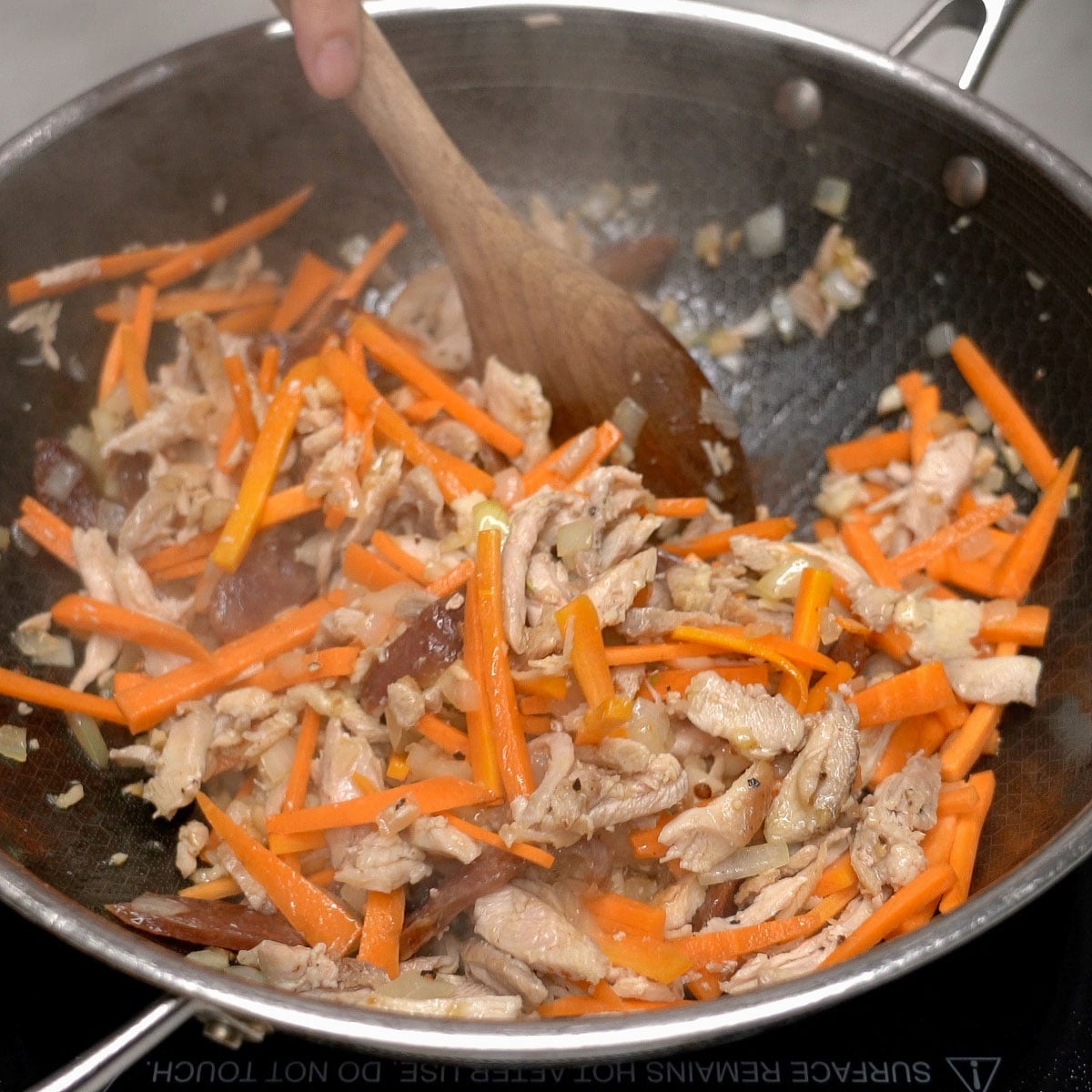
Add the shredded chicken and 1 medium carrot (julienned). Mix them together.
Step 7: Add the sauce and noodles
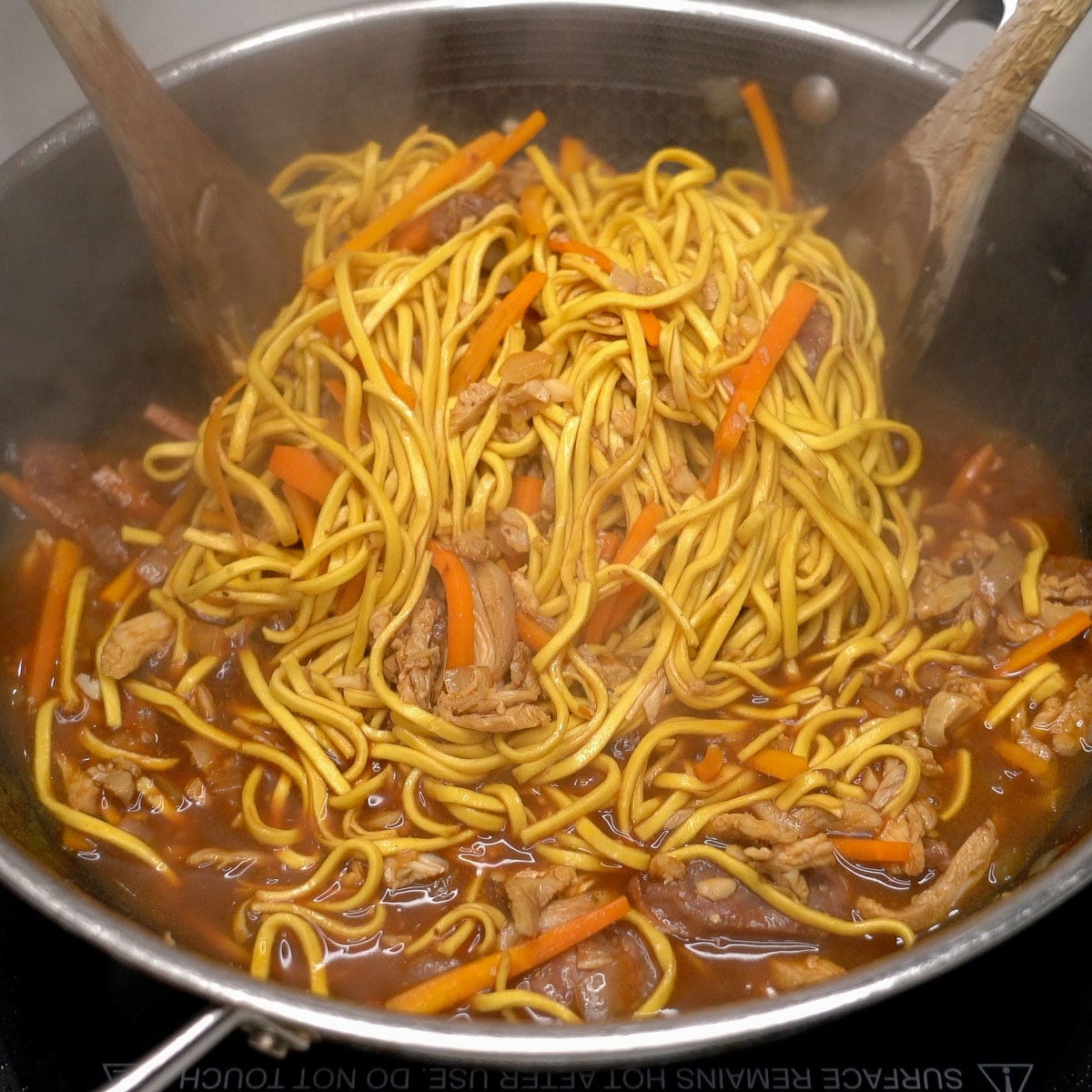
Pour in the sauce and bring to a boil. Taste and adjust as needed; add black pepper if you like.
Add 8 ounces pancit canton noodles and cook just until they start to soften, about 1-2 minutes.
Toss to separate the strands, but don't cook them all the way.
Step 8: Add the sotanghon and cabbage
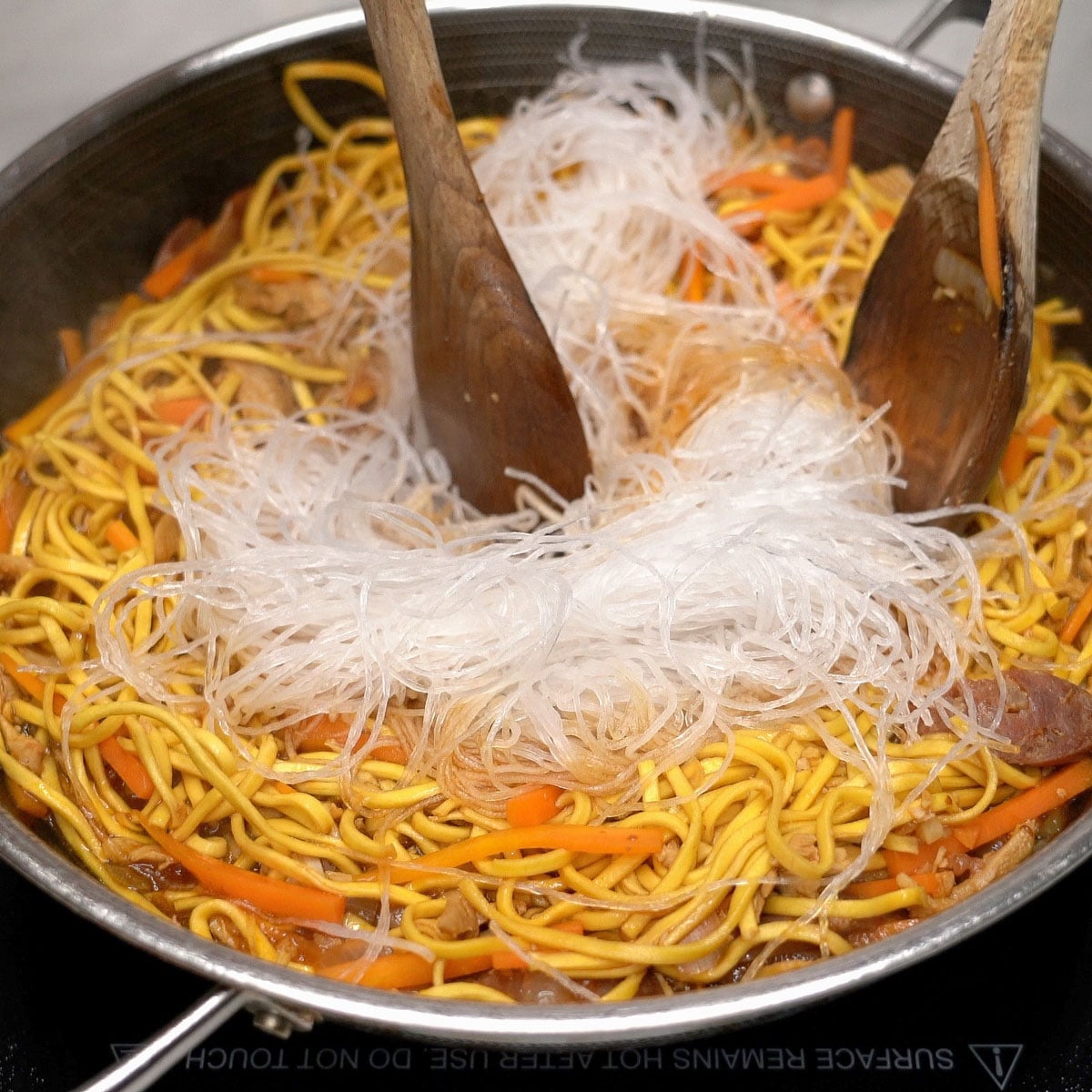
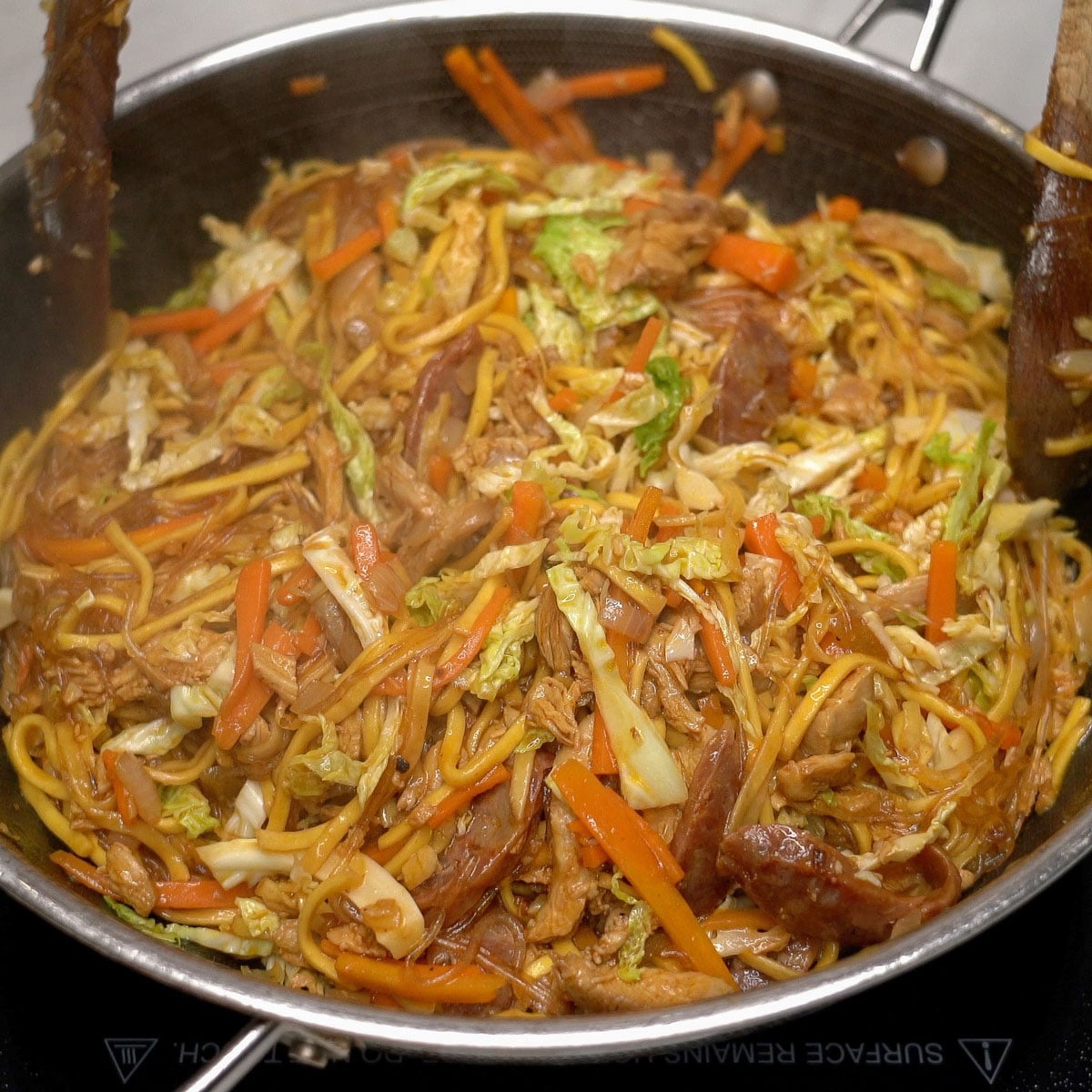
Once the canton is almost tender, add the sotanghon first and toss to separate the noodles.
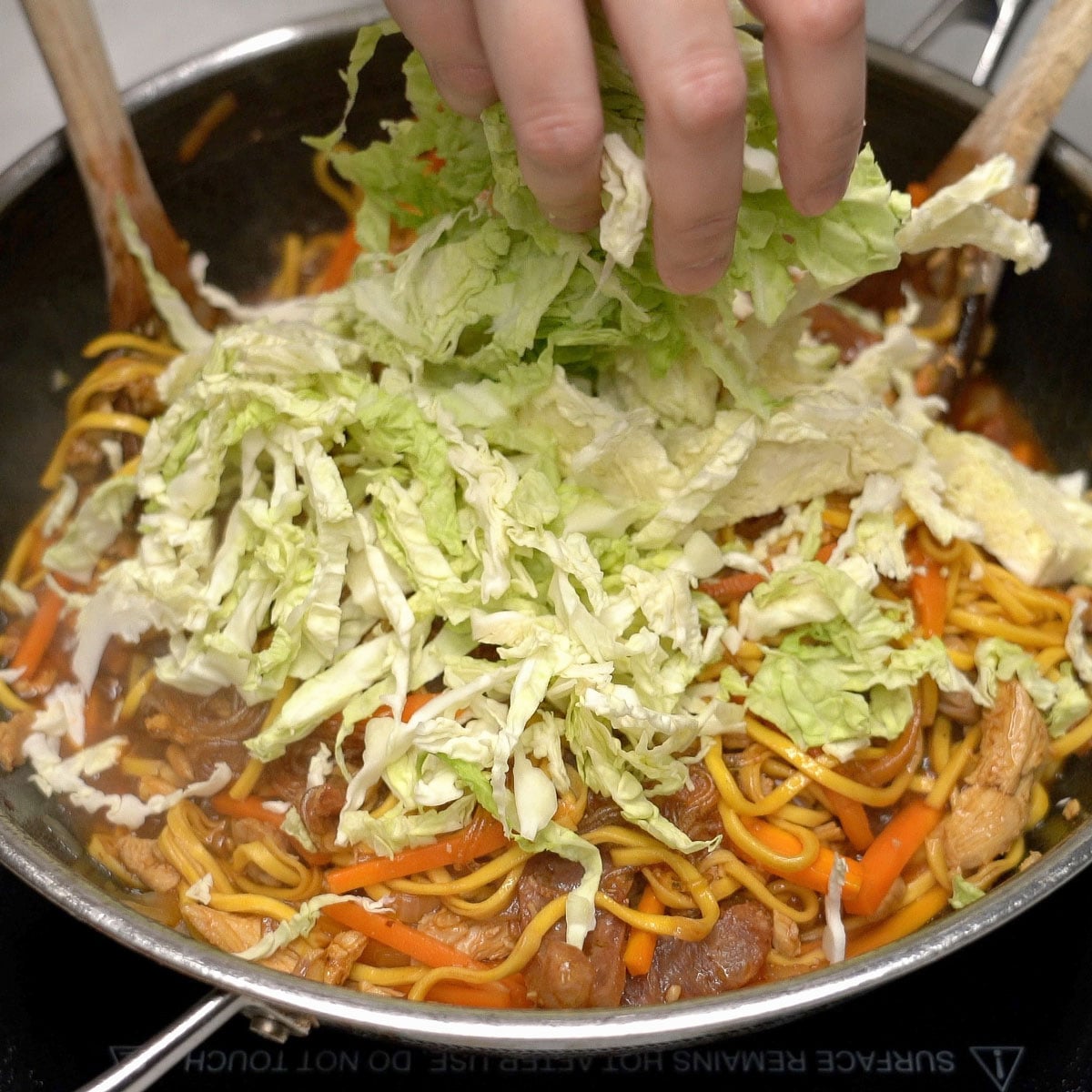
Add the cabbage and toss until the noodles absorb the sauce and the cabbage starts to soften.
If it starts to look dry before the noodles are fully cooked, add a little more hot water as needed.
Step 9: Finish and serve
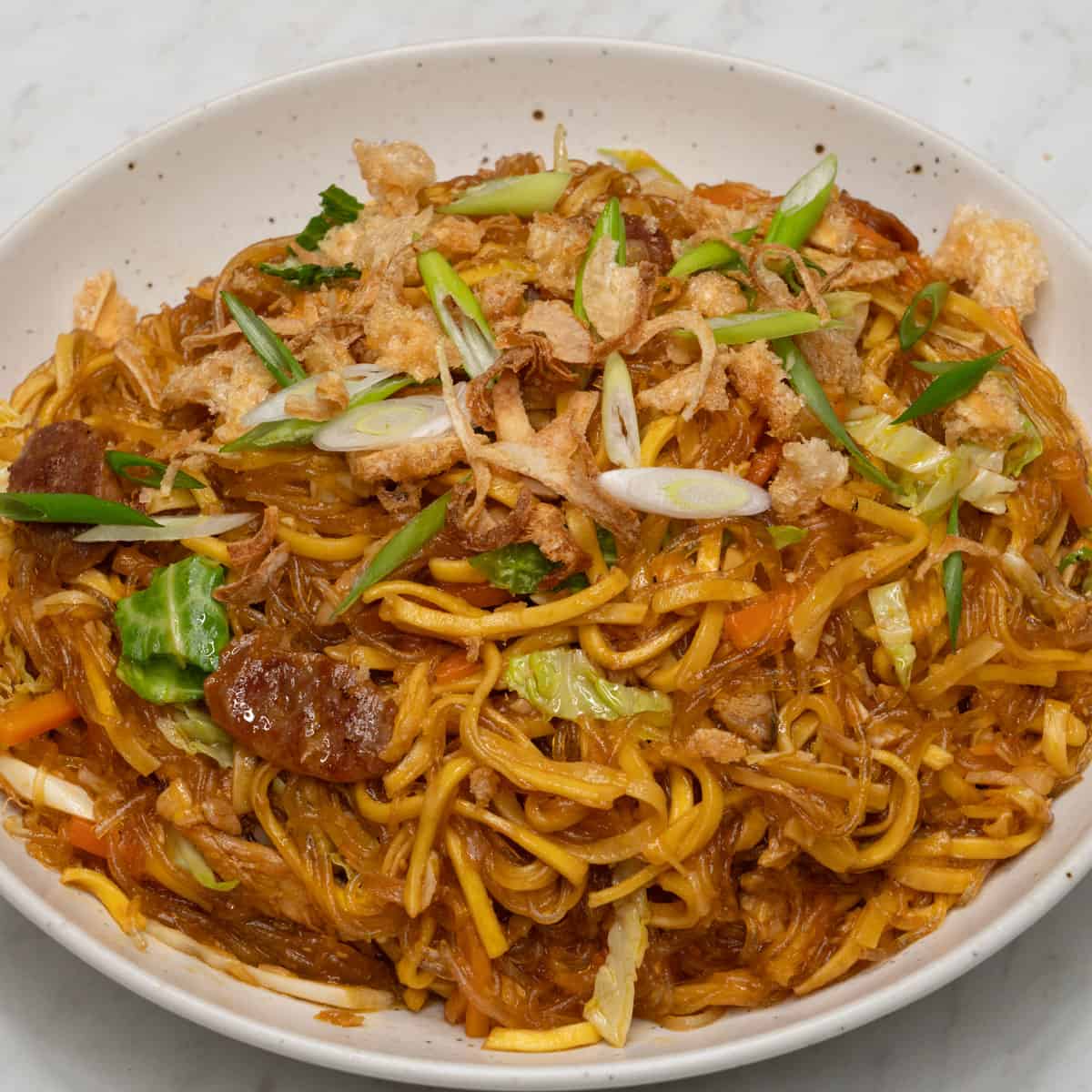
Top with scallions, fried garlic/shallots, and crushed chicharon, if you like.
Serve with calamansi or lemon on the side.
Cooking Tips
- Sear the chicken first. It adds more flavor than just boiling.
- Don't over-soak the sotanghon. It will finish cooking in the pan.
- Add canton first, then sotanghon. This keeps the noodles from getting too soft.
- Keep extra liquid nearby. Add a little at a time if the noodles need more to cook.
- Taste and adjust. Soy sauce and chicken base vary, so adjust as needed.
How to Store and Reheat
- To store: Keep in an airtight container in the fridge for up to 3 days.
- To reheat: Warm in a pan over medium heat with a splash of water or broth to loosen the noodles. You can also microwave until heated through.
What to Serve with Pancit Bam-i
- Lumpia: Crispy fried spring rolls with meat or vegetables.
- Lechon kawali: Deep-fried pork belly with crispy skin and tender meat.
- Filipino BBQ: Grilled pork or chicken skewers with a sweet and savory glaze.
- Chicken inasal: Grilled chicken with a citrus and garlic marinade.
- Tokwa't baboy: Fried tofu and pork in a tangy soy-vinegar sauce.
- Longganisa: Sweet Filipino sausages, usually served pan-fried.
- Fried fish: Simple fried fish, lightly seasoned and crispy.
Recipe FAQs
Pancit bam-i is a Filipino noodle dish made with a mix of pancit canton and sotanghon noodles.
It gives you two textures in one dish - one chewy, the other soft and slippery.
Pancit bam-i is made with pancit canton and sotanghon noodles.
The canton is thicker and chewier, while the sotanghon is thinner and a little more delicate.
Yes. Soak it in warm water until softened but not fully cooked. It will finish cooking in the pan with the sauce.
Do not over-soak the sotanghon, and add it after the canton is almost tender. If needed, add a little more liquid as the noodles finish cooking.
Other Noodle and Pasta Recipes You May Like

Did you make this recipe? I would love to know! Your feedback helps me make better recipes. Please rate, review, or comment below. Questions about this recipe are welcome, too!
Let's connect on Facebook, Instagram, Pinterest, TikTok, Twitter, and Youtube. Be sure to tag me when you try any of my recipes @recipesbynora!
📖 Recipe

Pancit Bam-i Recipe
Equipment
- Large pan or wok
Ingredients
- 8 ounces dry pancit canton noodles
- 5 ounces sotanghon noodles
- 1 pound chicken thighs
- 2 Chinese sausages sliced
- 6 garlic cloves minced
- 1 small onion finely chopped
- 1 medium carrot julienned
- 3 cups cabbage shredded
- 3 cups hot water more as needed
- 2 tablespoons soy sauce (I used dark soy sauce)
- 2 tablespoons oyster sauce
- 2 teaspoons chicken base or bouillon
- 1 teaspoon annatto powder
- Ground black pepper to taste
- Neutral oil as needed
For serving (optional):
- Scallions
- Fried garlic or shallots
- Crushed chicharon
- Calamansi or lemon
Instructions
- Soak the sotanghon in warm water until softened but not fully cooked. Drain and set aside.
- Mix hot water, soy sauce, oyster sauce, chicken base, annatto powder, and black pepper until dissolved.
- Season the chicken with salt and pepper, then sear until lightly browned and cooked through. Transfer to a plate and shred.
- In the same pan, cook the Chinese sausage until lightly browned. Push it to one side of the pan.
- Add the garlic and onion and cook until softened and fragrant.
- Add the shredded chicken and carrots, then toss together.
- Pour in the sauce and bring to a boil. Taste and adjust as needed, then add the pancit canton and toss as it softens.
- Once the canton is almost tender, add the soaked sotanghon and cabbage. Toss until the noodles are cooked and the cabbage is just wilted. Add a little hot water if needed.
- Top with scallions, fried garlic/shallots, and crushed chicharon, if using. Serve with calamansi or lemon on the side.
Notes
- Pancit canton noodles: Dried wheat noodles with a chewy texture. Fresh lo mein also works.
- Sotanghon noodles: Also called glass noodles. Soak first so they don't overcook in the pan.
- Chicken: I used chicken thighs because they stay juicy and flavorful. Chicken breast, leftover cooked chicken, pork, shrimp, or tofu also work.
- Chinese sausage: Optional, but it adds extra flavor.
- Vegetables: I kept it simple with carrots and cabbage, but green beans, snow peas, celery, or bok choy also work.
- Sauce: I used dark soy sauce, oyster sauce, chicken base, and annatto powder. Add more hot water or broth if needed.
- Crushed chicharon: Optional, but great on top for crunch and extra savory flavor.
- Sear the chicken first for more flavor.
- Don't over-soak the sotanghon.
- Add the canton before the sotanghon so the noodles don't get too soft.
- Keep extra liquid nearby and add as needed.
- Taste and adjust as you go.
- To store: Refrigerate in an airtight container for up to 3 days.
- To reheat: Warm in a pan with a splash of water, or microwave until heated through.
Tina says
This loooks very good
Nora Reyes says
Thank you, Tina!