
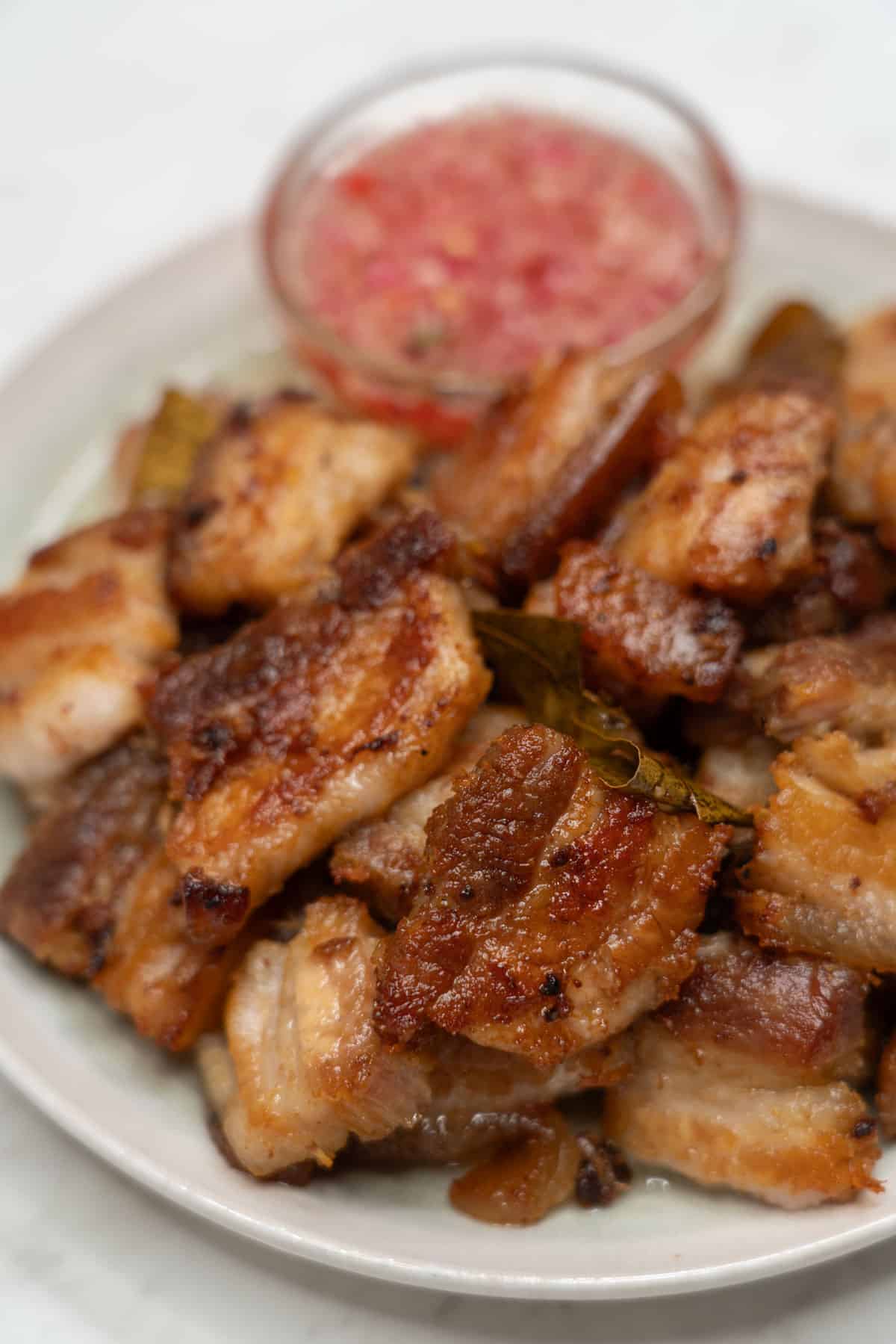
Adobo sa asin is a version of adobo made without soy sauce.
Pork is cooked with garlic, salt, black pepper, and vinegar until it's tender and lightly browned.
It's similar to adobong puti, but less vinegary. The texture is a bit like lechon kawali - just not deep-fried or extra crispy.
This is one of the simplest ways to make adobo using just a few ingredients. No extra sauces - just a simple version that lets the pork shine.
Jump to:
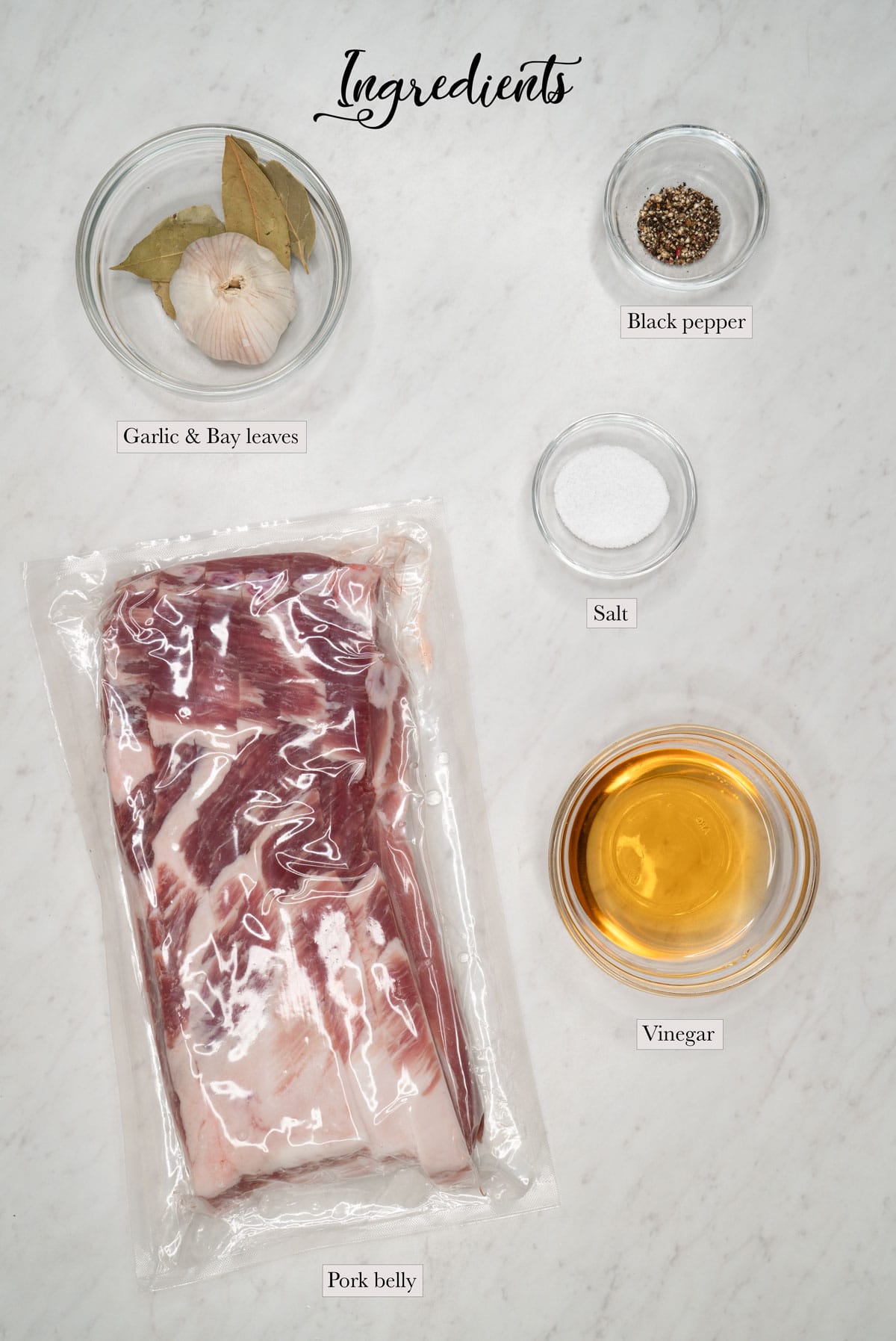
Ingredients You'll Need
Notes and Substitutions
- Pork: You can use pork belly or pork shoulder. Pork belly has more fat, which makes the meat softer and juicier after cooking. Pork shoulder is leaner but still works well.
- Salt: Start with 1 teaspoon kosher salt (use about ½ teaspoon if using fine salt), then taste and add more if needed. It's easier to add salt than fix salty adobo.
- Vinegar: Cane or coconut vinegar works best, but white vinegar is fine too.
- Garlic: Don't be shy here - adobo sa asin is meant to be garlicky.
How to Make Adobo sa Asin (Step-by-Step)
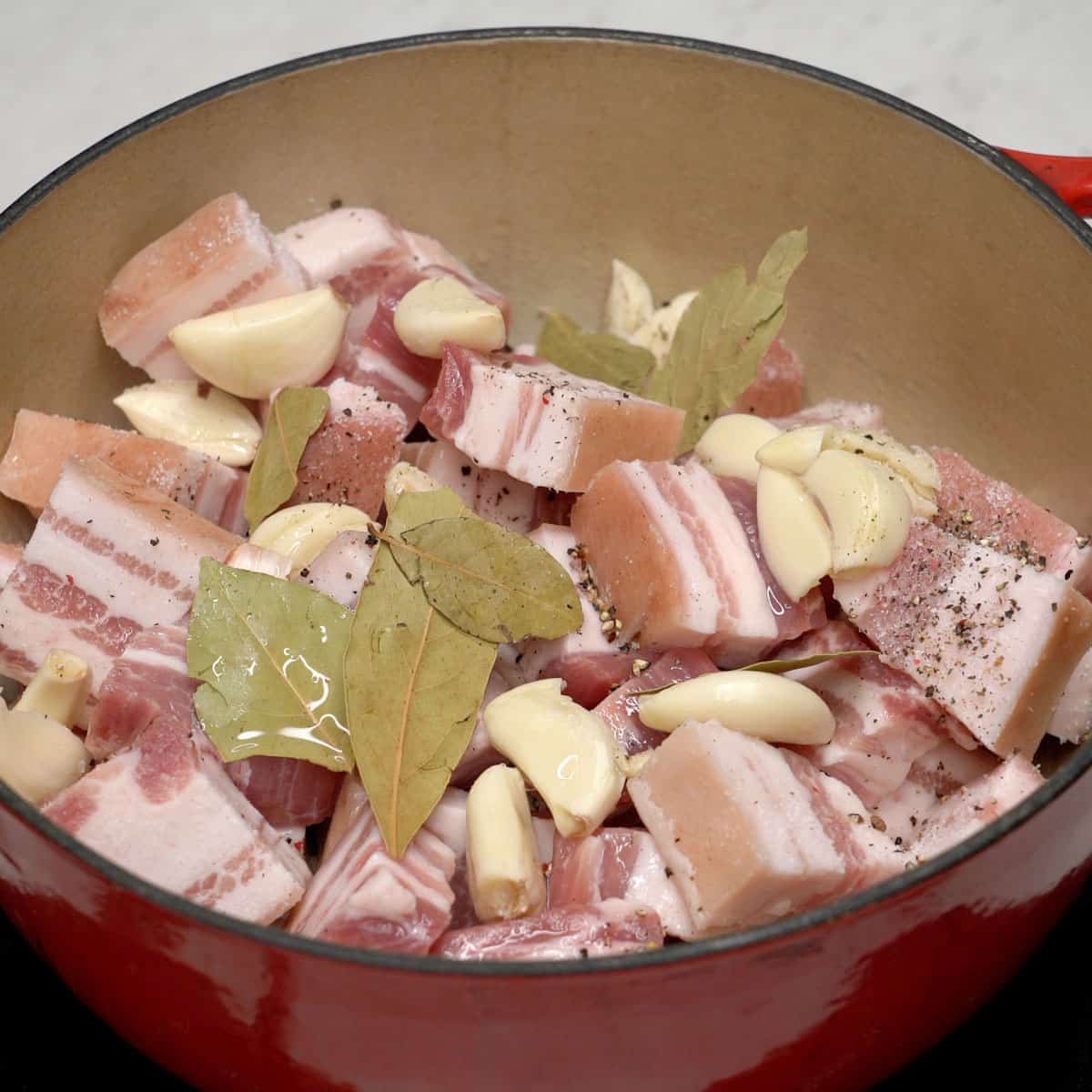
Step 1: Combine everything
In a large, heavy-bottomed pot, add:
- 3 pounds of pork belly (cut into large chunks)
- 1 head garlic (smashed); more if you like
- 3 bay leaves
- 1 teaspoon kosher salt (use about half for fine salt)
- Black pepper (whole or cracked); to taste
- ½ cup vinegar
- ½ cup water
Step 2: Cook until tender
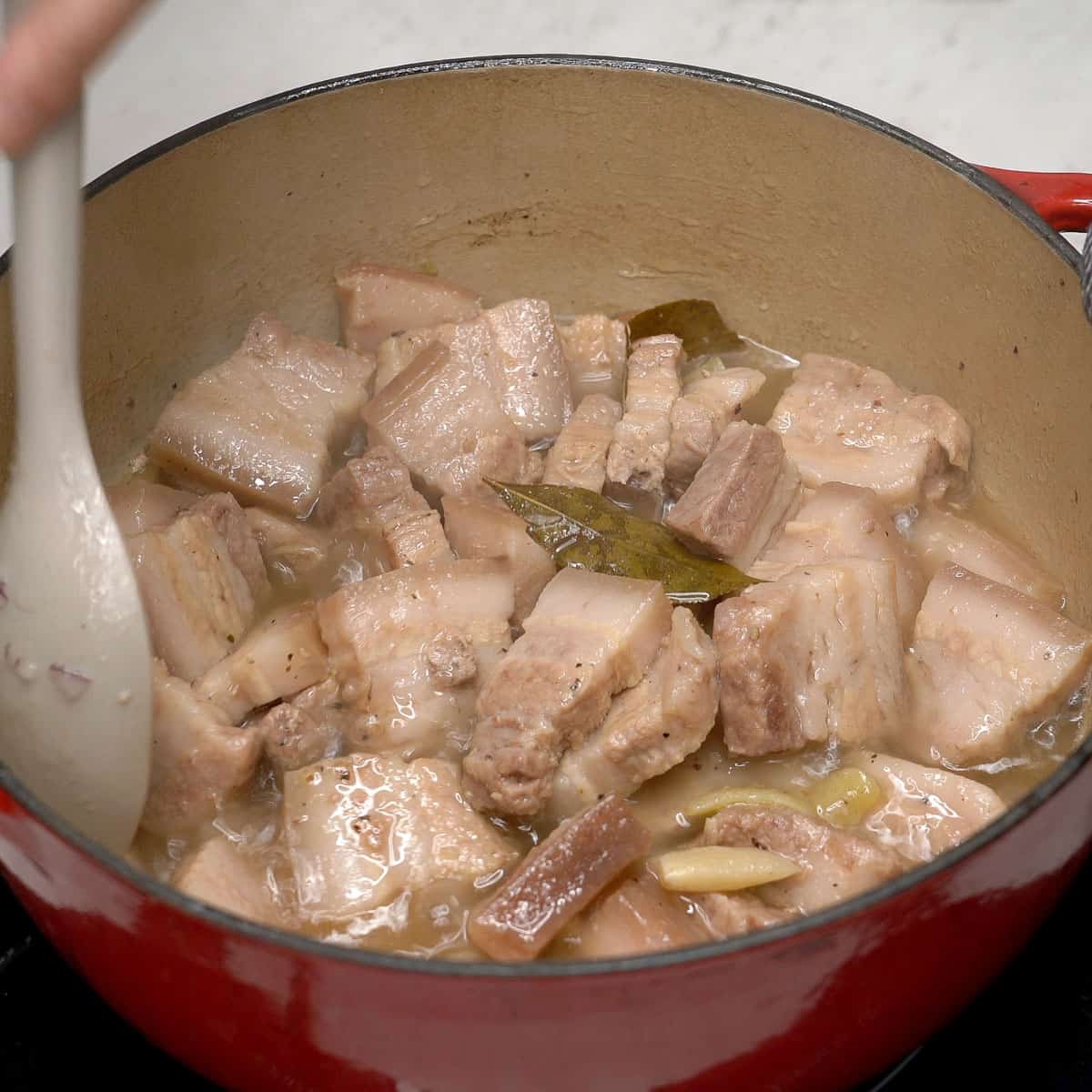
Cover and bring to a boil over medium-high heat. Lower the heat and simmer for 30-40 minutes, or until the pork is tender.
Stir once or twice so the pork cooks evenly and doesn't stick to the bottom.
If you want very soft pork, keep the pot covered so the liquid stays in.
If you want firmer meat, uncover sooner and let the liquid cook off faster.
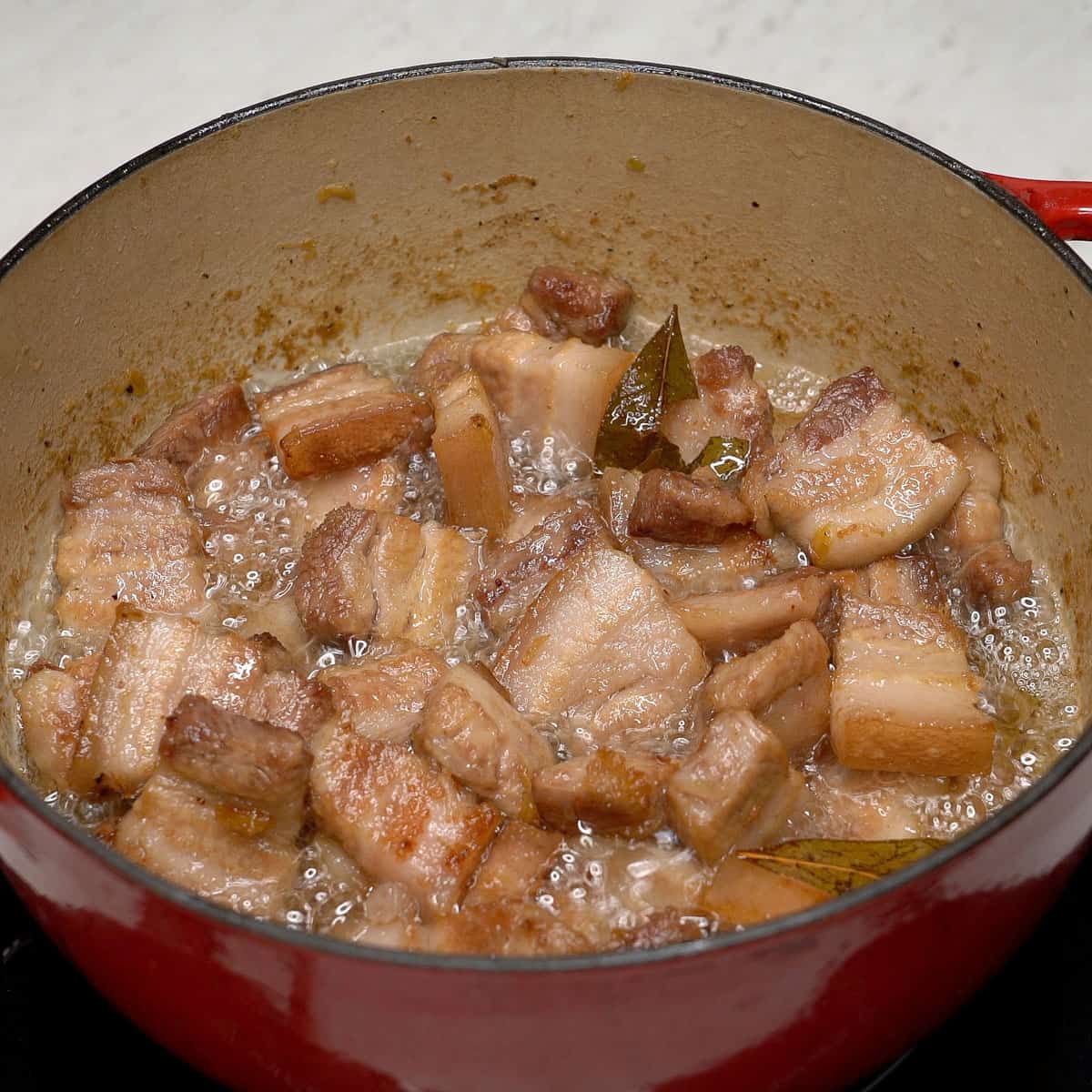
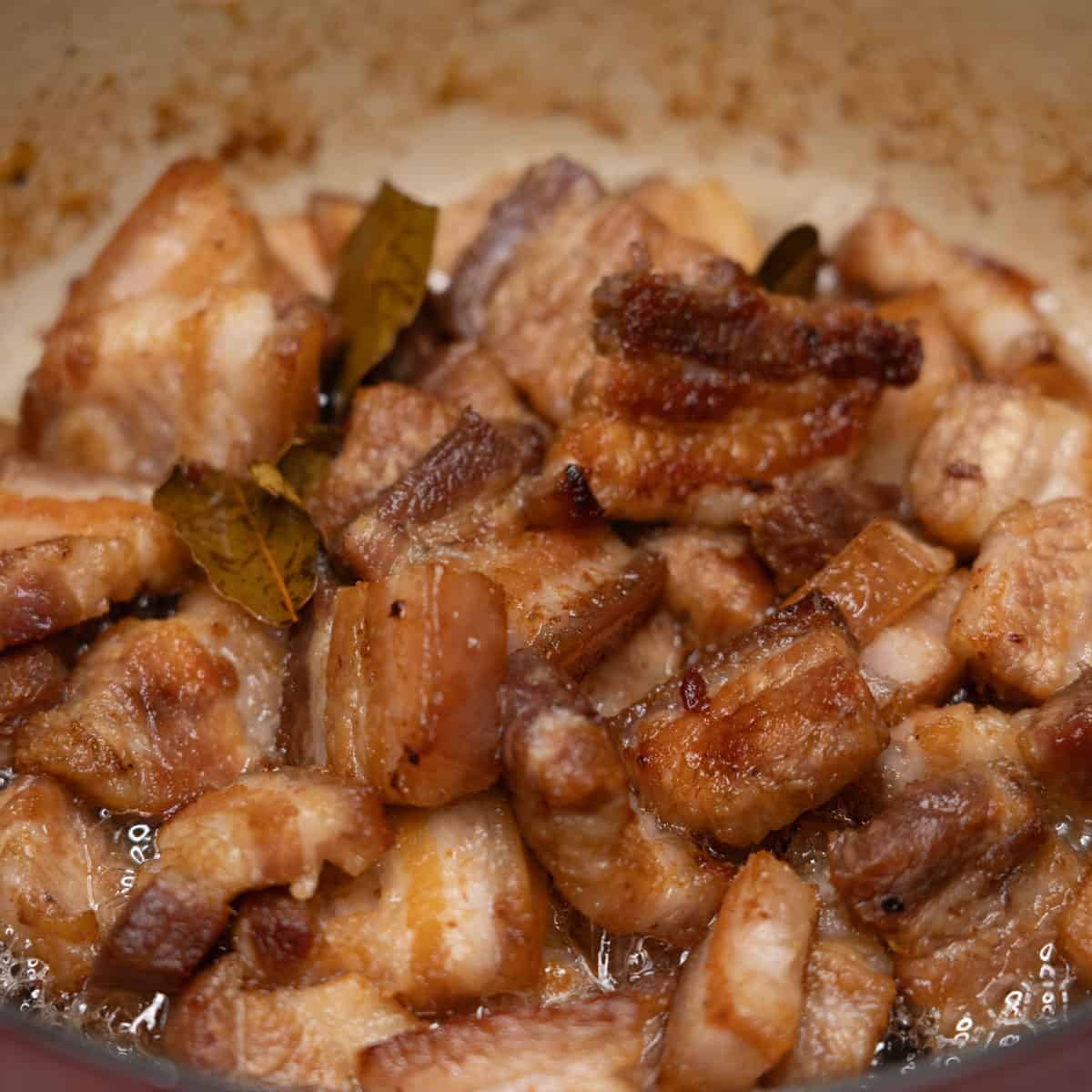
Step 3: Let it dry and brown
Remove the lid and cook over medium heat until most of the liquid is gone.
The pork will release fat, so it will look oily. Keep stirring until lightly browned on the edges.
Step 4: Taste and adjust
Taste the pork and add more salt if needed. Then, turn off the heat.
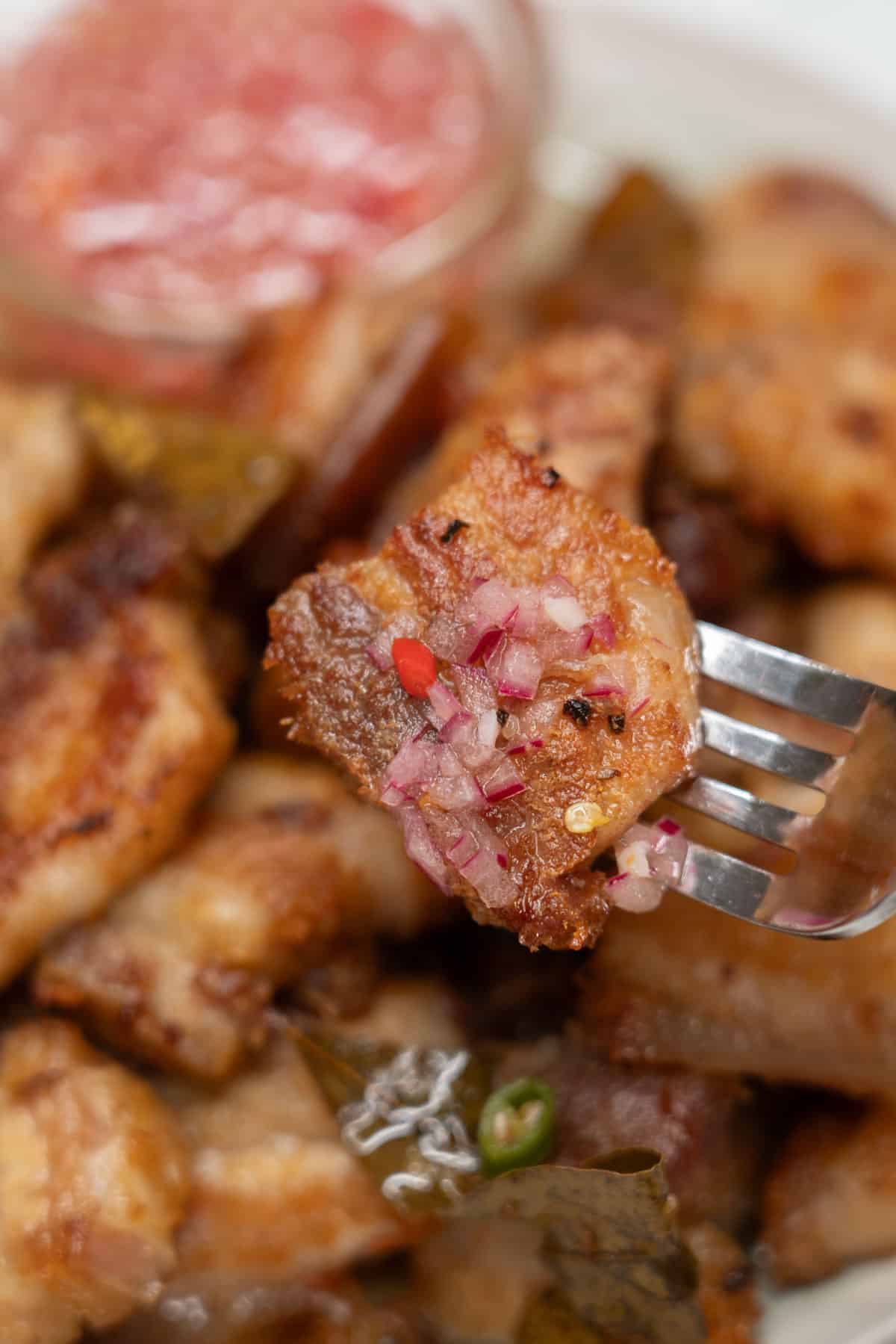
Serve your adobo sa asin with a vinegar dipping sauce or ketchup for the kids.
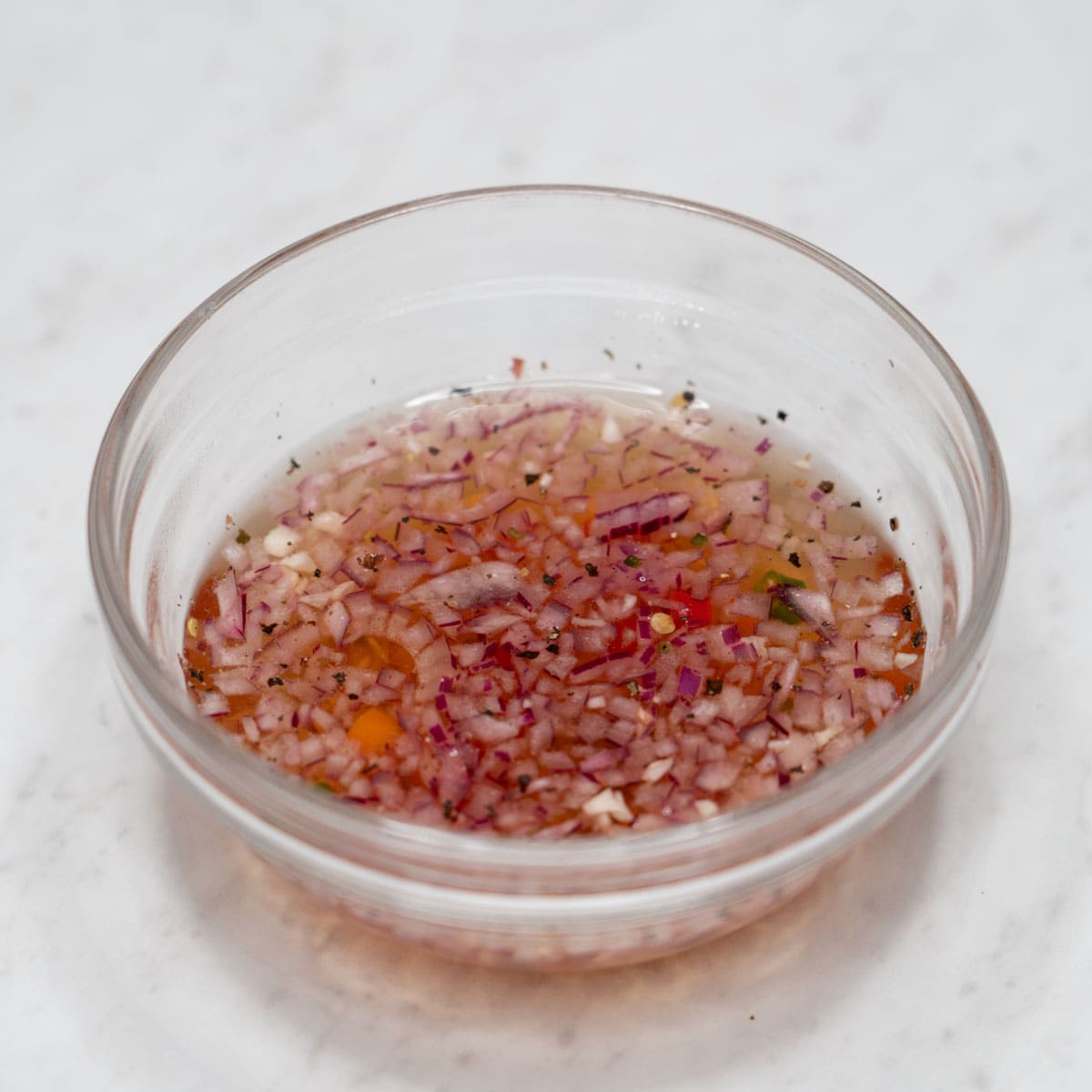
Optional Vinegar Dipping Sauce (Sawsawan)
Adobo sa asin is usually served with a simple vinegar dipping sauce on the side. Mix together:
- Vinegar
- Minced red onion or shallots
- Minced garlic
- Salt and black pepper, to taste
- A pinch of sugar
- Sliced chilies (optional)
Taste and adjust.
How to Store
- Refrigerate: Store in an airtight container for up to 3-5 days.
- Reheat: Warm in a pan over medium heat. Add a small amount of water if needed. Leftovers are great chopped up and used for fried rice.
Cooking Tips
- Cut the pork into larger pieces - they'll shrink as they cook.
- Let the vinegar come to a boil before stirring to mellow the sharp taste.
- Cook uncovered so the pork browns in its own fat, until it's as browned as you like.
- Start with less salt, then taste and add more as needed.
- For more garlic flavor, add a bit more near the end.
Recipe FAQs
Adobo sa asin is a soy sauce-free version of adobo.
Pork is cooked with garlic, salt, black pepper, and vinegar, then browned in its own fat.
It's garlicky, savory, and lighter than regular adobo. Also called adobong bisaya.
They're similar, but not the same. Both are made without soy sauce.
Adobong puti leans more on vinegar, so it tastes more tangy.
Adobo sa asin uses salt as the main seasoning, so it's less vinegary and more focused on garlic and pork flavor.
It shouldn't be. Start with a small amount of salt, then taste and add more if needed.
You want enough to bring out the pork flavor, not overpower it.
What to Serve With Adobo sa Asin
- Sinangag: Fried rice with lots of garlic.
- Java rice: Yellow rice made with turmeric and annatto.
- Atchara: Sweet and sour pickled green papaya.
- Stir-fried kangkong: Water spinach cooked quickly with garlic and salt.
- Ensaladang talong: Grilled eggplant salad with tomatoes and onions.
- Ensaladang pipino: Cucumber salad with vinegar and onions.
- Ensaladang kamatis: Tomatoes and onions with a light dressing.
Adobo Recipes You May Like

Did you make this recipe? I would love to know! Your feedback helps me make better recipes. Please rate, review, or comment below. Questions about this recipe are welcome, too!
Let's connect on Facebook, Instagram, Pinterest, TikTok, Twitter, and Youtube. Be sure to tag me when you try any of my recipes @recipesbynora!
📖 Recipe

Adobo sa Asin (Filipino Salt Adobo)
Equipment
- Large heavy-bottomed pot
Ingredients
- 3 pounds pork belly cut into large chunks
- 1 head garlic smashed
- 3 bay leaves
- 1 teaspoon kosher salt (use half for fine salt) more to taste
- Black pepper ground or cracked; to taste
- ½ cup vinegar
- ½ cup water
Instructions
- Combine pork, garlic, bay leaves, salt, pepper, vinegar, and water in a pot.
- Cover and bring to a boil. Lower the heat and simmer 30-45 minutes, until pork is tender. Stir once or twice.
- Remove lid and keep cooking until liquid is almost gone. Keep stirring until lightly browned.
- Taste and add more salt if needed. Turn off the heat.
Notes
- Pork: Belly or shoulder both work. Belly is fattier and juicier.
- Salt: Start small. Add more at the end if needed.
- Vinegar: Cane or coconut is best, white works too.
- Garlic: Use plenty - this dish is meant to be garlicky.
- Cut pork into larger pieces - they shrink as they cook.
- Let vinegar boil before stirring to mellow the flavor.
- Cook uncovered so the pork browns in its own fat.
- Start with less salt, then adjust to taste.
- Add more garlic at the end for stronger flavor.

Ryan says
I love these! So easy to make too.
Nora Reyes says
Yes, so easy! Thanks, Ryan!