
Adobo too salty? Don't panic. It's a common problem, especially with saltier soy sauce brands or when the sauce reduces too much.
The good news is you don't have to throw it out. Here are simple, proven ways to fix salty adobo using ingredients you probably already have.

Jump to:
Quick Ways to Fix Salty Adobo
- Add water
- Add potatoes or chayote
- Add some sugar or honey
- Serve with extra rice
- Optional: coconut milk (for adobo sa gata)
Add Water
The easiest fix is to add water. Start with about ½ cup, then let the adobo simmer for a few minutes. This helps tone down the salt without changing the flavor too much.
Have you tried adobo sa gata? You can also add a little coconut milk to reduce the saltiness, but water is still the safest fix.
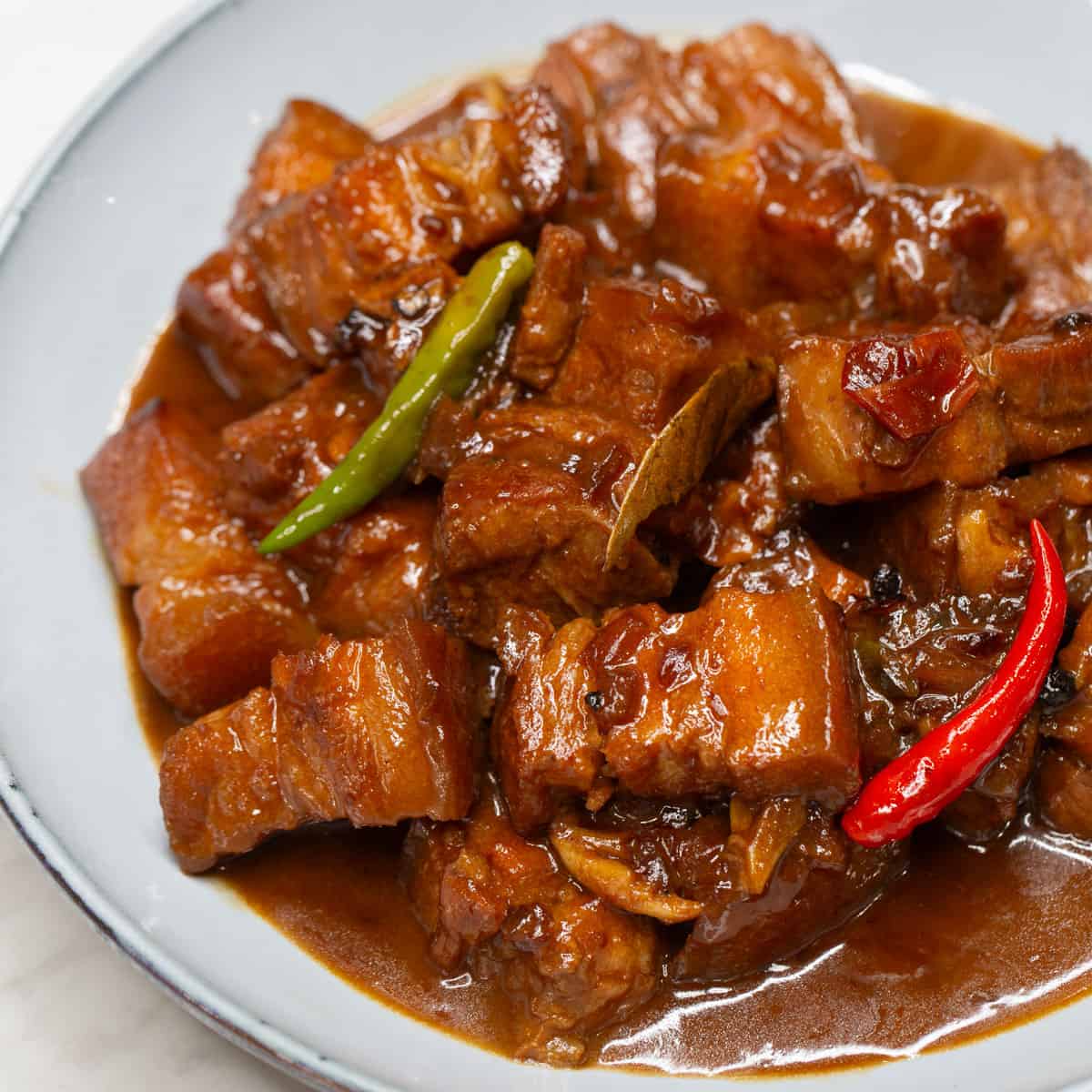
It's okay if the sauce ends up a little more saucy. If you don't mind extra sauce, you can always use the leftovers for adobo fried rice.
Add Potatoes (or Chayote)
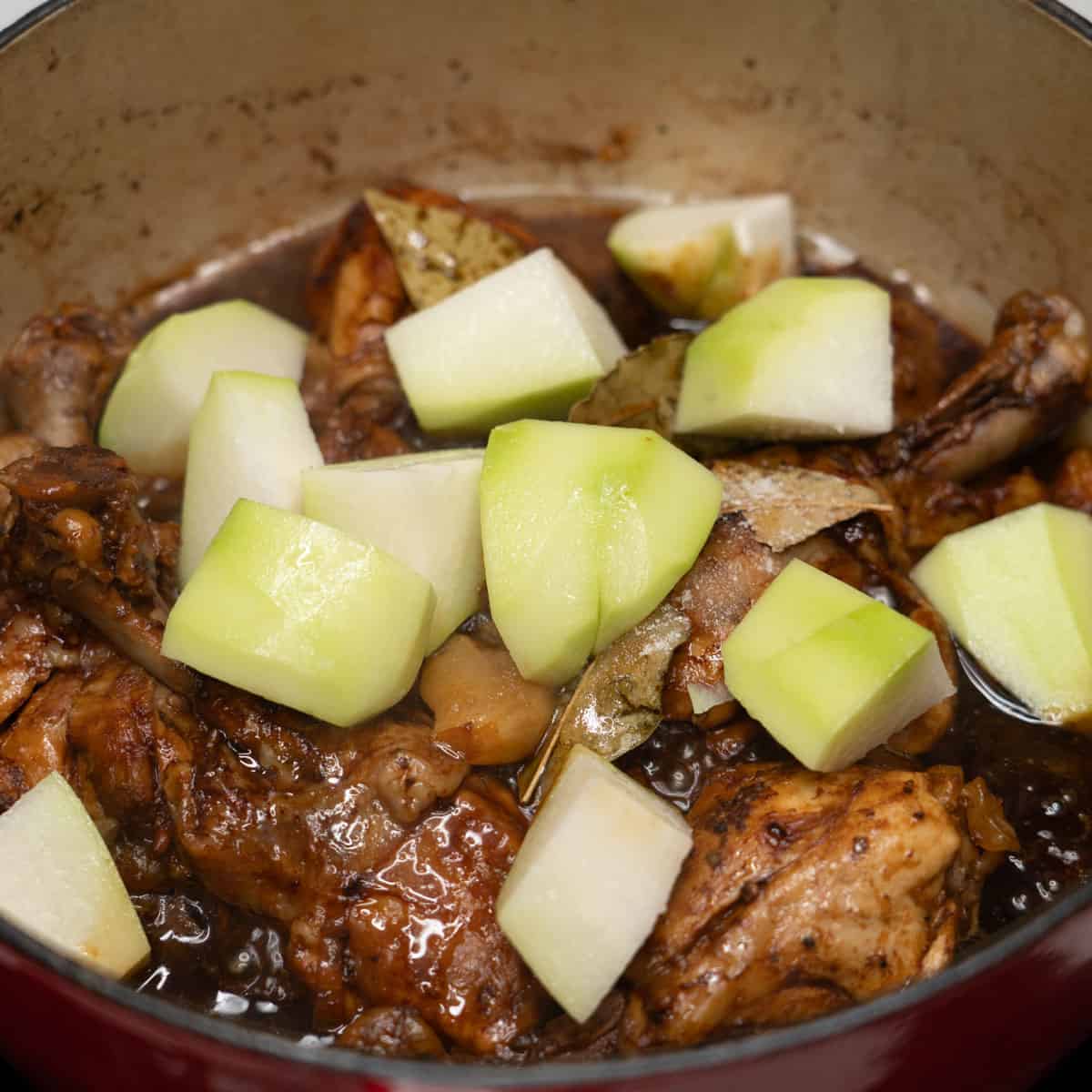
In many Filipino homes, adding potatoes is a common way to fix salty adobo. And it's not just for adobo, but for other dishes too.
As they cook, potatoes absorb some of the sauce, which can help with saltiness. They also make the dish more filling.

Chayote works too. It has a mild flavor and absorbs some of the sauce, which can help a little with saltiness.
It won't absorb as much as potatoes, but it still helps and adds more vegetables.
Add a Little More Sweetness
Add a little more sugar. Adobo usually has some already, but a small amount can help balance the saltiness without making it sweet.

About Vinegar
Vinegar won't fix saltiness on its own. Add water first, then use a little vinegar to balance the flavor.
Serve With More Rice
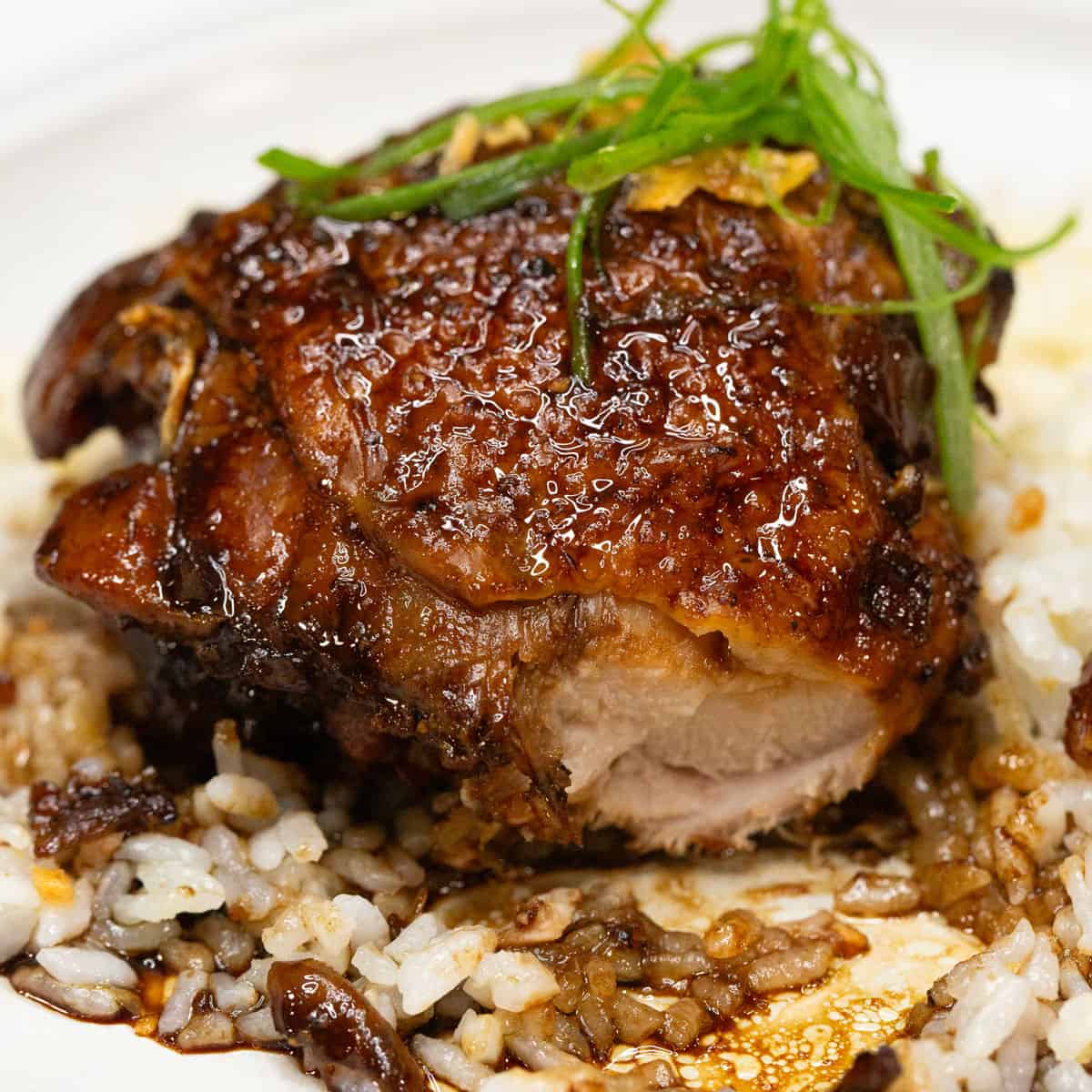
This doesn't fix the sauce, but extra plain rice makes it easier to enjoy.
Why Adobo Becomes Too Salty
Adobo usually turns out too salty for a few very common reasons:
- Using too much soy sauce
- Using a saltier soy sauce (like Silver Swan, Datu Puti, or Marca Piña)
- Using soy sauce without measuring
- Adding extra salt (or fish sauce) on top of soy sauce
- Letting the sauce cook down too long
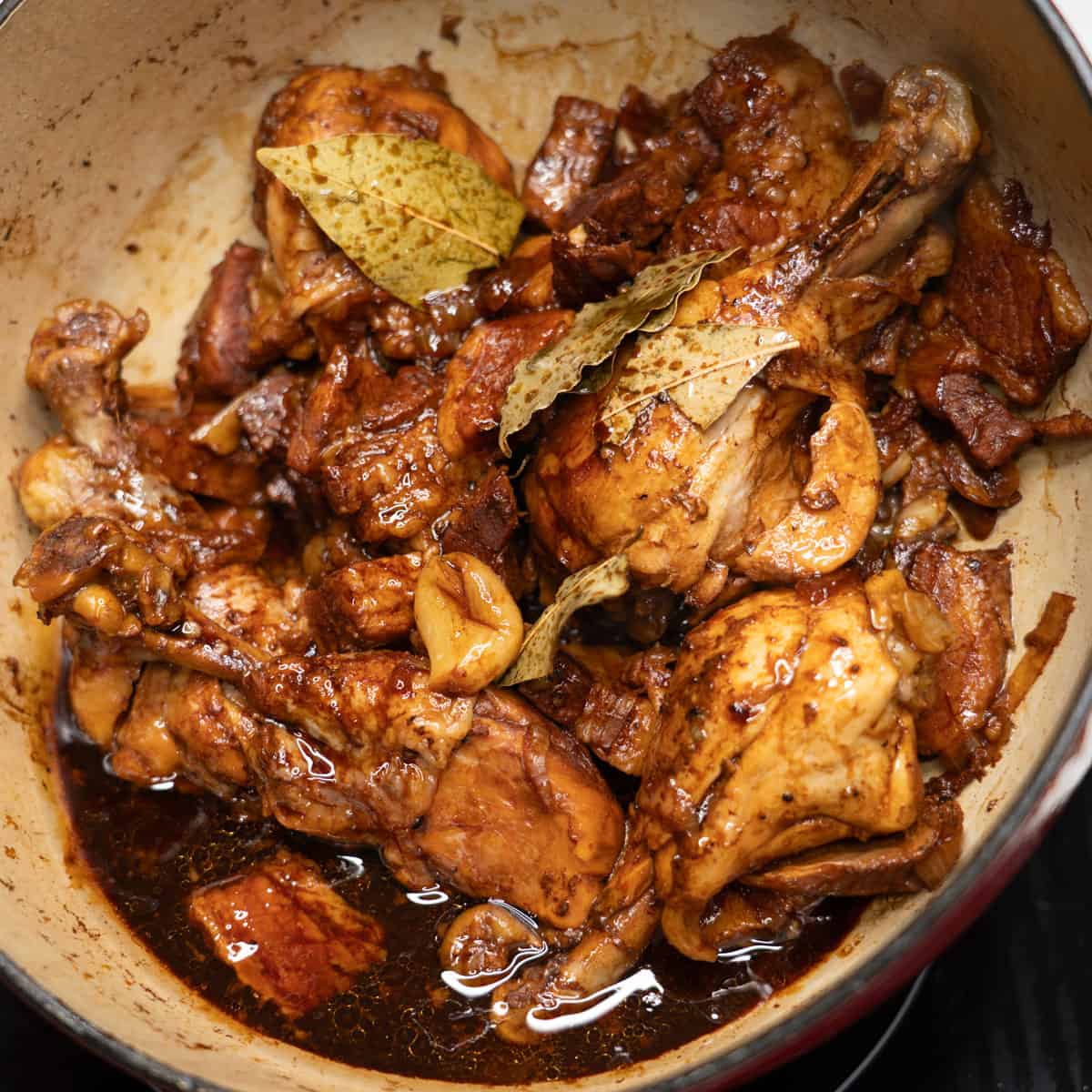
When the liquid reduces, all that salt gets concentrated. So it might taste okay early on, then turn salty toward the end.
How to Avoid Making Adobo Too Salty
For your next batch, these small changes make a big difference:
- Start with less soy sauce. Soy sauce brands have different salt levels. It's always easier to add more later than to fix a salty pot.
- Don't salt the meat at the start. Seasoning meat first works for a lot of recipes, but it's usually not needed for adobo - especially if the pieces aren't very big.
- Taste after it simmers, not before. Adobo changes as it cooks. What tastes okay early on can get salty once the sauce cooks down.
- Watch how much the sauce reduces. The more it reduces, the saltier it gets. Keep an eye on it and add a little water if needed.
Adobo is very forgiving. It's better to use less seasoning at the start, then add more at the end if needed.
FAQs
No. Vinegar doesn't remove salt. It can help balance flavor, but only after the sauce has been diluted.
Yes. You can still add water, potatoes, or chayote and reheat to reduce saltiness.
As adobo sits, the meat keeps soaking up the sauce. At the same time, the sauce gets a little thicker, which makes the salt taste stronger.
Yes. Potatoes, chayote, or extra rice can help. But water is still the fastest fix.
Regular soy sauce works well for adobo.
Different brands have different salt levels, so it helps to start with less and add more as you cook.
Common brands are Silver Swan, Datu Puti, Marca Piña, and Kikkoman. It helps to know how salty your soy sauce is.
I also like adding a little dark soy sauce for color. It's thicker and slightly sweet, so a small amount goes a long way.
Looking for an Easy Adobo Recipe?
If you want an adobo recipe that's easy to follow, try one of these:
- Chicken adobo: Made with chicken thighs and legs that stay juicy.
- Pork adobo: Made with pork belly, pork shoulder, or pork ribs.
- Adobong puti: A soy sauce-free adobo that's garlicky and savory.
- Adobong pusit: Squid adobo, sometimes cooked with coconut milk.
- Adobong sitaw: Yardlong beans cooked adobo-style.
- Adobong kangkong: A quick water spinach adobo.
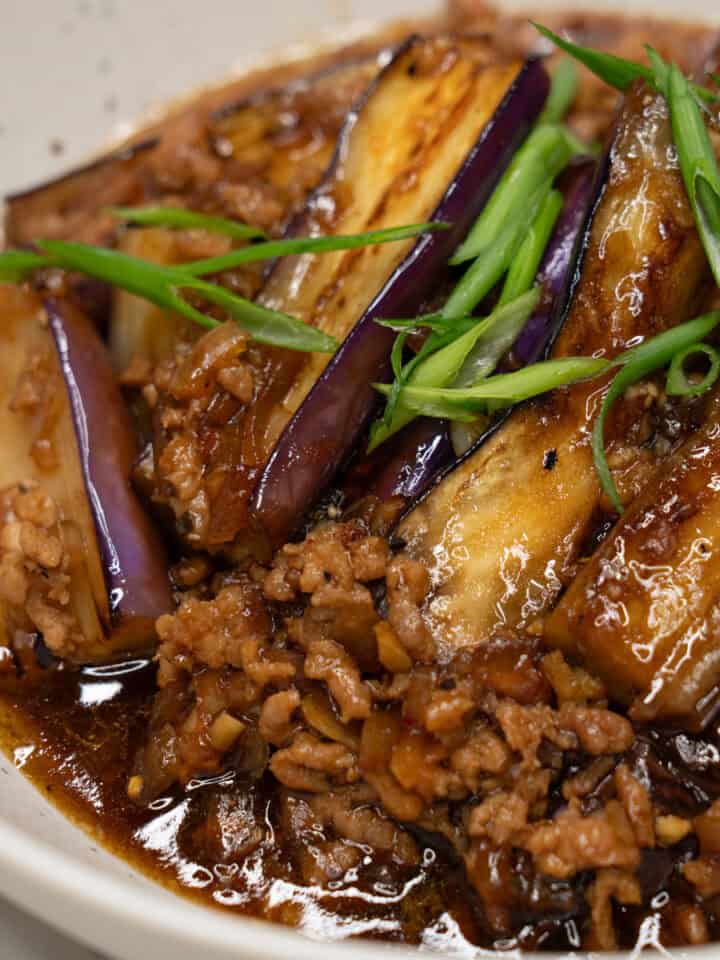
- Adobong talong: Eggplant cooked in adobo sauce, sometimes with pork.
- Tofu and mushroom adobo: A plant-based version with tofu and mushrooms.
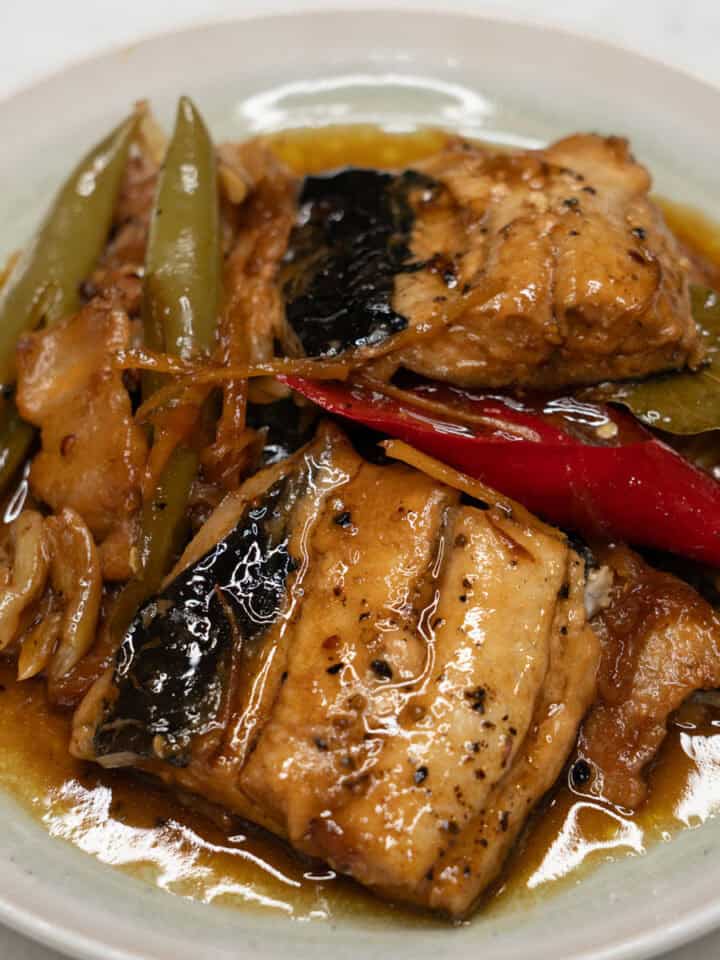
- Adobong bangus: A lighter version made with milkfish.
Cooking Basics You May Like



Did you like this post? I would love to know! Your feedback helps me make better recipes. Please rate, review, or comment below. Questions about this recipe are welcome, too!
Let's connect on Facebook, Instagram, Pinterest, TikTok, Twitter, and Youtube. Be sure to tag me when you try any of my recipes @recipesbynora!


Auggie says
What a helpful post. Thank you Nora.
Nora Reyes says
I am so glad! Thanks, Auggie!
Nora Reyes says
Thank you so much, Sophia!