
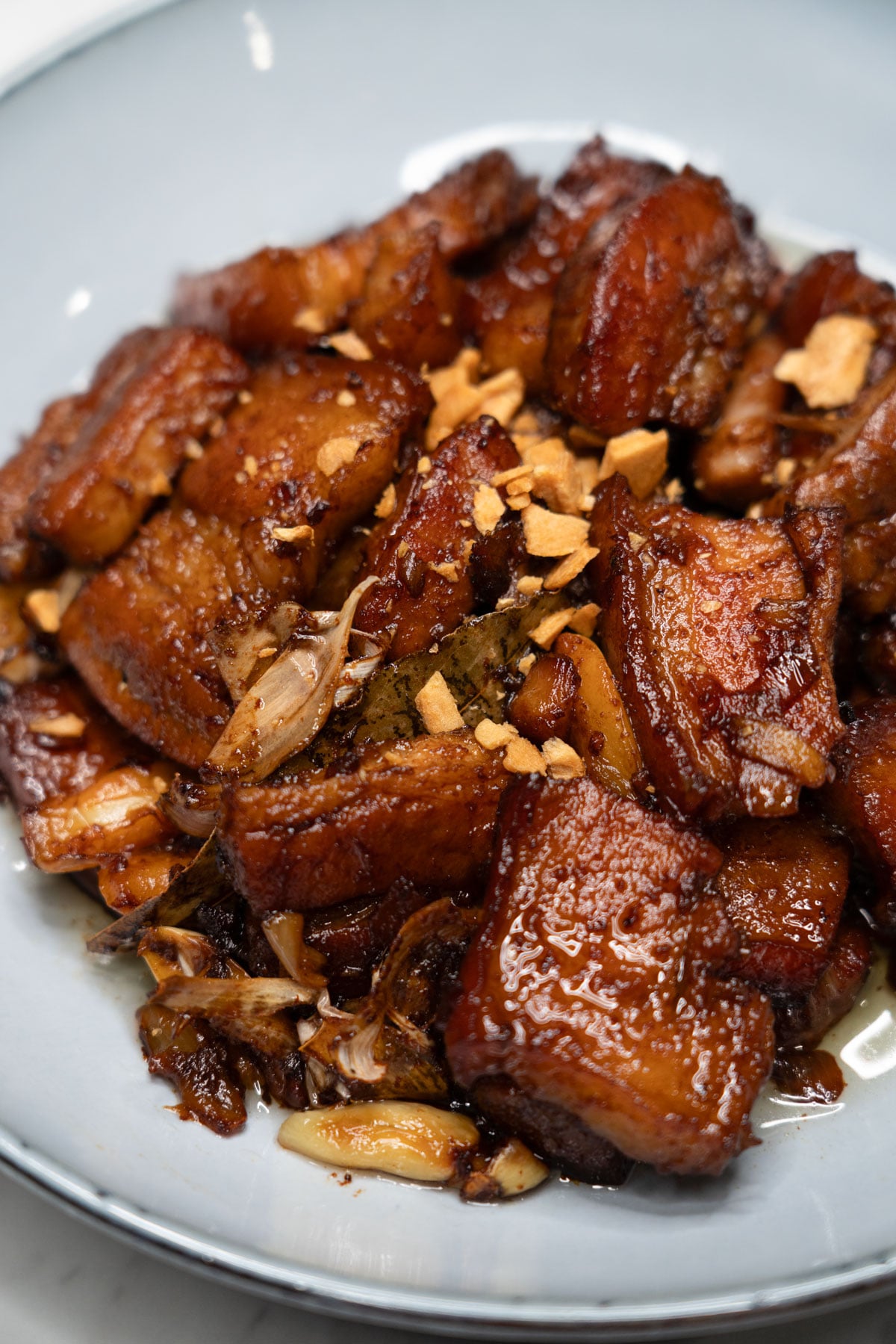
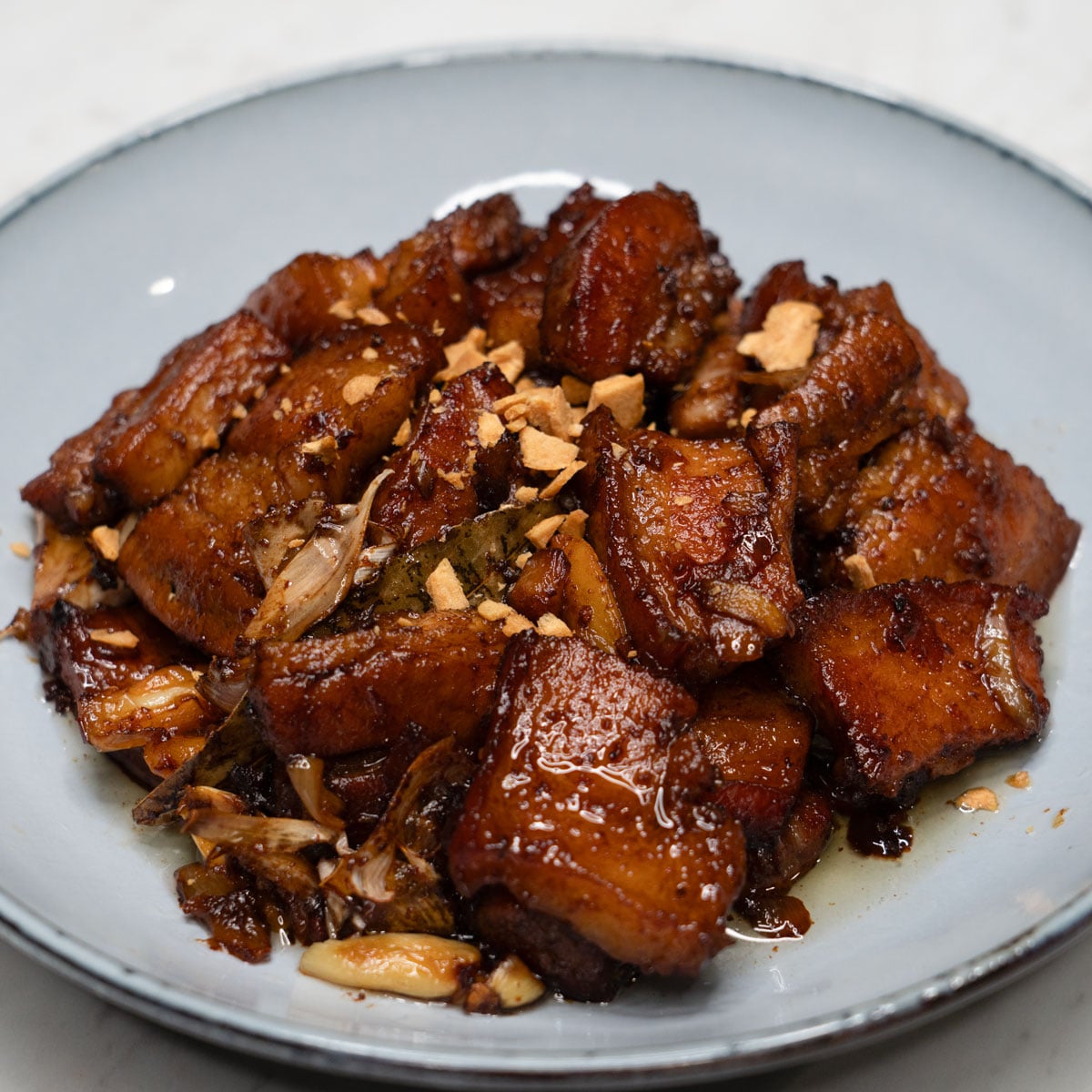
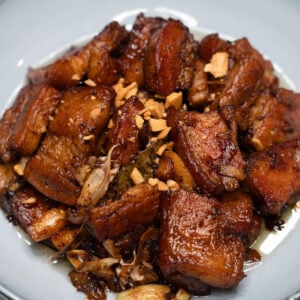
This adobong tuyo is a drier version of adobo cooked longer until most of the sauce is gone and the pork starts to cook in its own fat.
I like using pork belly for this because it stays tender and has enough fat for the meat to brown nicely at the end. It's also made with plenty of garlic, which adds a lot of flavor as it cooks.
It's not saucy like regular adobo - the goal is for the pork to brown and get a little crisp around the edges.
Jump to:
Ingredients You'll Need
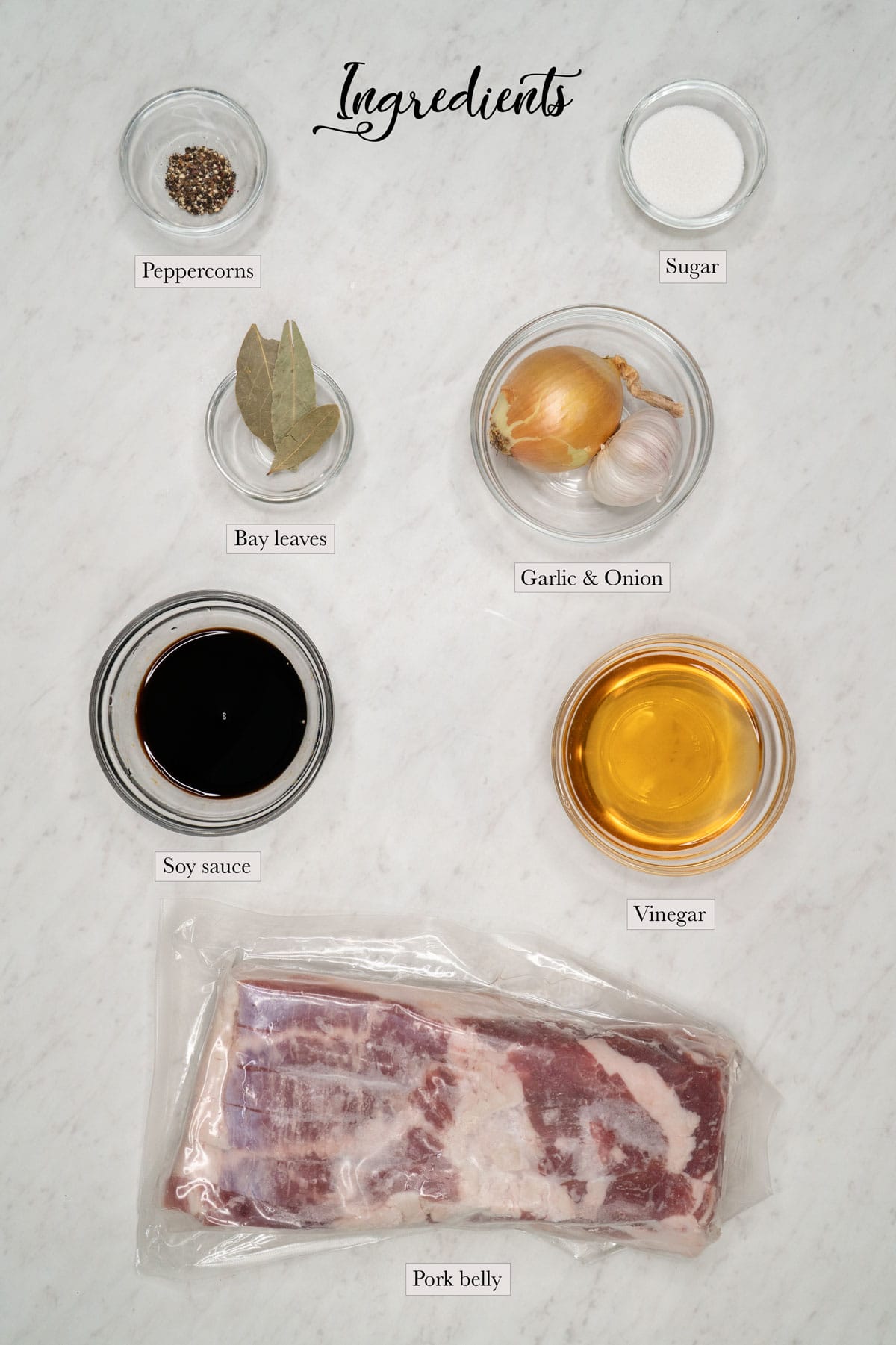
Notes and Substitutions
- Pork belly: Best for this recipe because the fat keeps the meat tender and helps it brown. Pork shoulder, pork butt, or pork ribs also work if they have some fat.
- Soy sauce: You can also use a mix of regular and a little dark soy sauce for color. Since brands vary in saltiness, start with less so it doesn't get too salty.
- Vinegar: Cane vinegar or coconut vinegar both work well. If you don't have them, you can use white vinegar or rice vinegar.
- Garlic: Use plenty of garlic for more flavor.
How to Make Adobong Tuyo (Step-by-Step)
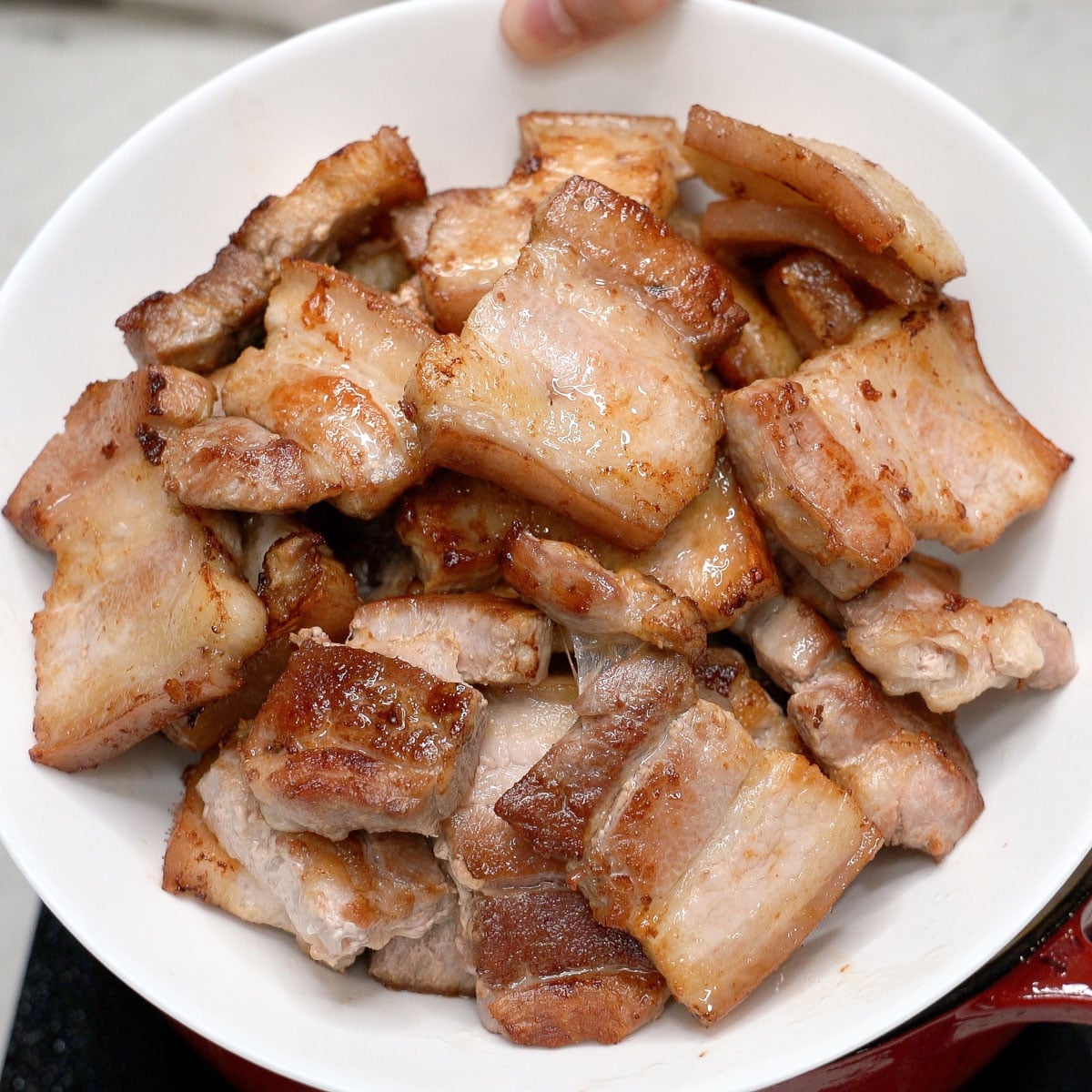
Step 1: Brown the pork
Heat a wide pot over medium-high heat.
Add 3 pounds of pork belly and brown lightly on several sides until some fat has rendered. No need to season it first.
Transfer to a plate.
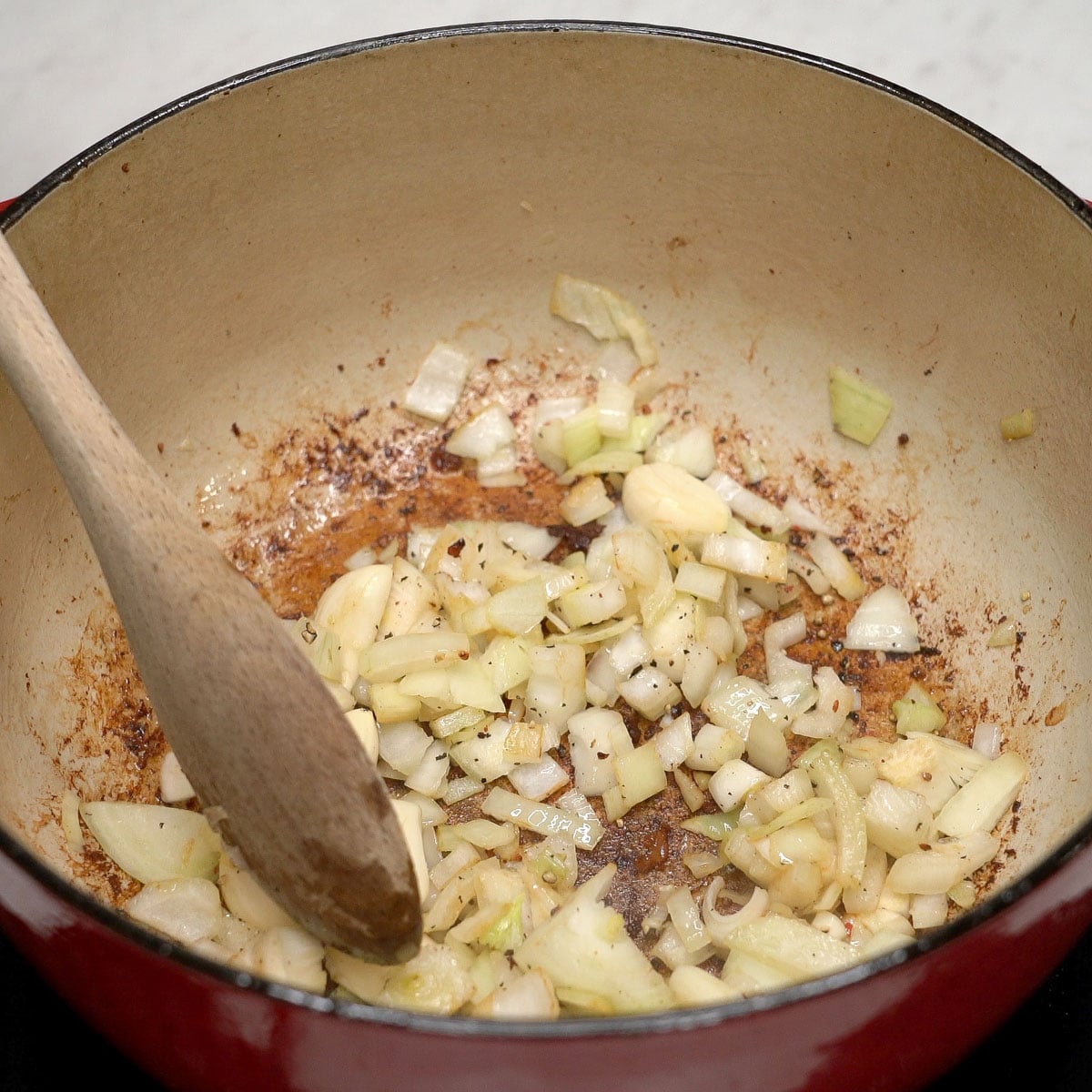
Step 2: Sauté the aromatics
Lower the heat to medium. If there's too much fat in the pot, remove most of it and add:
- 1 head of garlic (smashed)
- 1 medium onion (chopped )
- 1 teaspoon peppercorns (whole or cracked)
Sauté until they start to soften and smell good.
Step 3: Add the pork and build the sauce
Return the pork and add:
- 3 tablespoons regular soy sauce
- 1 tablespoon dark soy sauce
- ⅔ cup vinegar
- ¼ cup water
- 2 tablespoons sugar
- 3 bay leaves
Stir, then bring to a boil.
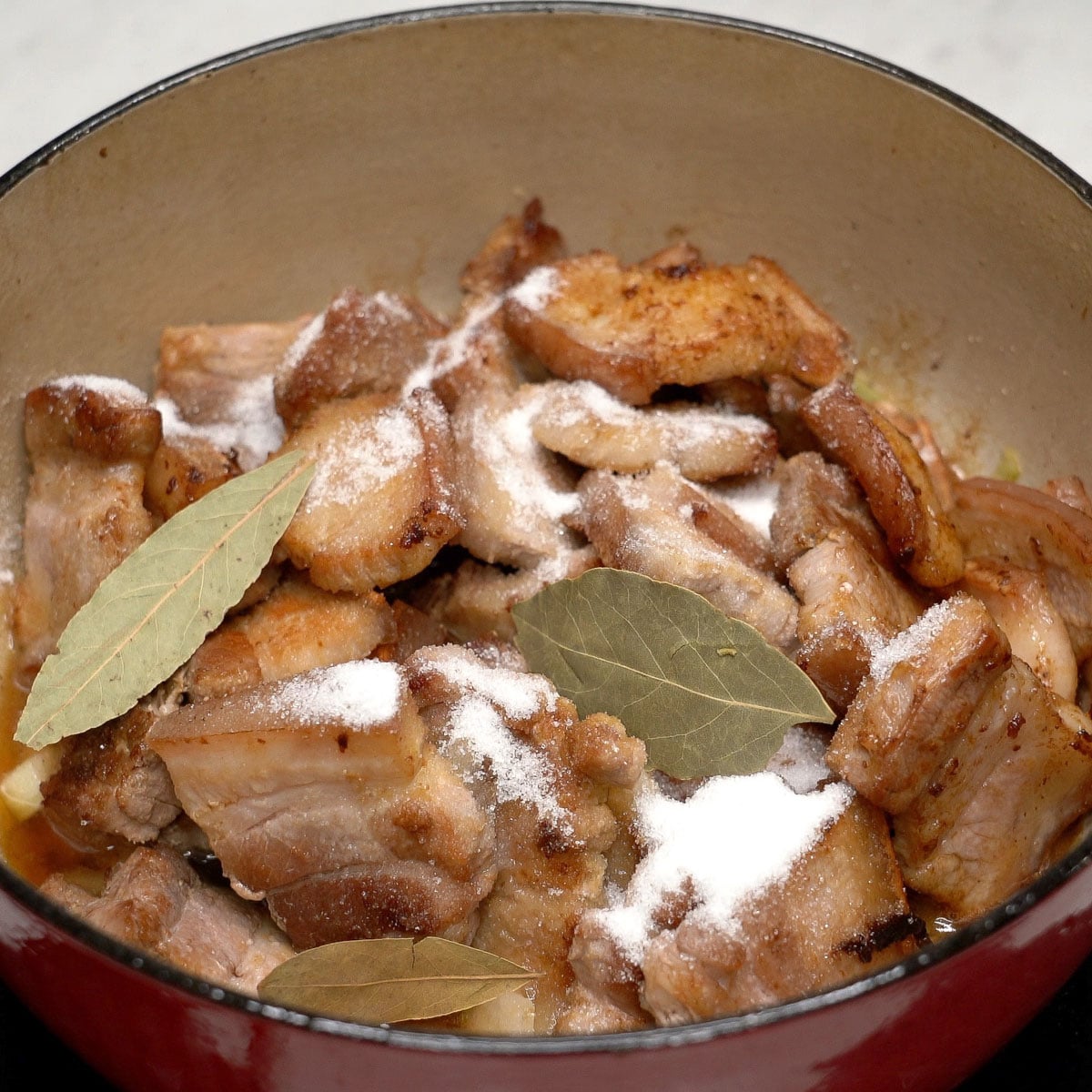
Step 4: Simmer until tender
Once boiling, cover and simmer for 30-45 minutes, until the pork is tender. Stir every now and then.
If the pot starts to look dry before the pork is done, add a little water.
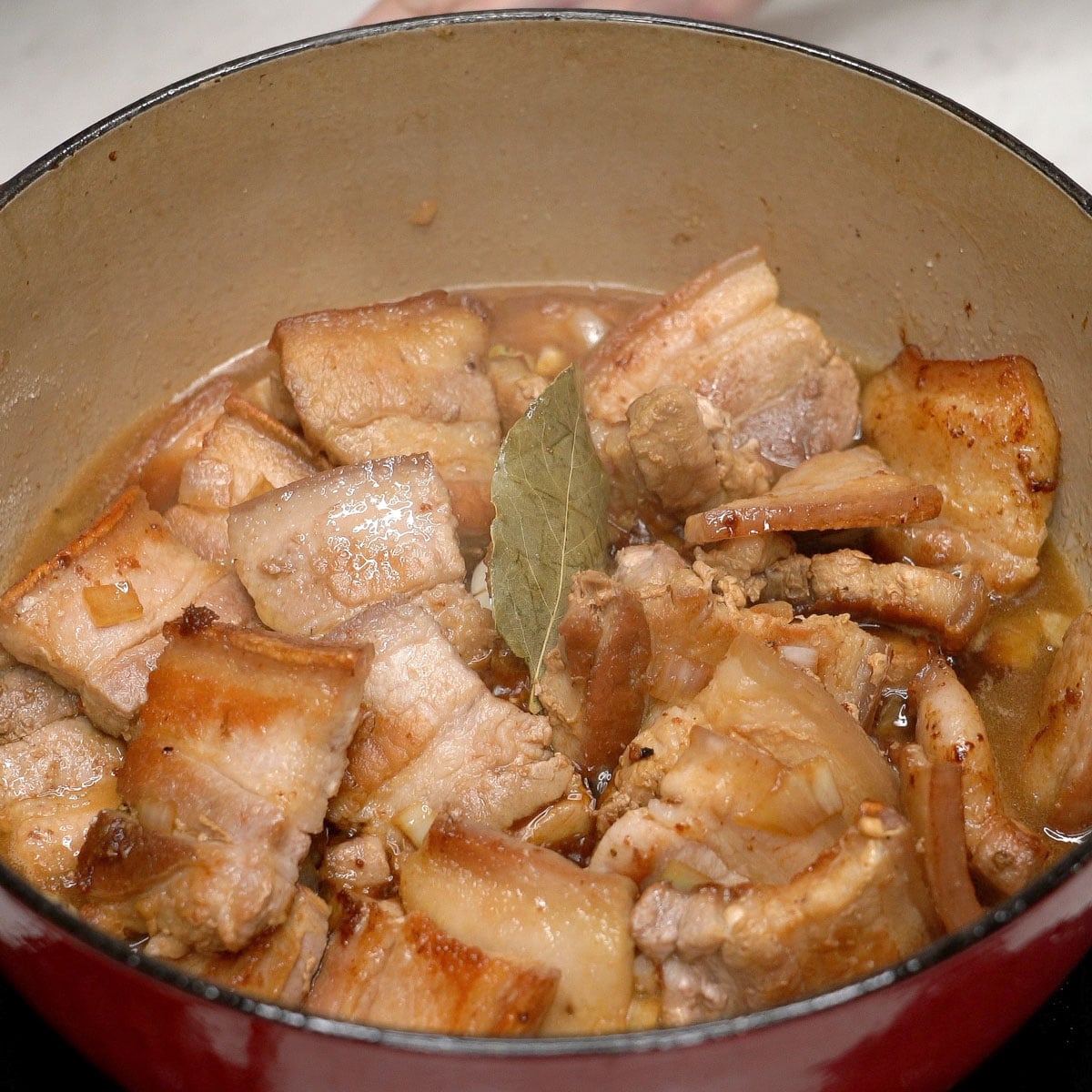
Step 5: Reduce the sauce and brown
Remove the lid and continue cooking until most of the liquid is gone. Taste and adjust if needed.
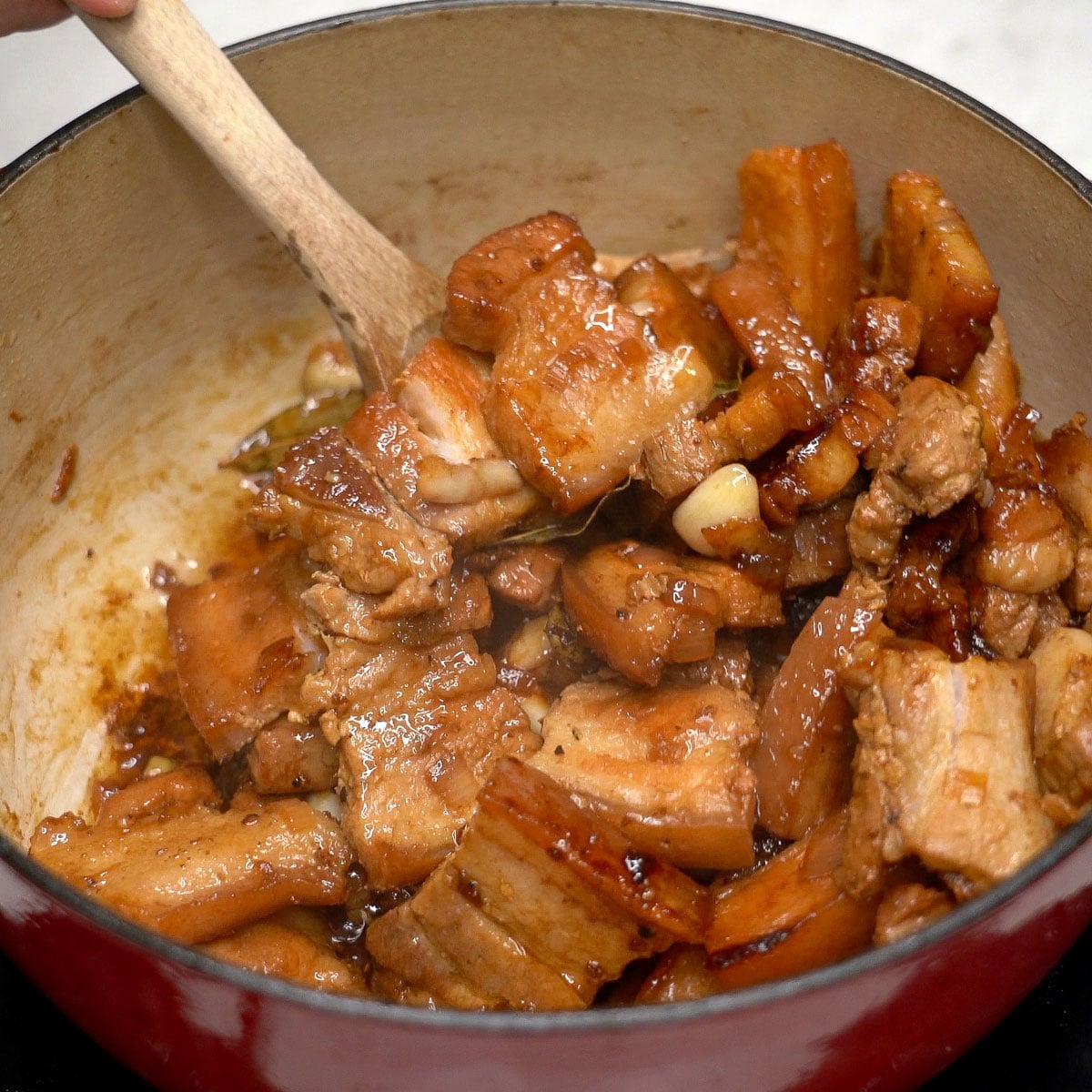
Stir more often at this point so the bottom doesn't burn. Keep cooking and turning the pork until it browns lightly in its own fat.
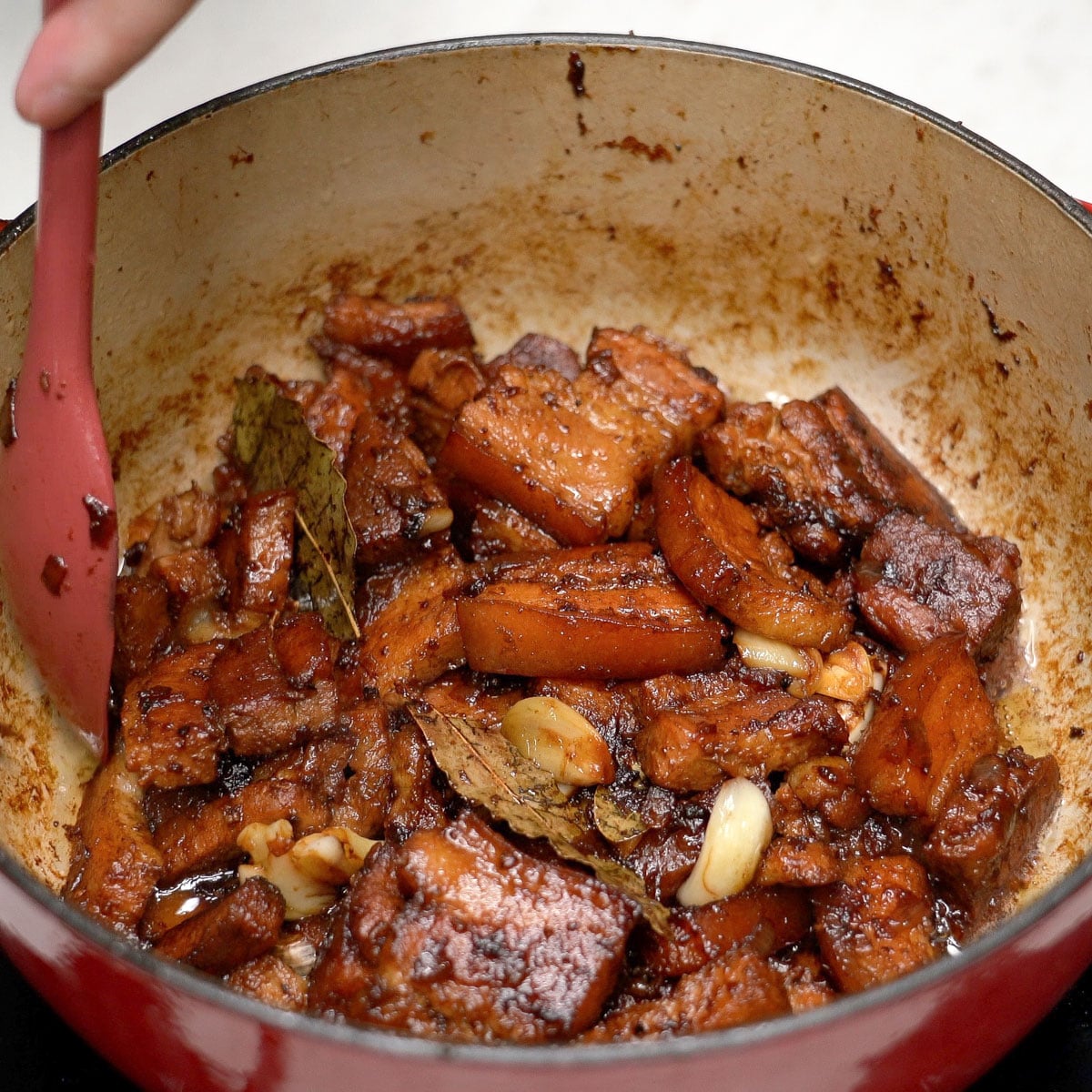
Step 6: Serve
Turn off the heat and serve your adobong tuyo while warm.
Cooking Tips
- Use a wide pot. This helps the sauce reduce faster and gives the pork more room to brown.
- Do not rush the last part. The flavor gets better once the sauce cooks down and the pork starts to fry in its own fat.
- Do not add too much water at the start. This is meant to be a drier adobo, not a saucy one.
How to Store & Reheat
- Refrigerator: Store leftovers in an airtight container in the refrigerator for up to 4 days.
- Freezer: You can freeze adobong tuyo for up to 2 months. Let it cool completely before storing in a freezer-safe container.
- To reheat: Warm in a pan over medium heat until heated through. If the pork looks dry, add a small amount of water.
Recipe FAQs
Adobong tuyo is a version of Filipino adobo cooked longer until most of the sauce is gone. The pork is left coated in a thick glaze and often starts to brown in its own fat.
"Tuyo" means dry. This version is cooked until the sauce is mostly gone.
Pork belly works well because it has enough fat to keep the meat tender as it cooks down. Other cuts with some fat, like pork shoulder or pork butt, also work.
Yes. Some versions use salt instead of soy sauce for a lighter-colored adobo. The flavor will be slightly different but still good.
Regular adobo usually has more sauce. Adobong tuyo is cooked longer until most of the liquid is gone and the pork starts to brown in the oil.
More Adobo Versions to Try
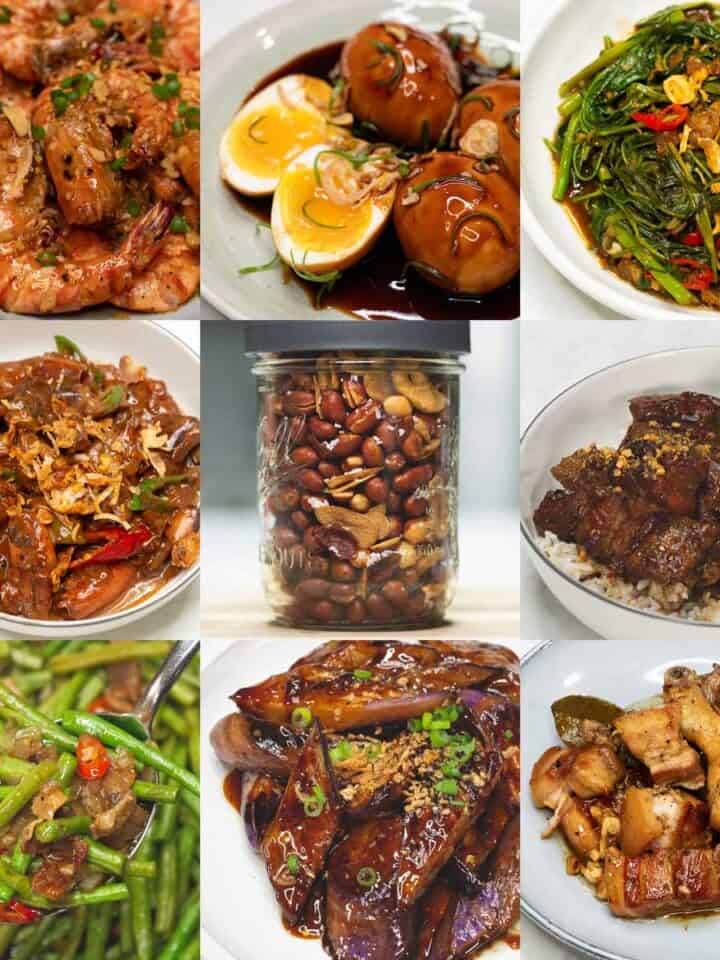
- Adobong puti: A lighter adobo made without soy sauce.
- Adobong pula: A red adobo colored with annatto.
- Adobo sa gata: Adobo cooked with coconut milk.
- Adobong dilaw: A turmeric-based adobo with a yellow color.
- Adobong pusit: Squid cooked adobo-style, often with squid ink.
- Adobong sitaw: Yardlong beans cooked in a simple adobo sauce.
- Adobong kangkong: Water spinach cooked with garlic, soy sauce, and vinegar.
Other Pork Recipes You May Like

Did you make this recipe? I would love to know! Your feedback helps me make better recipes. Please rate, review, or comment below. Questions about this recipe are welcome, too!
Let's connect on Facebook, Instagram, Pinterest, TikTok, Twitter, and Youtube. Be sure to tag me when you try any of my recipes @recipesbynora!
📖 Recipe
Adobong Tuyo Recipe (Dry Pork Adobo)
Equipment
- Wide pot
Ingredients
- 3 pounds pork belly cut into 1½-inch pieces
- 1 head garlic smashed
- 1 medium onion chopped
- 3 tablespoons regular soy sauce
- 1 tablespoon dark soy sauce
- ⅔ cup vinegar
- ¼ cup water more as needed
- 2 tablespoons sugar more to taste
- 1 teaspoon whole or cracked peppercorns
- 3 bay leaves
Instructions
- Heat a wide pot over medium-high heat. Brown the pork until some fat has rendered. No need to season.Transfer to a plate.
- Lower heat to medium and remove excess fat. Sauté garlic, onion, and peppercorns until softened and smelling good.
- Return the pork, then add soy sauce, dark soy sauce, vinegar, water, sugar, and bay leaves. Stir and bring to a boil.
- Cover and simmer 30-45 minutes, until tender. Stir every now and then. Add a little water if it starts to dry out.
- Uncover and cook until most of the liquid is gone. Stir more often so it doesn't burn.
- Keep cooking and turning the pork until lightly browned in its own fat. Turn off the heat.
Notes
- Pork belly: Best for this recipe. Pork shoulder, pork butt, or ribs also work if they have some fat.
- Soy sauce: Use regular soy sauce, or mix with a little dark soy sauce for color. Start with less to avoid it getting too salty.
- Vinegar: Cane or coconut vinegar works best. White or rice vinegar also work.
- Garlic: Use plenty for more flavor.
- Use a wide pot so the sauce reduces faster.
- Don't rush the last step - the pork needs time to brown.
- Don't add too much water - this is meant to be a dry adobo.
- Refrigerator: Store leftovers in an airtight container in the refrigerator for up to 4 days.
- Freezer: You can freeze for up to 2 months. Let it cool completely before storing in a freezer-safe container.
- To reheat: Warm in a pan over medium heat until heated through. If the pork looks dry, add a small amount of water.

Comments
No Comments