
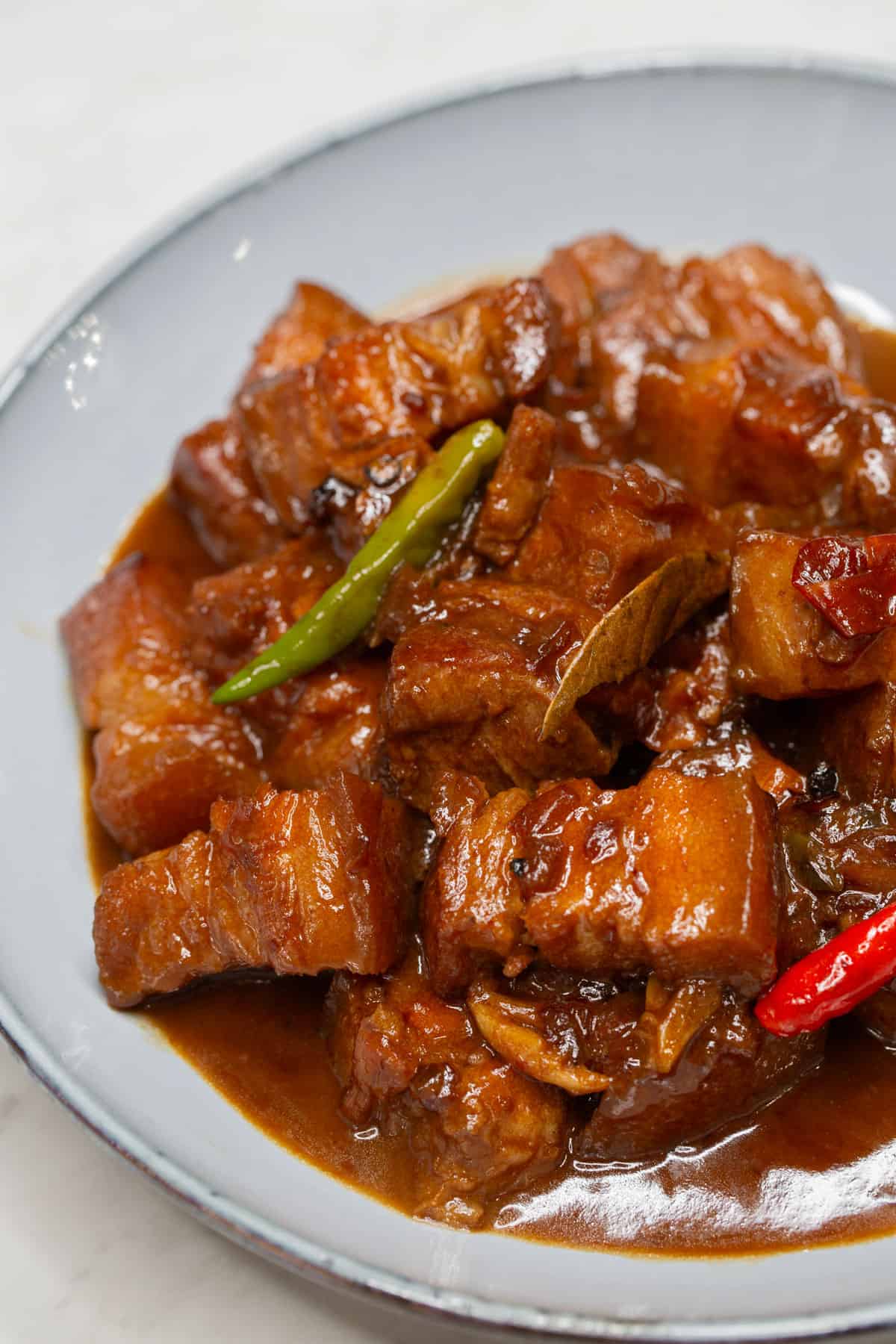
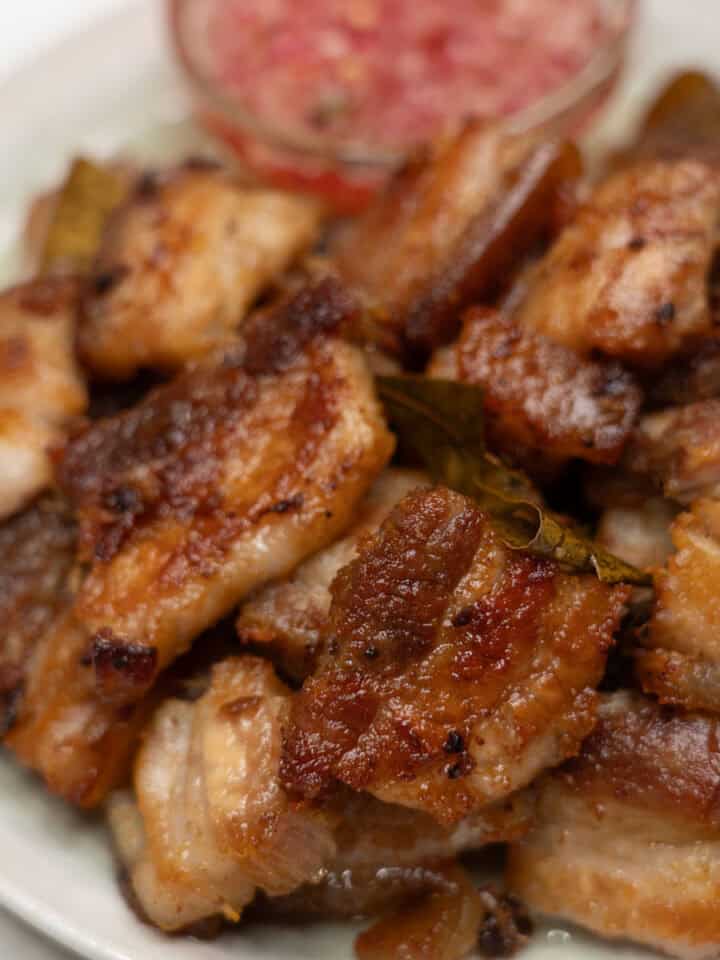
Adobo sa gata is a version of pork adobo cooked with coconut milk. It makes the sauce creamy and tones down the salty and tangy flavors.
If you like adobo with more creamy sauce, this is a good one to make.
Jump to:
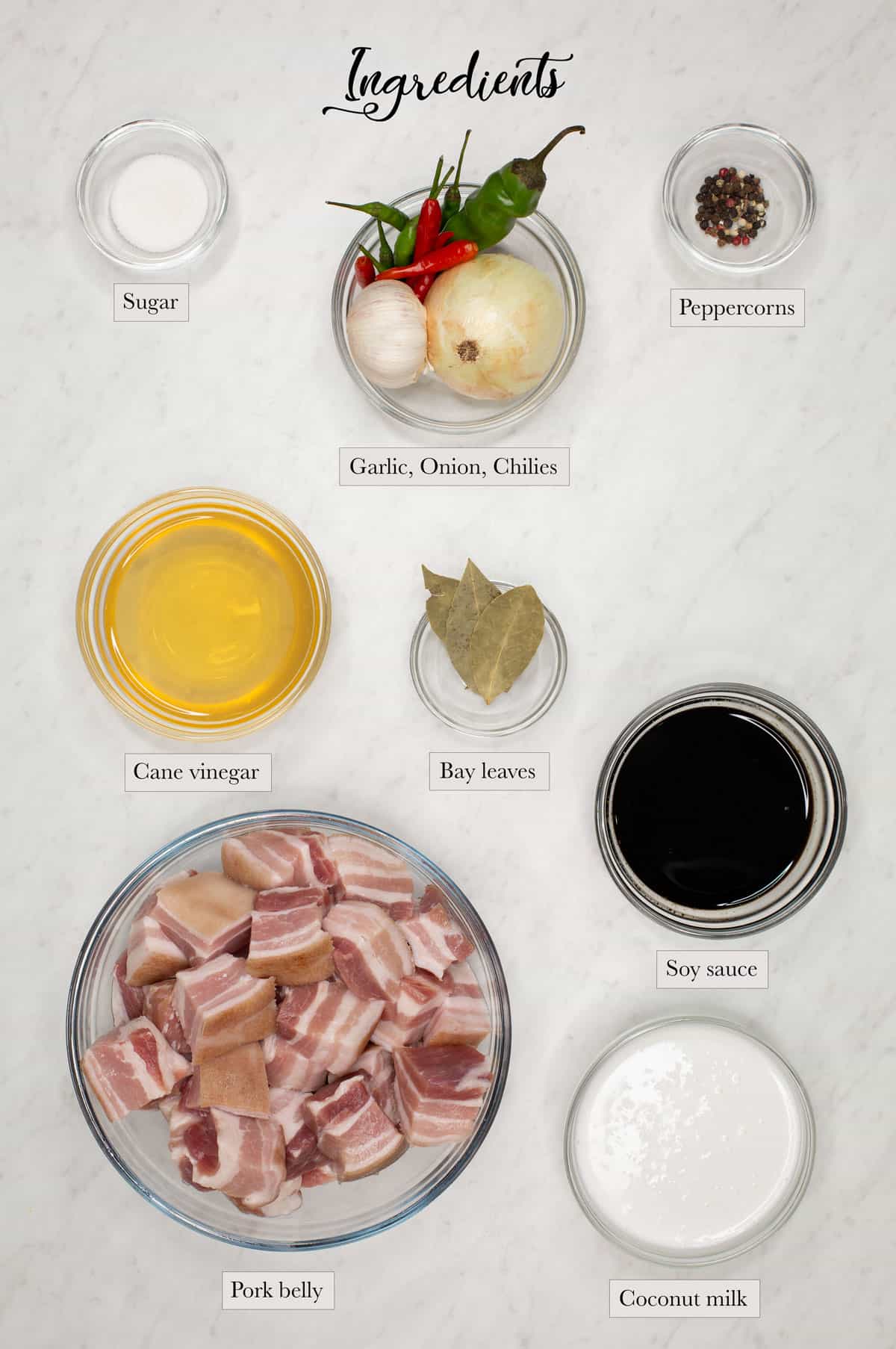
Ingredients You'll Need
Notes and Substitutions
- Pork belly: Best cut for this dish because it stays juicy and flavorful. You can also use pork shoulder, ribs, or even chicken.
- Soy sauce: Use Filipino brands like Silver Swan or Datu Puti, but any regular soy sauce works. Some brands are saltier than others, so it's best to start with a little less and add more as you go.
- Vinegar: Cane or coconut vinegar is traditional, but white vinegar works too.
- Coconut milk (gata): Use full-fat coconut milk for a creamier sauce.
- Chilies: Adds a little heat if you like spicy food. Totally optional.
How to Make Adobo sa Gata (Step-by-Step)
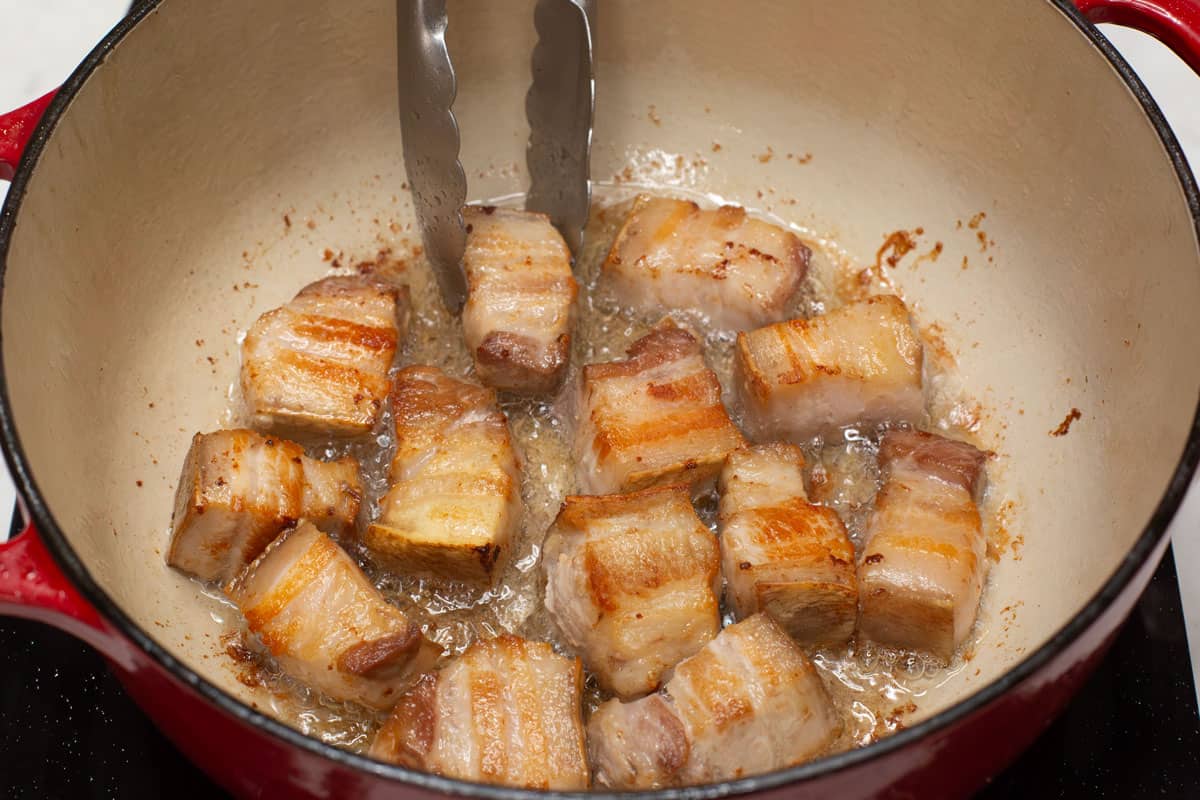
Step 1: Sear the pork
Heat a little oil in a pot over medium-high heat. Sear 3 pounds of pork belly until lightly browned - just enough to add flavor, not fully cook them.
Work in batches if needed. Spoon out some of the excess oil from the pot.
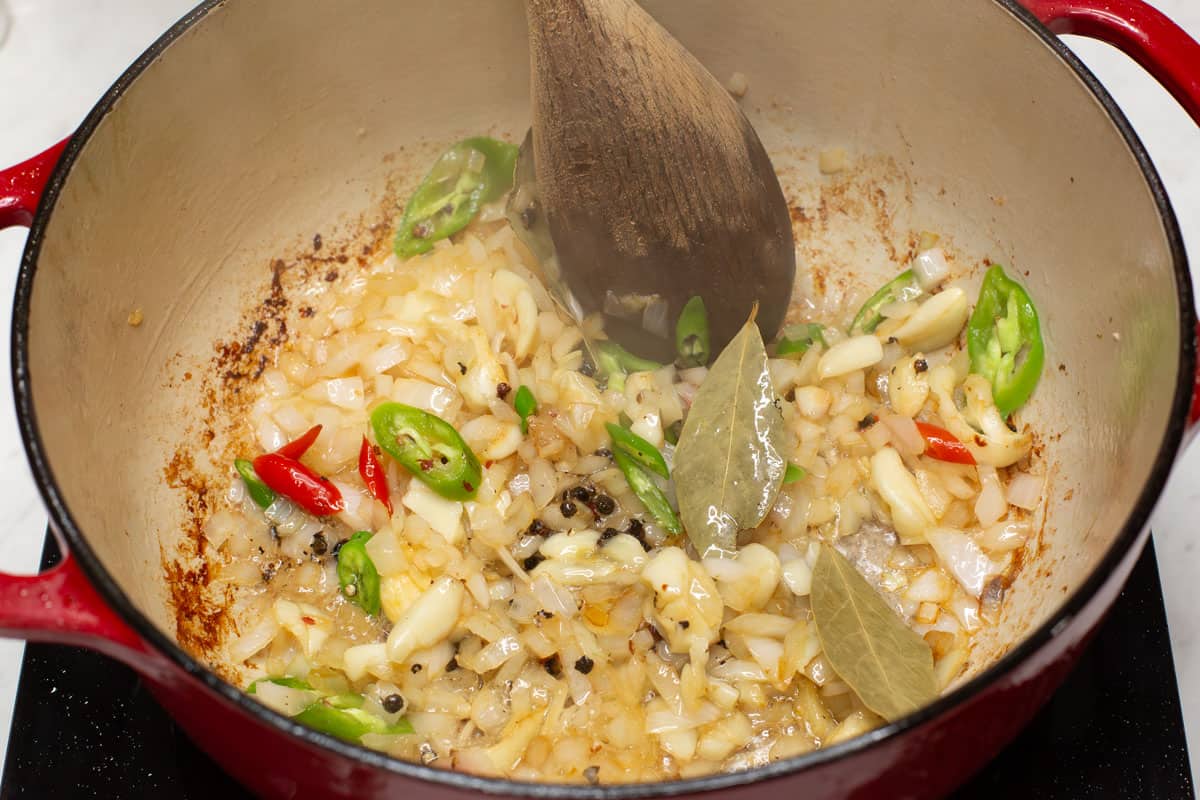
Step 2: Sauté the aromatics
Lower the heat to medium and add a bit more oil if needed. Sauté 1 head garlic (smashed) and 1 medium onion (chopped) until softened.
Add 1 teaspoon cracked peppercorns, 3 bay leaves, and some sliced chilies (if using). Cook for another minute to bring out their flavor.
Step 3: Simmer
Return the seared pork to the pan, then add:
- ½ cup soy sauce
- ⅔ cup cane vinegar
- 1 tablespoon sugar
- ¼ cup water (more as needed)
Stir everything together and bring it to a boil.
Cover and simmer on medium heat for about 30 minutes. Add a small amount of water if it gets too dry.
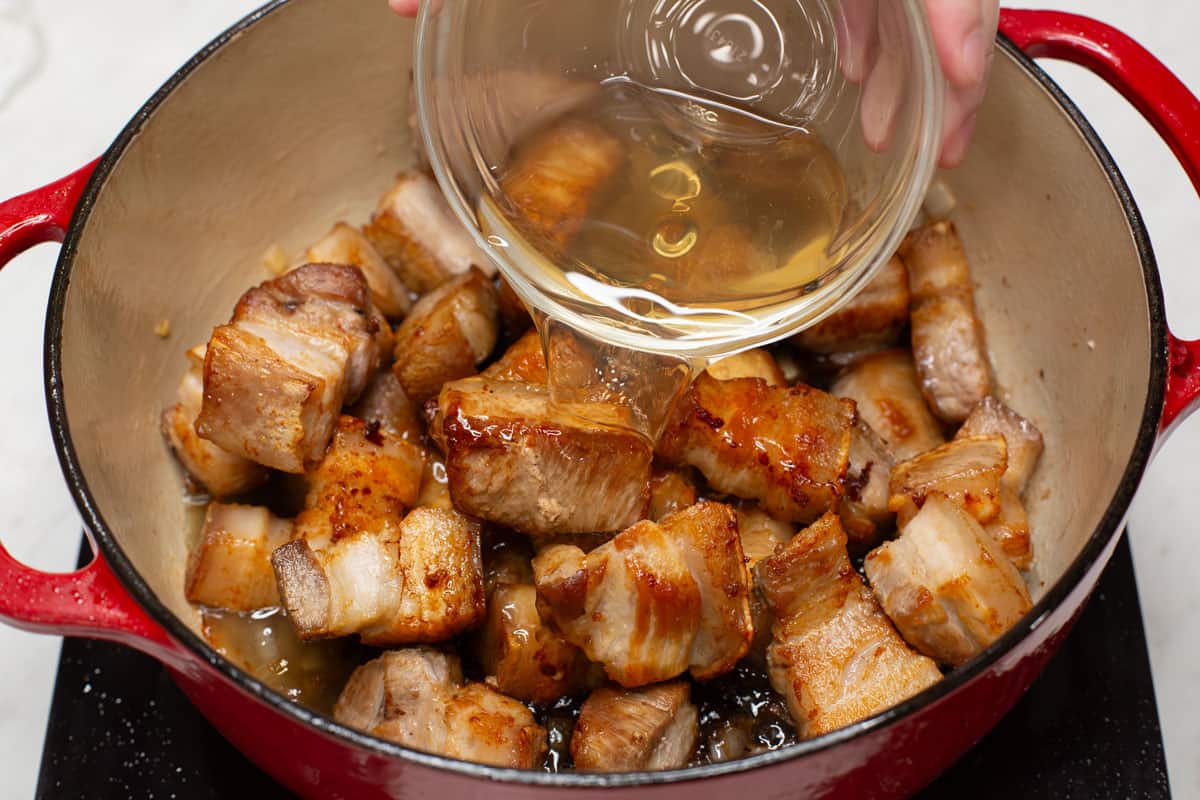
If there's too much oil on top, you can scoop some out so your adobo doesn't end up greasy.
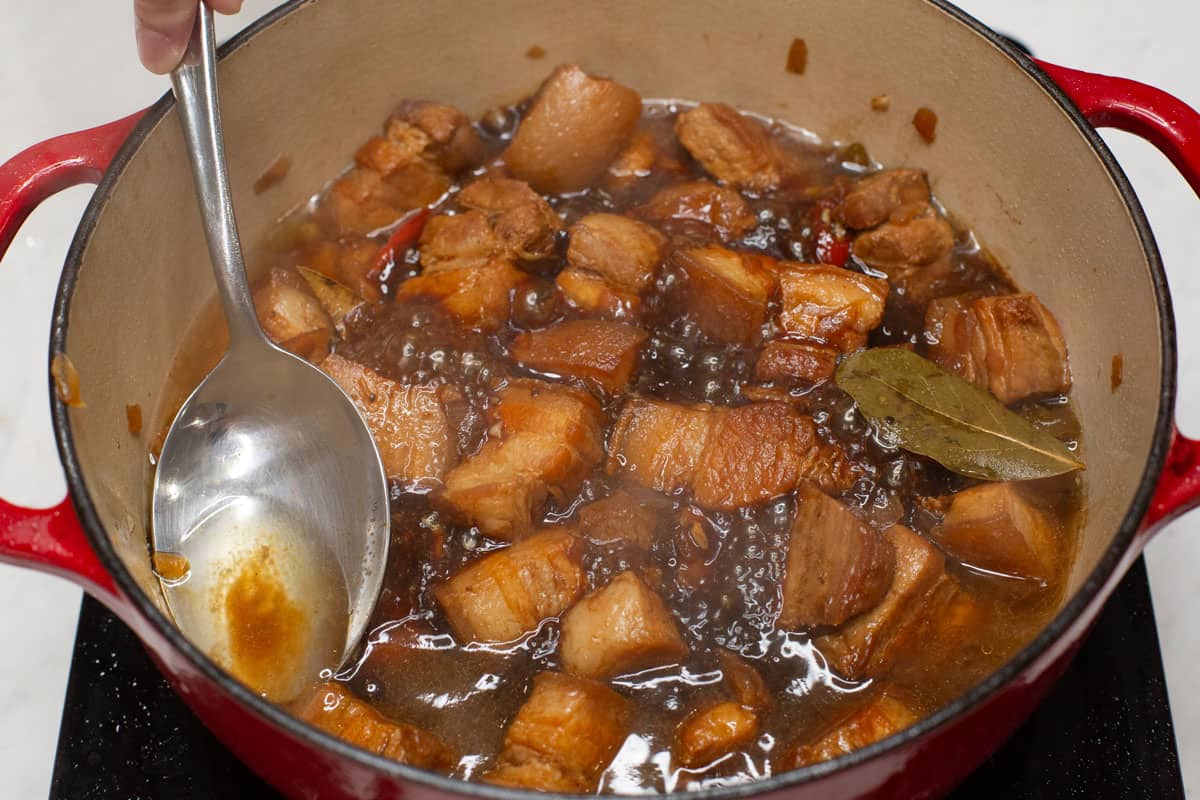
Step 4: Add the coconut milk
Add 1 cup of coconut milk and simmer for another 15-20 minutes.
If the sauce looks thin, remove the lid and let it cook down slightly.
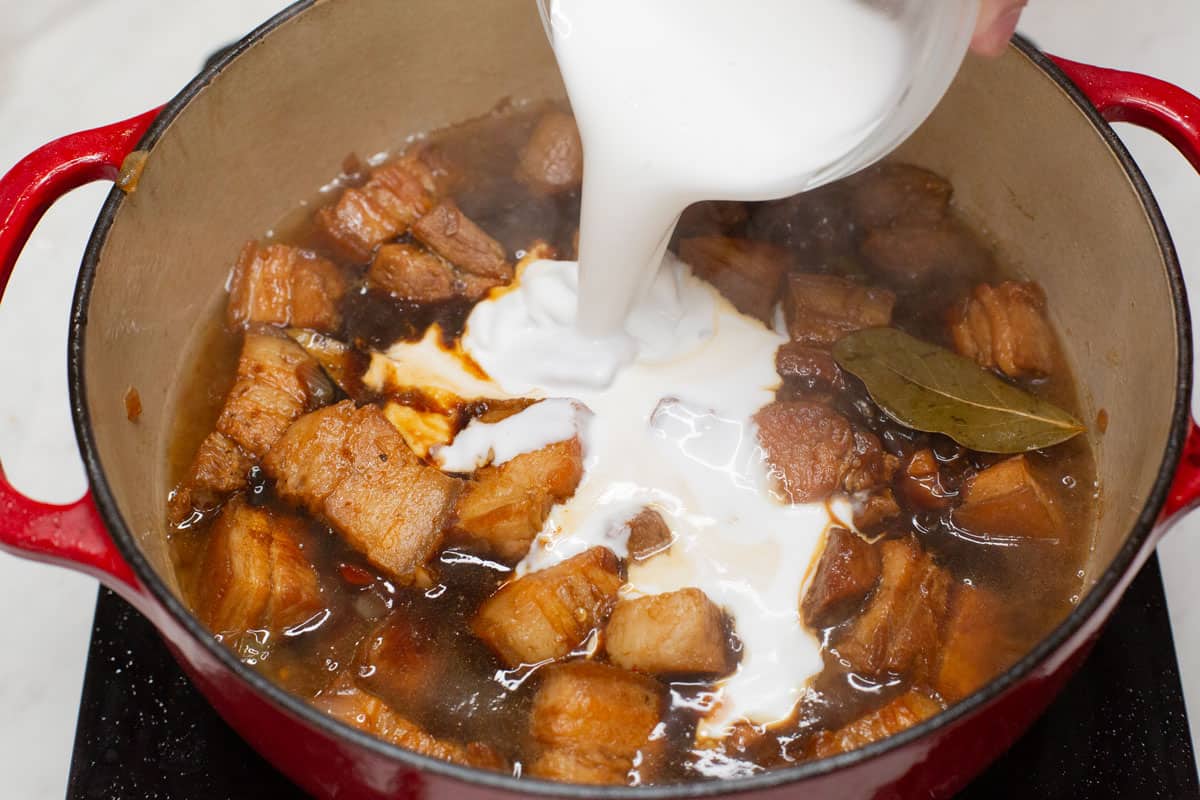
Taste and adjust the seasoning. You can add more sugar if you like it sweeter.
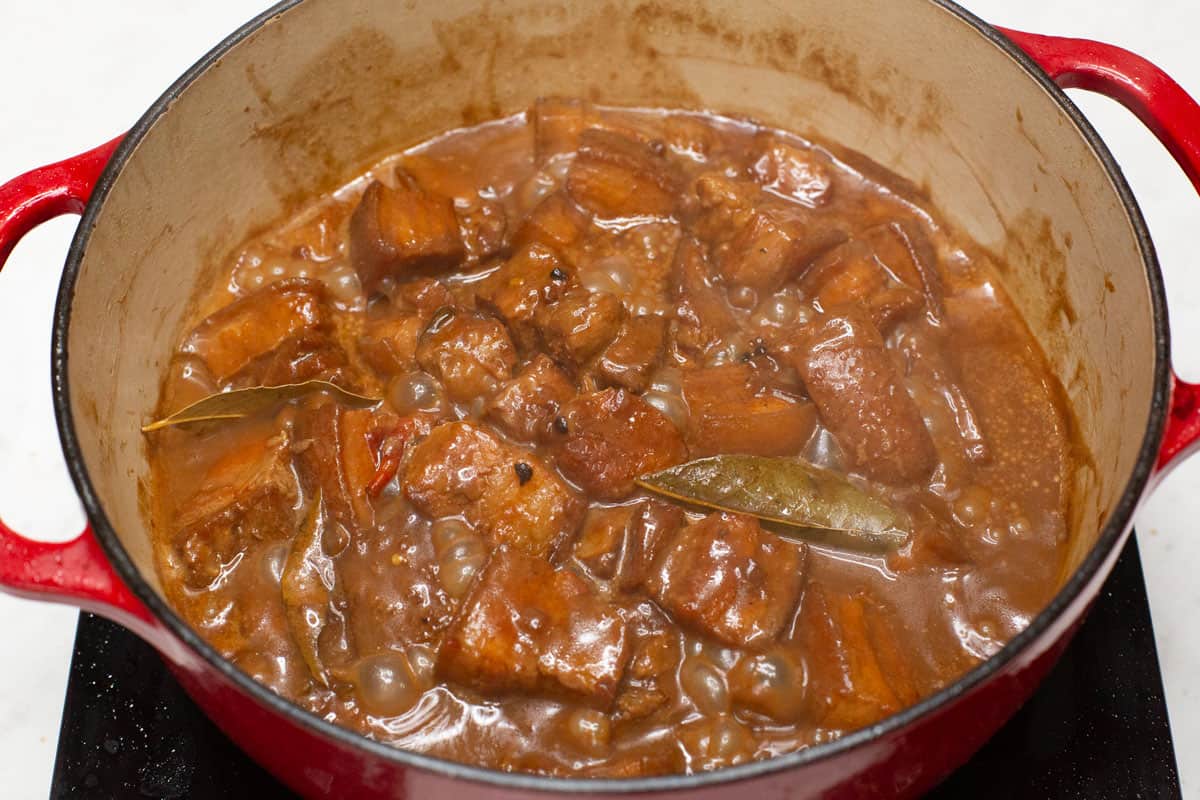
Step 5: Serve
Serve your adobo sa gata hot with steamed rice. Don't forget to spoon plenty of that creamy sauce over everything.

Make Ahead, Storage, and Reheating
- You can make adobo sa gata ahead of time - it actually tastes better the next day.
- Store leftovers in an airtight container in the fridge for up to 4 days.
- To reheat, warm it on the stove or in the microwave.
- If the sauce is too thick, add a small amount of water or coconut milk.
Recipe FAQs
Traditional adobo is tangy, savory, and garlicky, with no coconut milk. Adobo sa gata has coconut milk, which makes the sauce creamy and tones down the flavor.
Not really. It's mostly savory and tangy, just like regular adobo. The coconut milk adds a mild sweetness and makes the sauce creamy, but it doesn't taste like a sweet dish.
If your adobo turns out too salty, you can add a little water or a small amount of sugar. I also wrote a guide on how to fix salty adobo if you need more help.
I usually use cane vinegar or coconut vinegar for adobo sa gata, but regular white vinegar works too. Just don't use balsamic or apple cider vinegar, as they can change the flavor.
Yes. Like most adobo dishes, it actually tastes better the next day once the flavors have had time to come together.
Yes, you can freeze adobo sa gata for up to 2 months. The coconut milk may separate a little after freezing, but just stir it while reheating and the sauce will come back together.
Try Other Adobo Recipes
- Pork adobo: The classic version with pork.
- Chicken adobo: Same adobo flavors, made with chicken.
- Adobong pusit: Squid cooked adobo-style, some with coconut milk.
- Adobong puti: Made without soy sauce.
- Adobong sitaw: Yardlong beans in adobo sauce.
- Adobong talong: Eggplant with adobo sauce.
- Adobong kangkong: Water spinach cooked in soy sauce and vinegar.
- Tofu and mushroom adobo: A plant-based version with tofu and mushrooms
Pork Recipes You May Like

Did you make this recipe? I would love to know! Your feedback helps me make better recipes. Please rate, review, or comment below. Questions about this recipe are welcome, too!
Let's connect on Facebook, Instagram, Pinterest, TikTok, Twitter, and Youtube. Be sure to tag me when you try any of my recipes @recipesbynora!
📖 Recipe

Adobo sa Gata (Filipino Pork Adobo in Coconut Milk)
Equipment
- Wide pot
Ingredients
- 3 pounds pork belly cut into 1½-inch pieces
- 1 head garlic smashed
- 1 medium onion chopped
- 1 teaspoon cracked peppercorns more to taste
- 3 bay leaves
- Chilies optional
- ½ cup soy sauce
- ⅔ cup vinegar
- 1 tablespoon sugar more to taste
- 1 cup coconut milk
- Neutral oil for sautéing
Instructions
- Heat oil in a pot over medium-high heat. Brown pork on all sides. Work in batches if needed. Spoon out excess oil.
- Lower heat to medium. Add garlic and onion and cook until softened. Add peppercorns, bay leaves, and chilies (if using).
- Return pork to the pot. Add soy sauce, vinegar, sugar, and ¼ cup water. Bring to a boil, then simmer for about 30 minutes. Add more water as needed.
- Add coconut milk and simmer for 15-20 minutes, until pork is tender and sauce lightly coats the meat.
- Taste and adjust seasoning. Serve hot with rice.
Notes
- Pork belly: You can also use pork shoulder, ribs, or chicken.
- Soy sauce: Some brands are saltier than others, so start with less and add more as you go.
- Vinegar: Cane or coconut vinegar is traditional, but white vinegar works too.
- Coconut milk (gata): Use full-fat coconut milk for a creamier sauce.
- Chilies (optional): Adds a little heat if you like spicy food.
- Make ahead: Tastes even better the next day.
- Store: Refrigerate in an airtight container for up to 4 days.
- Reheat: Warm on the stove or in the microwave. Add a little water or coconut milk if needed.



M says
Ive never tried this. Is it any better than reg adobo
Nora Reyes says
Do you like dishes with coconut milk? If you do, it's worth giving this a try. If not, regular adobo is a classic. =)
Hello says
Yum!!!
Nora Reyes says
Thank you!!!