
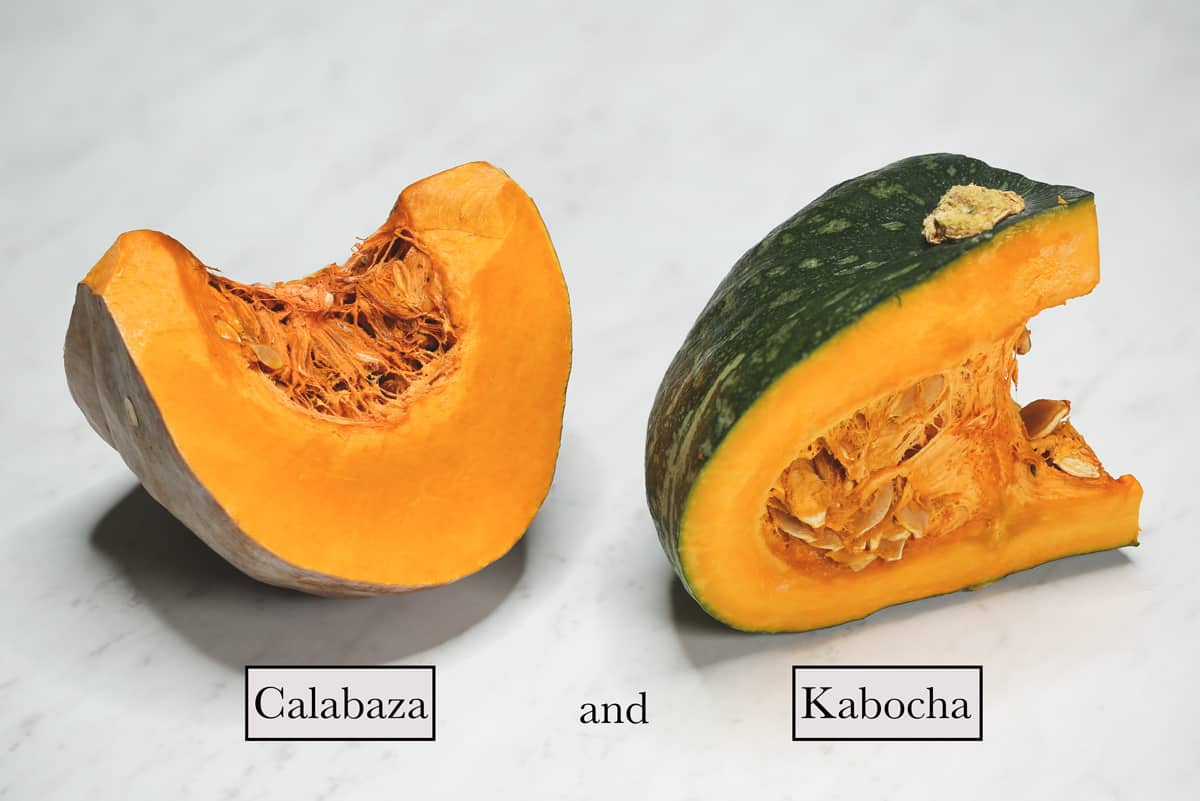
Kabocha squash is often used as a substitute for kalabasa in Filipino cooking, especially outside the Philippines where calabaza can be hard to find.
It has bright orange flesh that becomes soft and creamy when cooked. Because of its texture and flavor, it works really well in dishes like ginataang kalabasa, pinakbet, soups, and stews.
If you can't find kalabasa at the store, kabocha squash is one of the best alternatives.

Jump to:
- What is Kabocha Squash?
- Can Kabocha Be Used Instead of Kalabasa?
- What Does Kabocha Squash Taste Like?
- Can You Eat the Skin of Kabocha Squash?
- How to Buy Kabocha Squash
- How to Store Kabocha Squash
- How to Prepare Kabocha Squash
- Filipino Recipes That Use Kabocha Squash
- FAQs About Kabocha Squash
- More Filipino Food Guide
- 💬 Comments
What is Kabocha Squash?
Kabocha squash is a type of Japanese pumpkin. It's round, dark green on the outside, and bright orange inside.
The flesh is thick and cooks up soft and smooth. Compared to other squash, it's not watery and doesn't fall apart easily.
That's one reason it works so well in many cooked dishes.

Can Kabocha Be Used Instead of Kalabasa?
Yes. Kabocha is one of the best substitutes for kalabasa.
Kalabasa (also called calabaza squash) is commonly used in Filipino cooking, but it can be harder to find in the U.S.
Kabocha has a similar texture when cooked, so it works well in many Filipino dishes. Because it holds its shape well, it doesn't become mushy when cooked.
What Does Kabocha Squash Taste Like?
Kabocha has a slightly sweet flavor.
When cooked, the texture becomes soft, smooth, and a little creamy. It's not watery like some squash varieties.
This is why it works well in soups, stews, and coconut milk dishes.
Can You Eat the Skin of Kabocha Squash?
Yes. The skin of kabocha squash is edible.
When cooked, the skin softens and becomes easier to eat. Many people leave it on, especially when the squash is simmered or roasted.
If you prefer a softer texture, you can peel it before cooking.

How to Buy Kabocha Squash
Kabocha squash is often sold in Asian grocery stores and some supermarkets.
When choosing one:
- Pick a squash that feels heavy for its size
- The skin should be dark green and firm
- Avoid squash with soft spots or deep cuts
A good squash should feel solid and dense.
How to Store Kabocha Squash
Whole kabocha squash can be stored in a cool, dry place for several weeks.
Once cut, remove the seeds and wrap the squash tightly. Store it in the refrigerator and keep for about 4 to 7 days.

How to Prepare Kabocha Squash
Wash the squash to remove any dirt. Kabocha squash has a firm rind, so it can be a little hard to cut.
If it feels too tough, you can microwave it for 3 to 5 minutes to soften the skin slightly before cutting.
Step 1: Cut the squash in half.
Place it on a cutting board and carefully cut through the squash with a sharp knife, avoiding the stem.
Step 2: Scoop out the seeds.
Use a spoon to remove the seeds and the stringy center.

Step 3: Cut into quarters.
Place each half cut-side down and slice it in half again.
Step 4: Trim the stem.
Cut off the tough stem portion from each piece.

Step 5: Slice into wedges.
Cut each quarter into wedges.

Step 6: Cut depending on your recipe.
You can leave them as wedges or cut them into smaller cubes or thin strips.

Kabocha squash can be used in soups, stews, stir-fries, or coconut milk dishes.
Roasting kabocha squash may not be common in Filipino cooking, but it's an easy way to prepare it.

Filipino Recipes That Use Kabocha Squash
Kabocha squash can be used the same way kalabasa is used in Filipino cooking.
Some common dishes include:
- Ginataang kalabasa: Squash cooked in coconut milk, often with shrimp or pork.
- Pinakbet: A vegetable stew with squash, eggplant, bitter melon, okra, and shrimp paste.
- Kalabasa soup: A simple squash soup that can be blended or left chunky.
- Ukoy: Shrimp and vegetable fritters that sometimes include shredded squash.
- Lumpiang gulay: Vegetable spring rolls that may include squash.

FAQs About Kabocha Squash
Kabocha squash is one of the closest substitutes because it has a similar texture when cooked.
No. Peeling is optional.
The skin becomes tender when cooked, but you can peel it if you prefer a smoother texture.
Yes. The skin of kabocha squash is edible and softens when cooked. Many people leave it on when making soups or stews.
Kabocha squash has a slightly sweet flavor. When cooked, the flesh becomes soft and smooth.
Yes. Kabocha squash contains fiber and nutrients like vitamin A and vitamin C.
Like many squash varieties, it's a good vegetable to include as part of a balanced diet.

More Filipino Food Guide



Did you like this post? I would love to know! Your feedback helps me make better recipes. Please rate, review, or comment below. Questions about this post are welcome, too!
Let's connect on Facebook, Instagram, Pinterest, TikTok, Twitter, and Youtube. Be sure to tag me when you try any of my recipes @recipesbynora!


Laura says
I love making pinakbet and i’ve never used the real calabaza. Kabocha always works great for me. Thanks for this post!
Nora Rey says
That's awesome! Pinakbet is such a delicious and healthy dish. It's great to hear that you've been able to make it work with kabocha squash, which is a great alternative to calabaza. I do the same, too.