
Biko is a Filipino sticky rice cake made with glutinous rice, coconut milk, and sugar, then topped with crispy latik curds.
It's soft, chewy, and has a rich coconut flavor with just the right amount of sweetness.
This version uses panutsa, but you can also use brown sugar if that's what you have. It takes a bit of stirring, but the steps are simple and easy to follow.

Jump to:
What is Biko?
Biko is a Filipino rice cake, or kakanin, made with glutinous rice, coconut milk, and brown sugar. It's soft and chewy, with a rich coconut flavor.
It's usually topped with latik - crispy bits made by cooking coconut milk until the oil separates.
Some versions use latik syrup, a thick coconut caramel made from coconut milk and sugar. You'll see it more often in bibingkang malagkit and other rice cakes.
Biko is also called sinukmani in some parts of the Philippines. It's often served on a bilao (a woven tray) and enjoyed as a snack or dessert anytime.

Ingredients You'll Need

Notes and Substitutions
- Glutinous rice: Also called malagkit or sticky rice. It turns soft and chewy when cooked, but it's not actually sweet.
- Coconut milk: Fresh is great, but canned works just fine. You can also use coconut cream (kakang gata) for a richer, thicker texture.
- Panutsa: A type of sugar made from cooked sugarcane juice. It gives biko a deeper caramel flavor and darker color. You can use dark brown sugar or muscovado instead.
- Anise seeds: These add a light licorice-like flavor. You can also use ginger, vanilla, or pandan.
How to Make Biko (Step-by-Step)
Step 1: Cook the rice
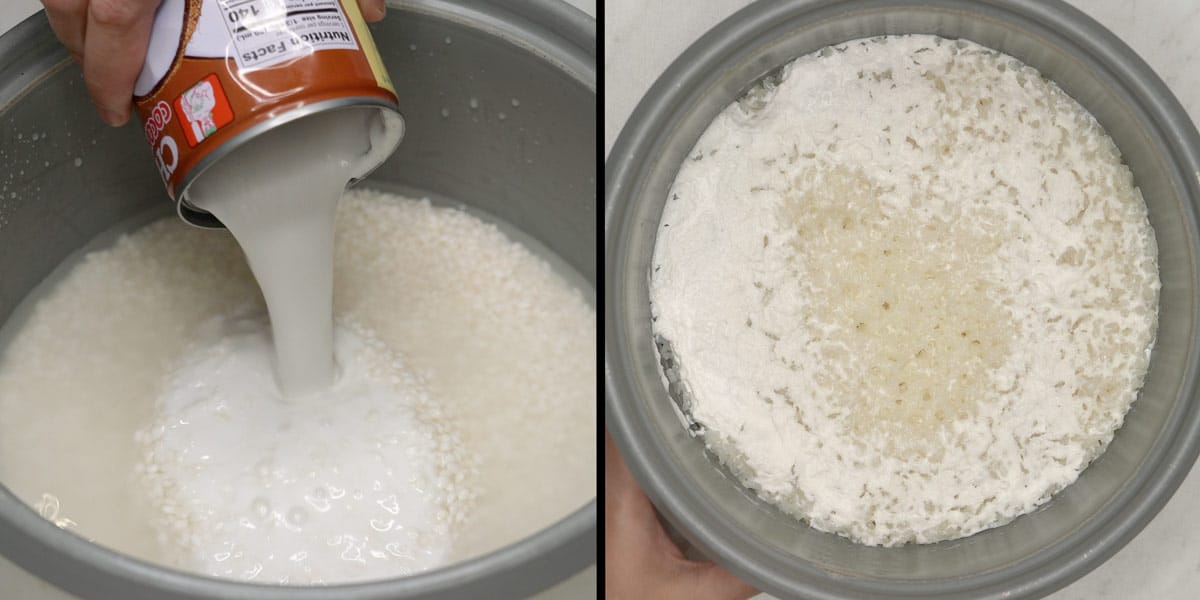
In a pot, rinse 2 cups of glutinous rice until the water runs clearer, then drain.
Add 1 cup of water, 1 cup of coconut milk from the can (save the rest for later), and a pinch of salt.
Bring to a boil over medium-high heat. Lower the heat and cover.
Simmer for about 20 minutes, or until the liquid is absorbed. You can also use a rice cooker.
Don't overcook it. The rice should be tender and sticky, not mushy.
Once done, remove the lid right away to release steam, then let it cool completely.
Step 2: Make the latik (coconut curds)
Pour 1 can of coconut milk or cream (about 1½ cups) into a pan.
Bring to a boil over medium-high heat. Keep stirring so it doesn't burn.
Once it starts to thicken, lower the heat to medium and stir more often.
Cook for another 5-10 minutes, until the oil separates and the curds turn golden and crispy.
Strain the curds right away - they can continue to brown from the heat. Set aside for topping.
For a more detailed guide on making latik, check out my step-by-step recipe.

Step 3: Prepare the serving platter
Line a tray or plate with banana leaves. Biko is traditionally served in a bilao (a bamboo tray), but any flat plate will work.
If using banana leaves, quickly pass them over a flame to soften, then brush lightly with latik oil to keep the biko from sticking.

Step 4: Chop the panutsa
Cut the panutsa into small pieces so it melts faster and more evenly when you cook it.
It's usually sold in solid blocks or discs, so breaking it up makes it easier to work with.

Step 5: Make the coconut mixture
In a nonstick pan, combine:
- the remaining ½ cup coconut milk from earlier
- 1 can of coconut milk
- 8 ounces of panutsa
- ½ teaspoon anise seeds
- a pinch of salt
Bring to a boil over medium-high heat, stirring occasionally.
Cook for about 15 minutes, or until slightly thickened and a deep caramel color.

Step 6: Cook the rice mixture
Add the cooled rice and stir to coat evenly.
Cook over medium heat for about 20 minutes. Keep strring so it doesn't burn.
As it cooks, the mixture will start to look slightly oily as the coconut milk cooks down.
It's ready when it turns thick and sticky, pulls away from the pan, and becomes harder to stir. The texture should be soft and chewy, not mushy.

Step 7: Transfer
Spread the rice mixture to the prepared platter. Spread it out evenly using a spatula or the back of a spoon.
Gently press it down to level the top and pack it in. Brush the top lightly with latik oil to keep it from drying out.

Step 8: Serve
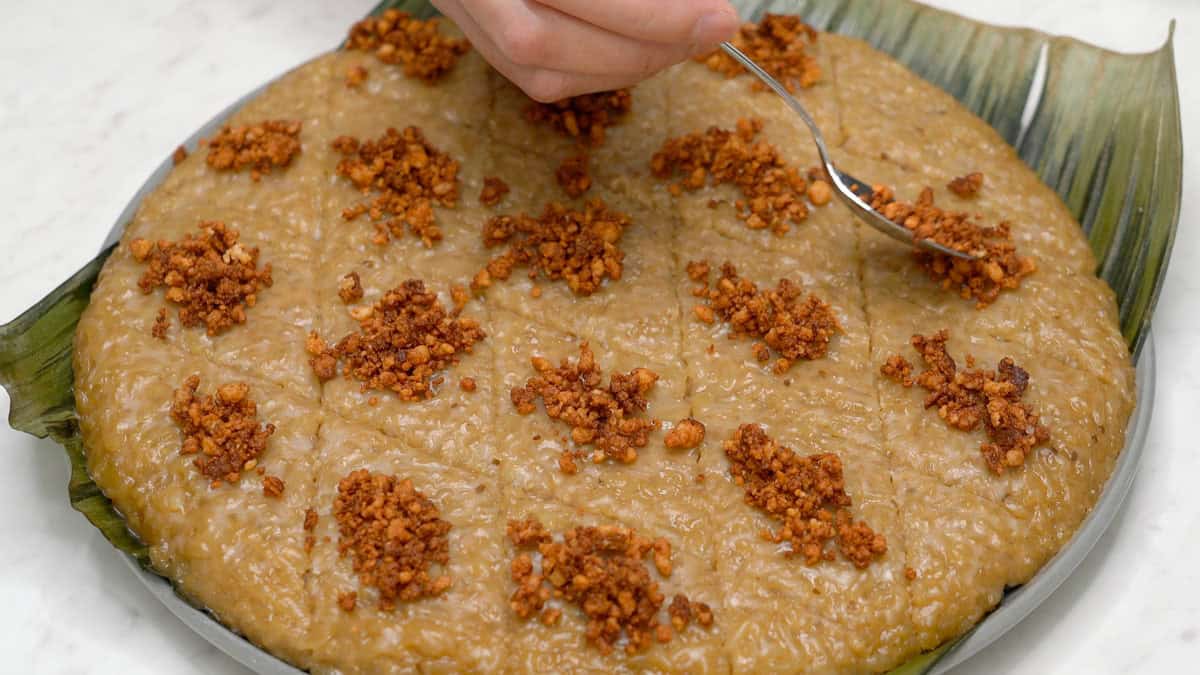
Let you biko cool slightly. Slice it into diamond or square pieces using a greased knife or dough/bench scraper.
Top with crispy latik curds. Enjoy!
Tips for Making Biko
- Don't overcook the rice - it should be cooked but still firm.
- Stir constantly so the mixture doesn't stick or burn.
- Cook until thick and sticky for that chewy texture.
- Lower the heat if the bottom starts to stick.
- Let it cool slightly before slicing so it holds its shape.
How to Store and Reheat Biko
- To store: Keep in an airtight container at room temperature for up to 1 day, or refrigerate for up to 3 days.
- To reheat: Microwave for a few seconds until soft or enjoy at room temperature.

Recipe FAQs
Latik can refer to two different coconut toppings. One is crispy coconut curds made by cooking coconut milk until the oil separates - this is what's used in biko.
The other is latik syrup, a thick coconut caramel made with coconut milk and sugar, which is more usually used in bibingkang malagkit.
Biko is made with glutinous rice, coconut milk, and brown sugar, then topped with latik (coconut curds).
It's usually overcooked or didn't have enough moisture (water or coconut milk). It will also firm up more as it cools.
More Filipino Rice Cakes
- Ube kalamay: Chewy rice cake made with ube, coconut milk, and glutinous rice.
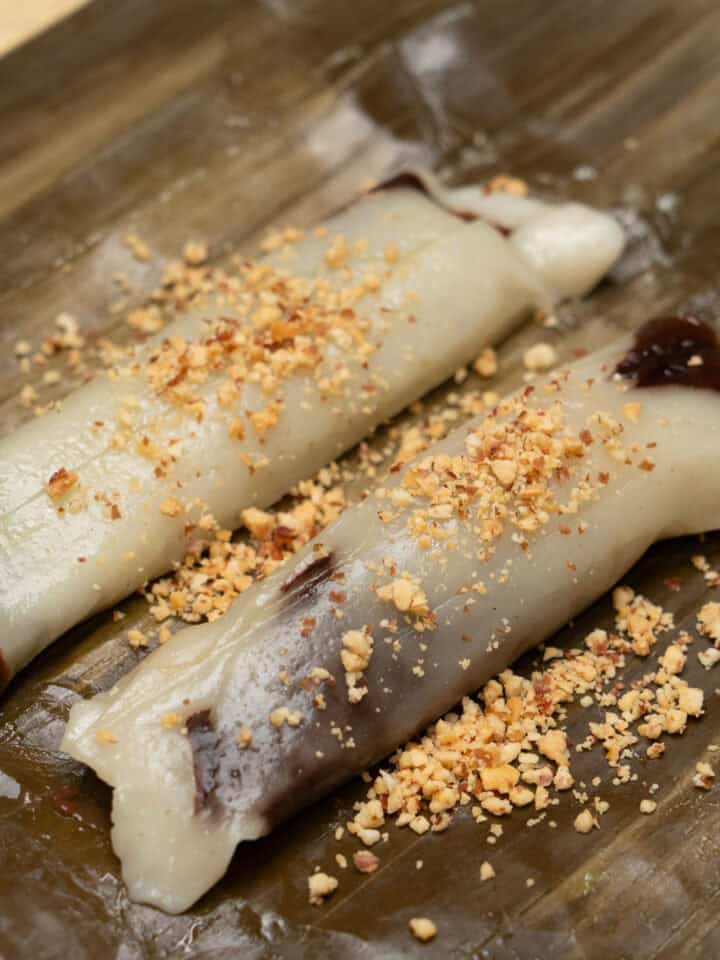
- Ube suman sa latik: Ube sticky rice wrapped in banana leaves and served with latik.
- Espasol: Soft rice cake rolled in toasted rice flour, sometimes with ube.
- Palitaw: Boiled rice cakes coated with coconut, sugar, and sesame seeds or peanuts.
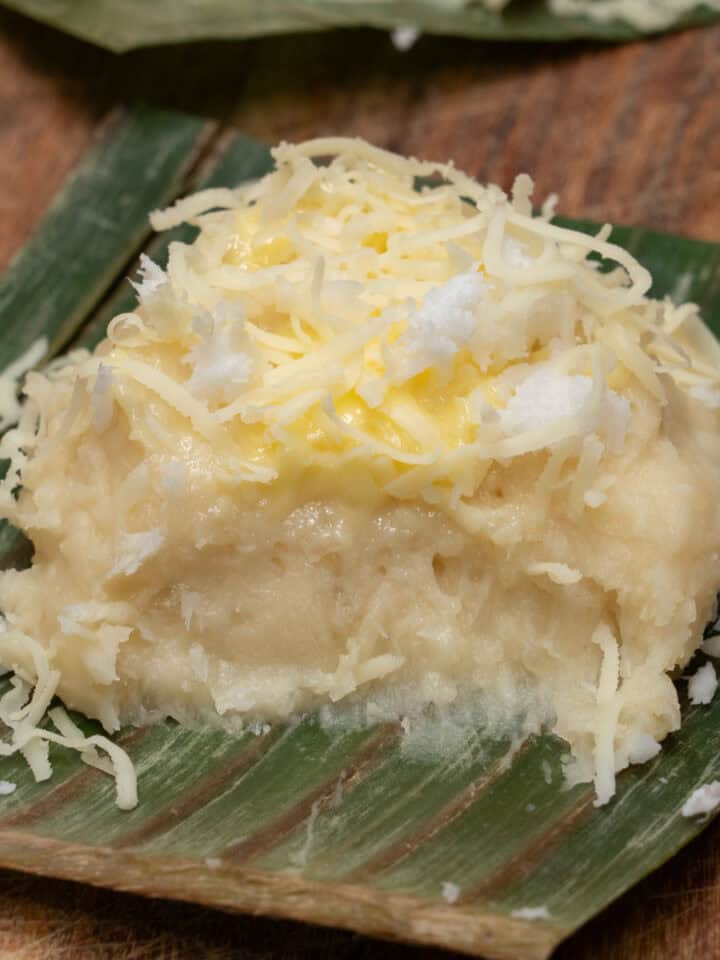
- Puto: Steamed rice cakes, sometimes topped with cheese or salted egg.
- Suman: Sticky rice with coconut milk, wrapped in banana leaves.
- Sapin-sapin: Layered rice cake with different flavors and colors.
Other Merienda Recipes You May Like

Did you make this recipe? I would love to know! Your feedback helps me make better recipes. Please rate, review, or comment below. Questions about this recipe are welcome, too!
Let's connect on Facebook, Instagram, Pinterest, TikTok, Twitter, and Youtube. Be sure to tag me when you try any of my recipes @recipesbynora!
📖 Recipe

Biko Recipe (Sticky Rice Cake with Latik Curds)
Equipment
- Pot or rice cooker
- Non-stick pan or wok (for biko)
- Wide pan (for latik)
- Tray or plate (lined with banana leaves, optional)
Ingredients
For the Biko:
- 2 cups glutinous rice
- 1 cup water (for cooking rice)
- 2 (13.5 oz each) cans coconut milk (about 3 cups) divided
- 8 ounces panutsa chopped (sub: dark brown sugar)
- ½ teaspoon anise seeds optional
- A pinch of salt
For the latik:
- 1 (13.5-oz) can coconut milk or cream
Instructions
- Cook the rice: Rinse rice, then cook with water, 1 cup coconut milk, and a pinch of salt until liquid is absorbed. Remove the lid and let cool.
- Make the latik: Cook 1 can coconut milk until oil separates and curds turn golden. Strain and set aside.
- Prepare the serving platter: Line a tray or plate with banana leaves (softened over a flame). Brush lightly with latik oil to prevent sticking.
- Make the coconut milk mixture: In a pan, combine remaining coconut milk plus 1 can of coconut milk, panutsa, anise seeds, and a pinch of salt.Bring to a boil and cook for about 15 minutes until slightly thickened.
- Cook the rice mixture: Add rice and cook over medium heat for about 20 minutes. Keep stirring until thick and sticky.
- Transfer: Spread into a lined tray, smooth the top, and brush with latik oil.
- Serve: Let cool slightly, slice, and top with latik.
Video
Notes
- Glutinous rice: Also called malagkit or sticky rice. It turns soft and chewy when cooked, but it's not actually sweet.
- Coconut milk: Fresh is great, but canned works just fine. You can also use coconut cream (kakang gata) for a richer, thicker texture.
- Panutsa: A type of sugar made from cooked sugarcane juice. It gives biko a deeper caramel flavor and darker color. You can use dark brown sugar or muscovado instead.
- Anise seeds: These add a light licorice-like flavor. You can also use ginger, vanilla, or pandan.
- Don't overcook the rice - it should be cooked but still firm.
- Stir constantly so the mixture doesn't stick or burn.
- Cook until thick and sticky for that chewy texture.
- Lower the heat if the bottom starts to stick.
- Let it cool slightly before slicing so it holds its shape.
- To store: Keep in an airtight container at room temperature for up to 1 day, or refrigerate for up to 3 days.
- To reheat: Microwave for a few seconds until soft or enjoy at room temperature.


Joyce says
Wow! This is different from other biko i’ve tried. Soo delicious. Soft, chewy and the flavor is amazing. Thank you for the recipe Ms. Nora!
Nora Reyes says
Hello Joyce! I am so glad you enjoyed it. Thank you for trying out the recipe!