
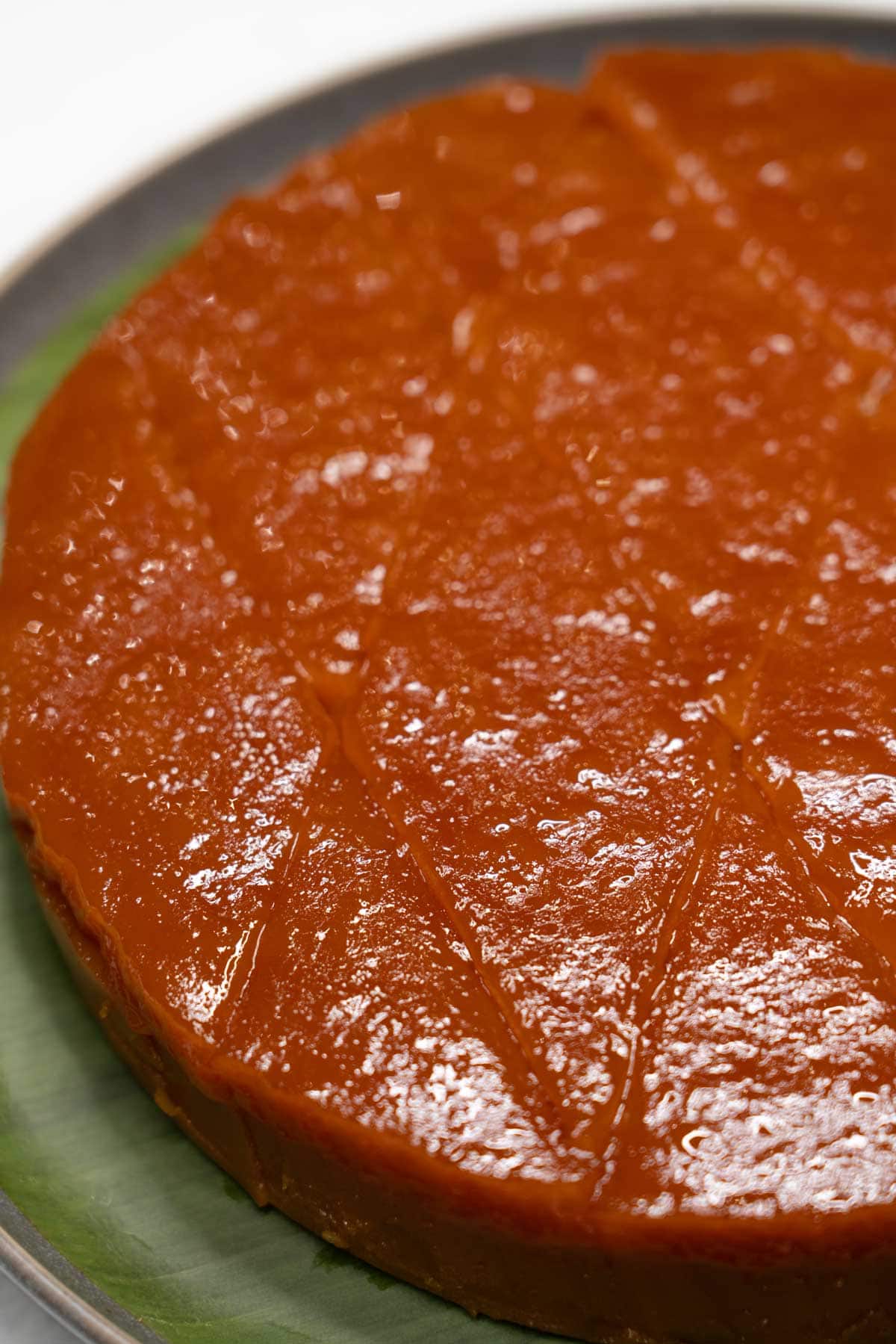
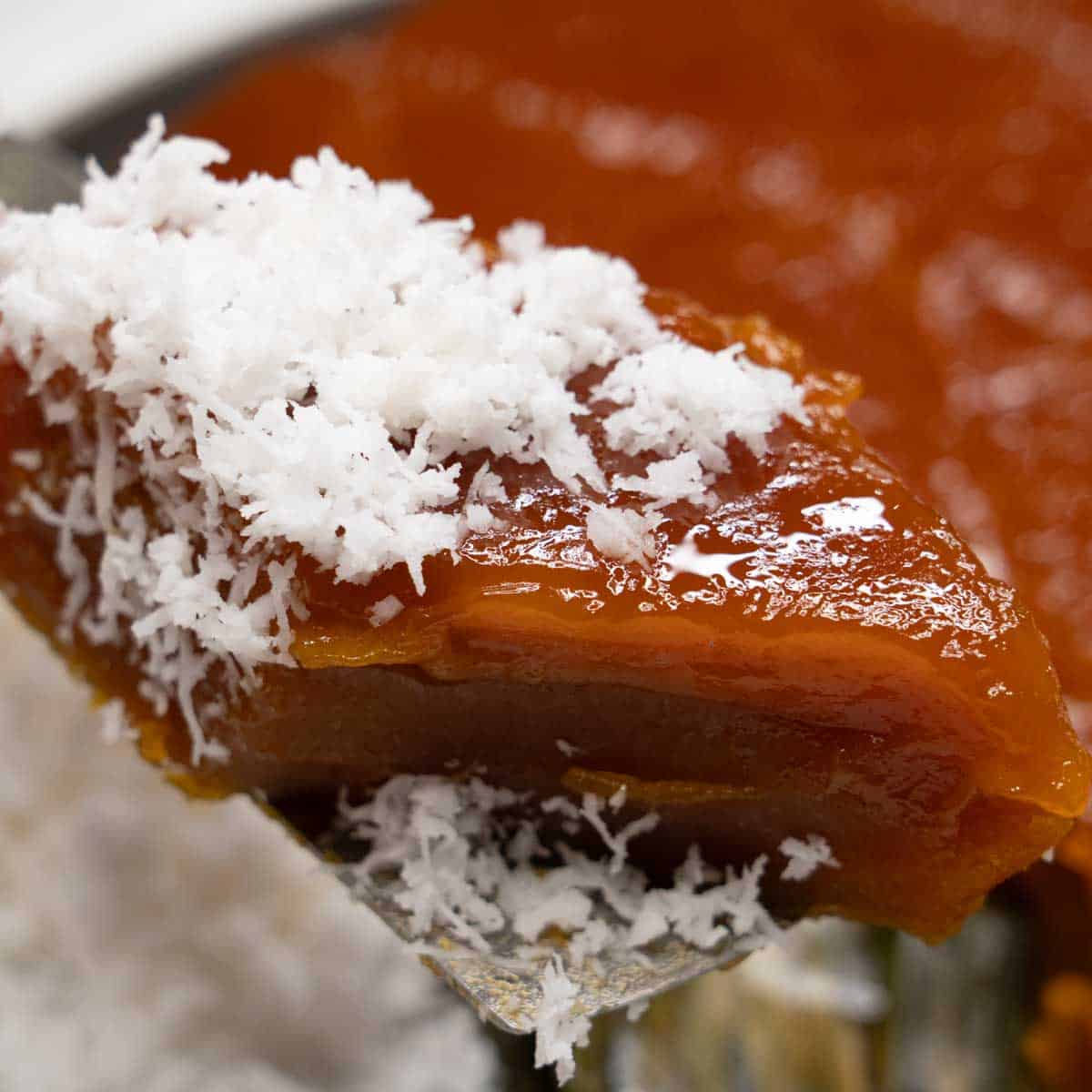
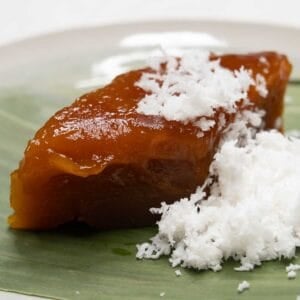
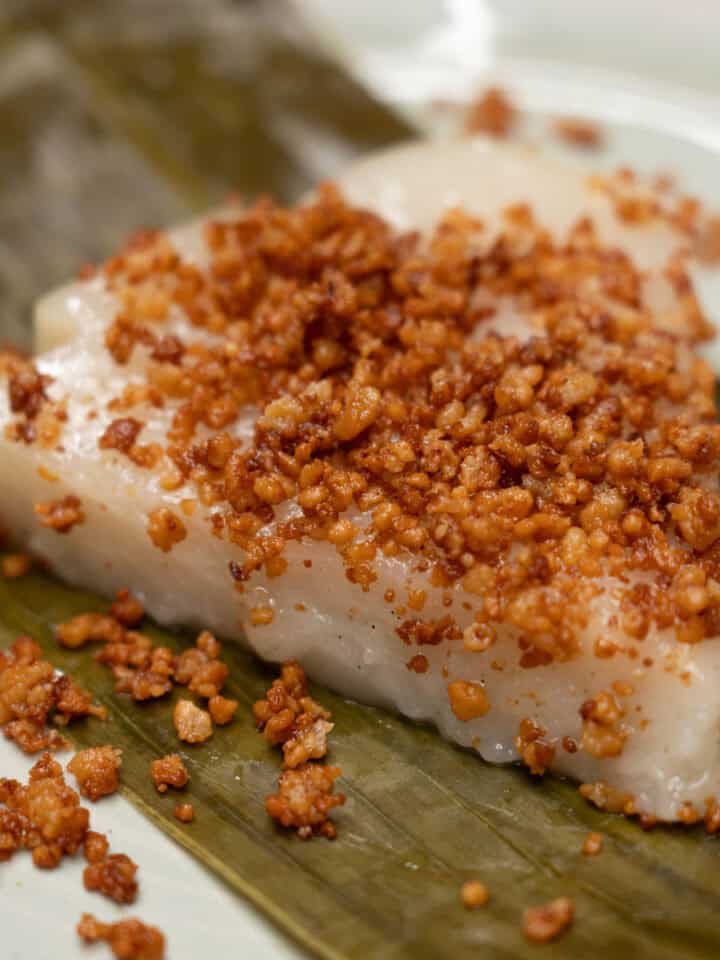
This traditional kutsinta is made in a pan instead of the usual small molds. It has two layers with slightly different textures - a firmer, chewy bottom layer and a softer top layer.
It's the kind of kutsinta you often see displayed on a bilao and sold in slices, usually topped with grated coconut.
In my hometown, we also call this version kalamay. It's simple to make, easy to share, and perfect for merienda or family gatherings.
Jump to:
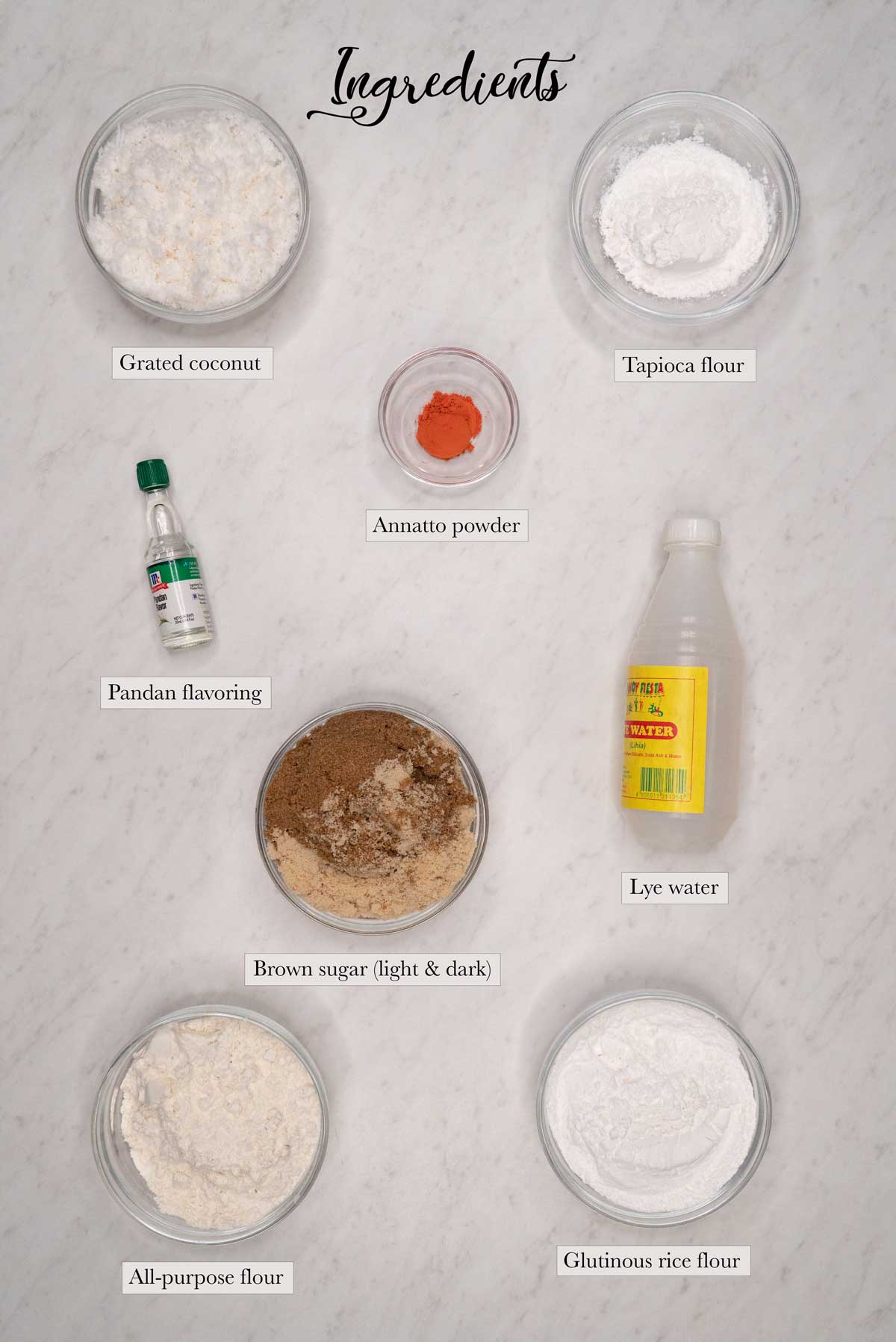
Ingredients You'll Need
Notes and Substitutions
- All-purpose flour: Helps the bottom layer hold its shape so the kutsinta slices cleanly.
- Tapioca flour (cassava starch): This is what gives kutsinta its chewy texture. Using too much can make it dense or rubbery.
- Glutinous rice flour (sweet rice flour): This makes a softer, slightly sticky top layer.
- Annatto (achuete): It gives kutsinta its orange color and doesn't add flavor. Annatto powder mixes easily into the batter. If using annatto seeds, soak them in hot water and use the colored water.
- Brown sugar: I like to mix dark and light brown sugar for a color that's just right. You can use either one - dark will make the kutsinta darker, while light will make it lighter. Panocha or panutsa also works well.
- Pandan flavor or extract: This is optional, but it adds a light pandan flavor. Use clear pandan extract, not the green pandan flavoring, which can change the color. You can also use vanilla extract instead.
- Grated coconut: Fresh grated coconut is best. Frozen grated coconut works too-just thaw it first. Avoid sweetened shredded coconut since it's much sweeter and drier.
How to Make Traditional Kutsinta (Step-by-Step)
Step 1: Prepare the pan and steamer
Bring water to a boil in your steamer over medium heat.
Note: I used a large pot with a rack and only needed about 1 inch of water. Just keep the water below the rack and add more if needed.
Grease an 8-inch round pan well. Kutsinta tends to stick, so make sure the bottom and sides are well coated.
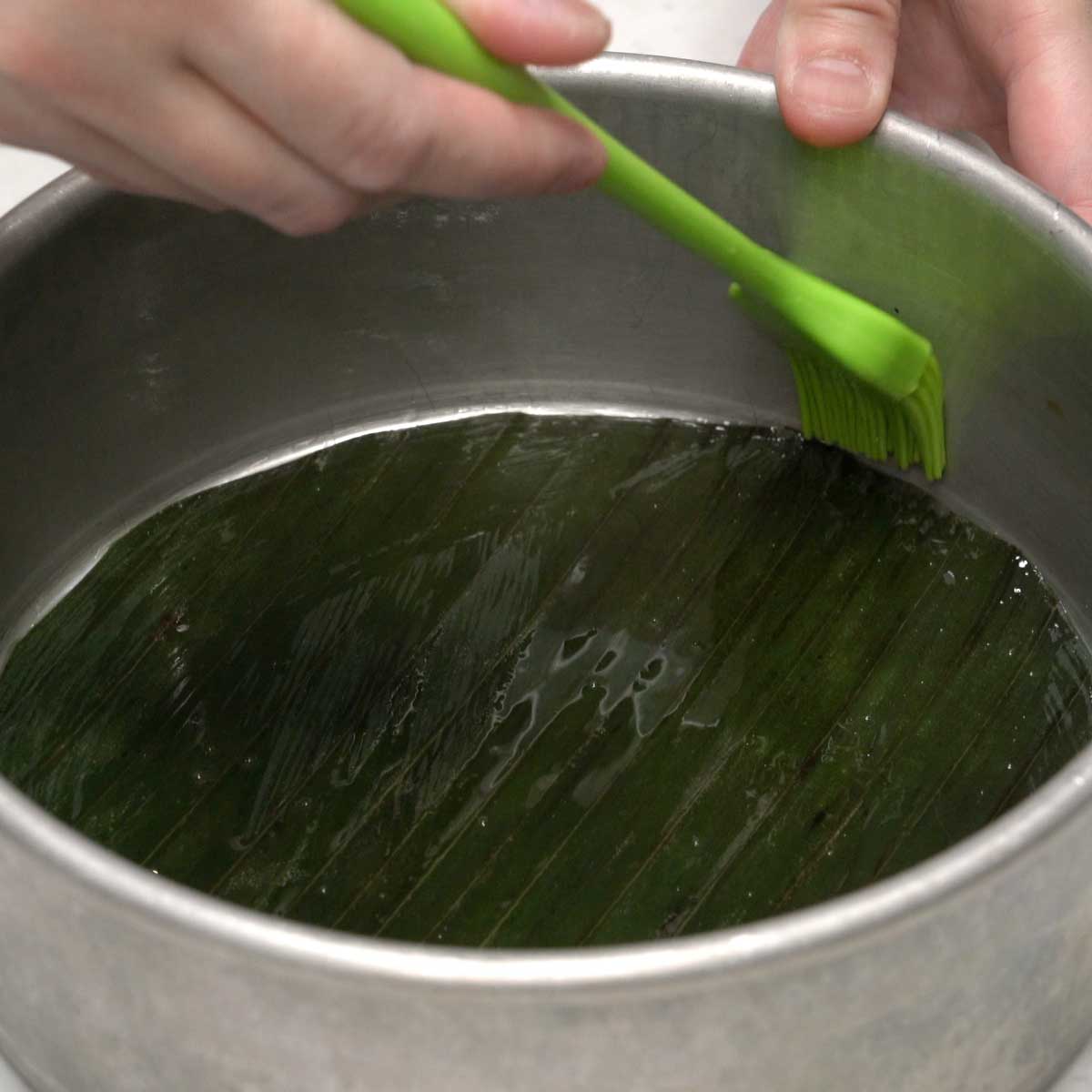
You can line the pan with banana leaf or parchment paper. After lining, lightly grease it as well.
Greasing helps prevent the kutsinta from sticking and makes it easier to lift out once it cools.
Step 2: Make the bottom layer
In a large bowl, combine:
- 1 cup all-purpose flour
- ⅓ cup tapioca flour
- 1 cup brown sugar (half dark, half light)
- 2 cups lukewarm water
- 1 teaspoon annatto powder
- 1 teaspoon lye water
- ½ teaspoon pandan extract or 1 teaspoon vanilla (optional)
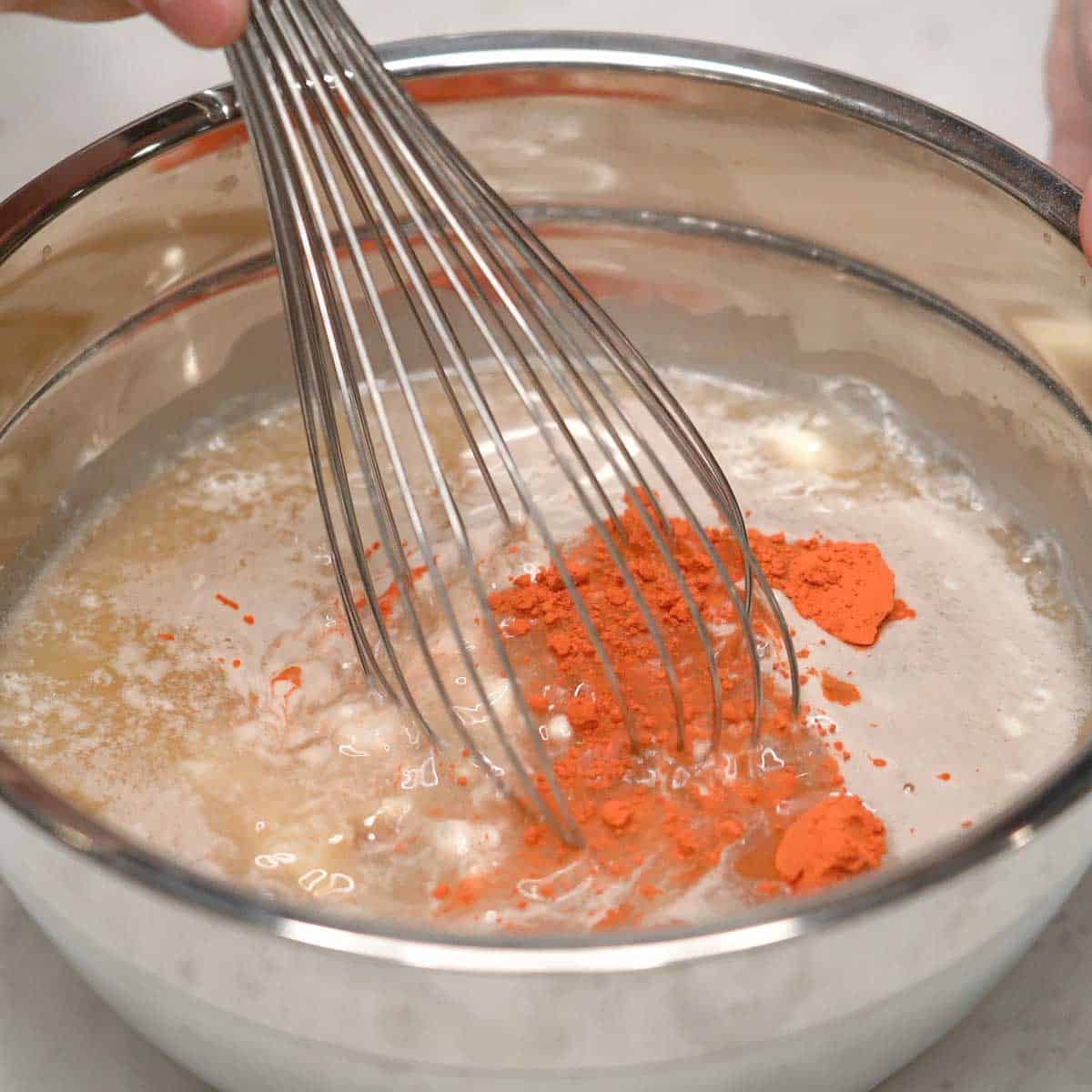
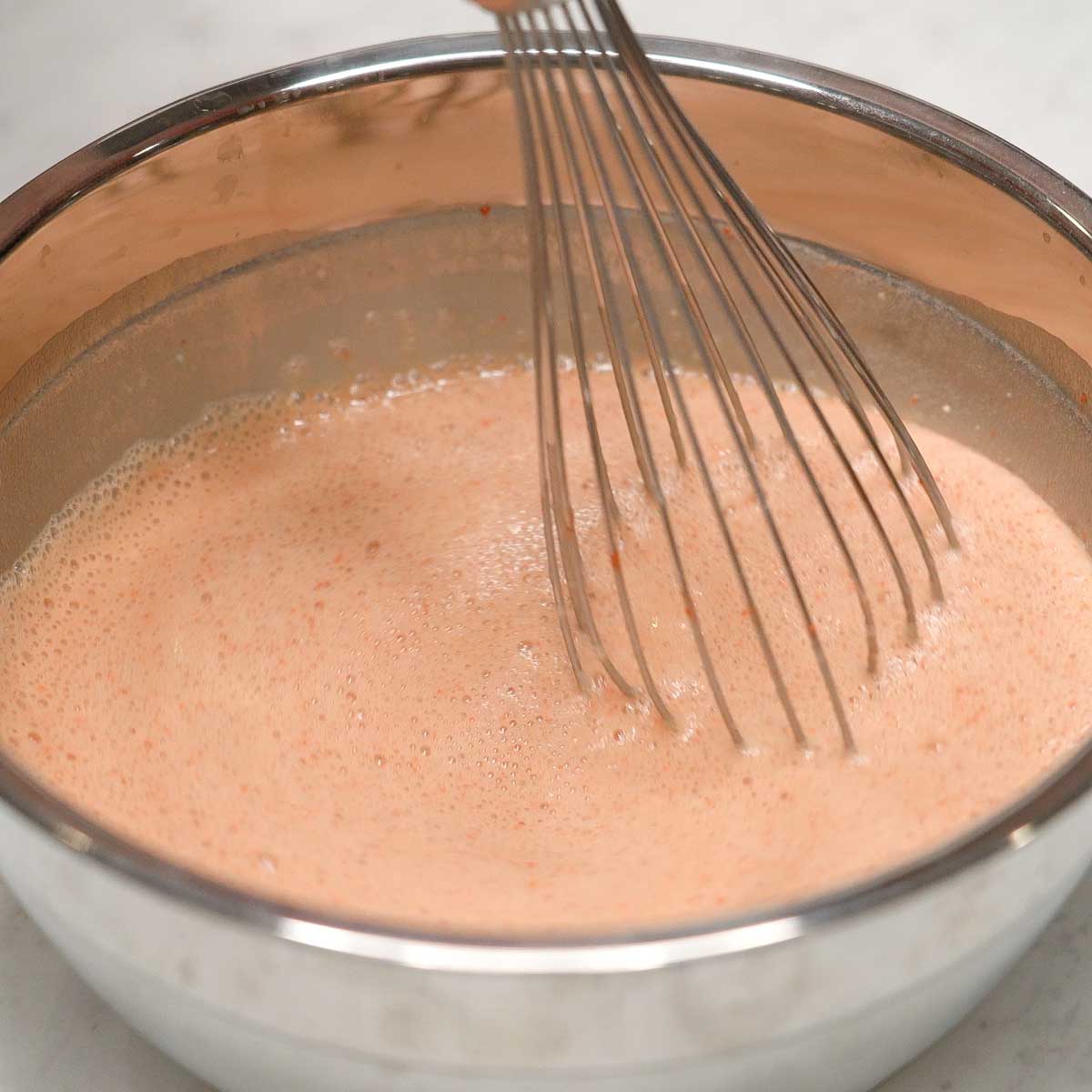
Whisk until the batter is smooth.
This bottom layer is the firmer layer. It has the familiar chewy texture of kutsinta and helps support the softer layer on top.
Step 3: Strain the batter
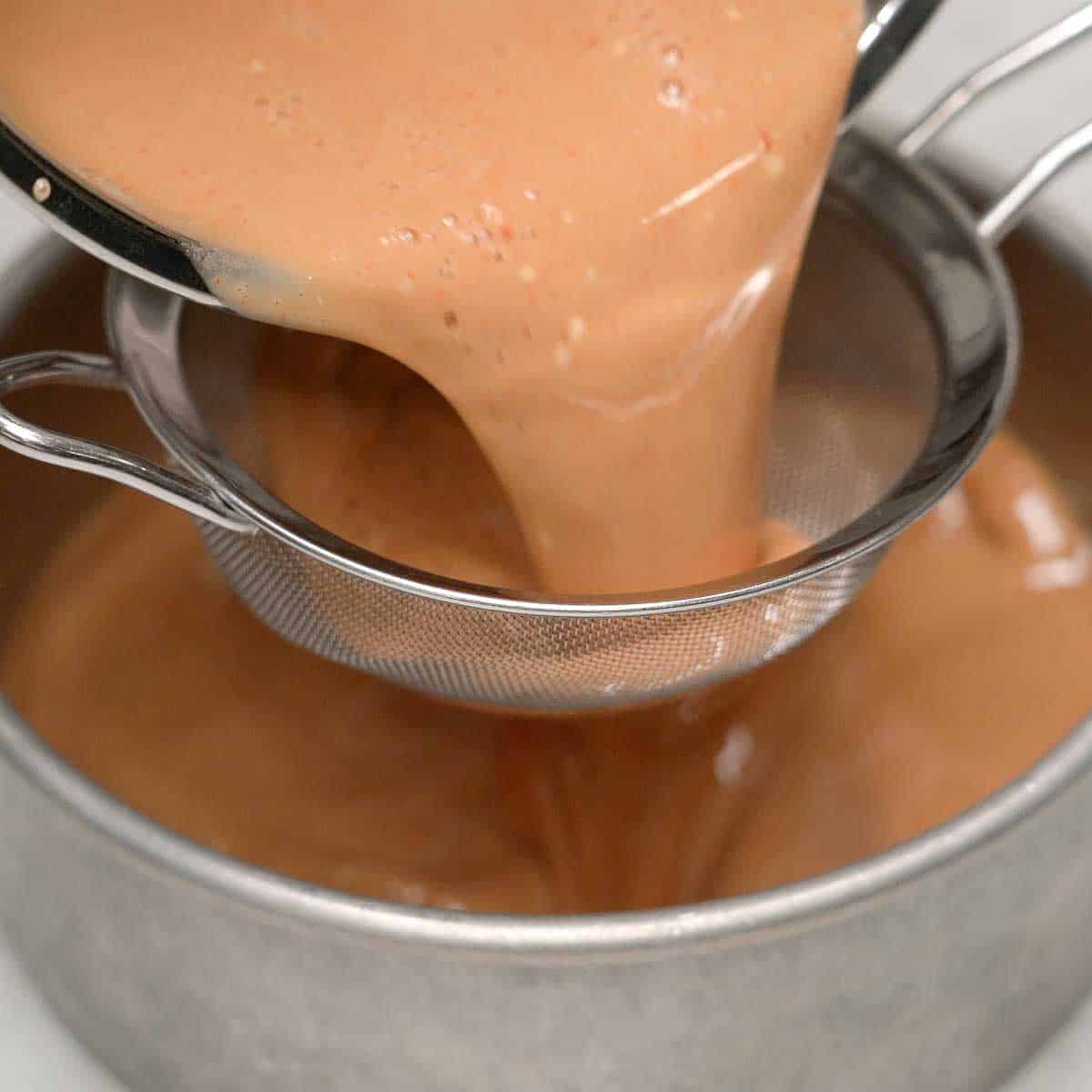
Strain the batter into another bowl or directly into the prepared pan.
This helps remove lumps and gives you a smoother texture.
Step 4: Steam the bottom layer
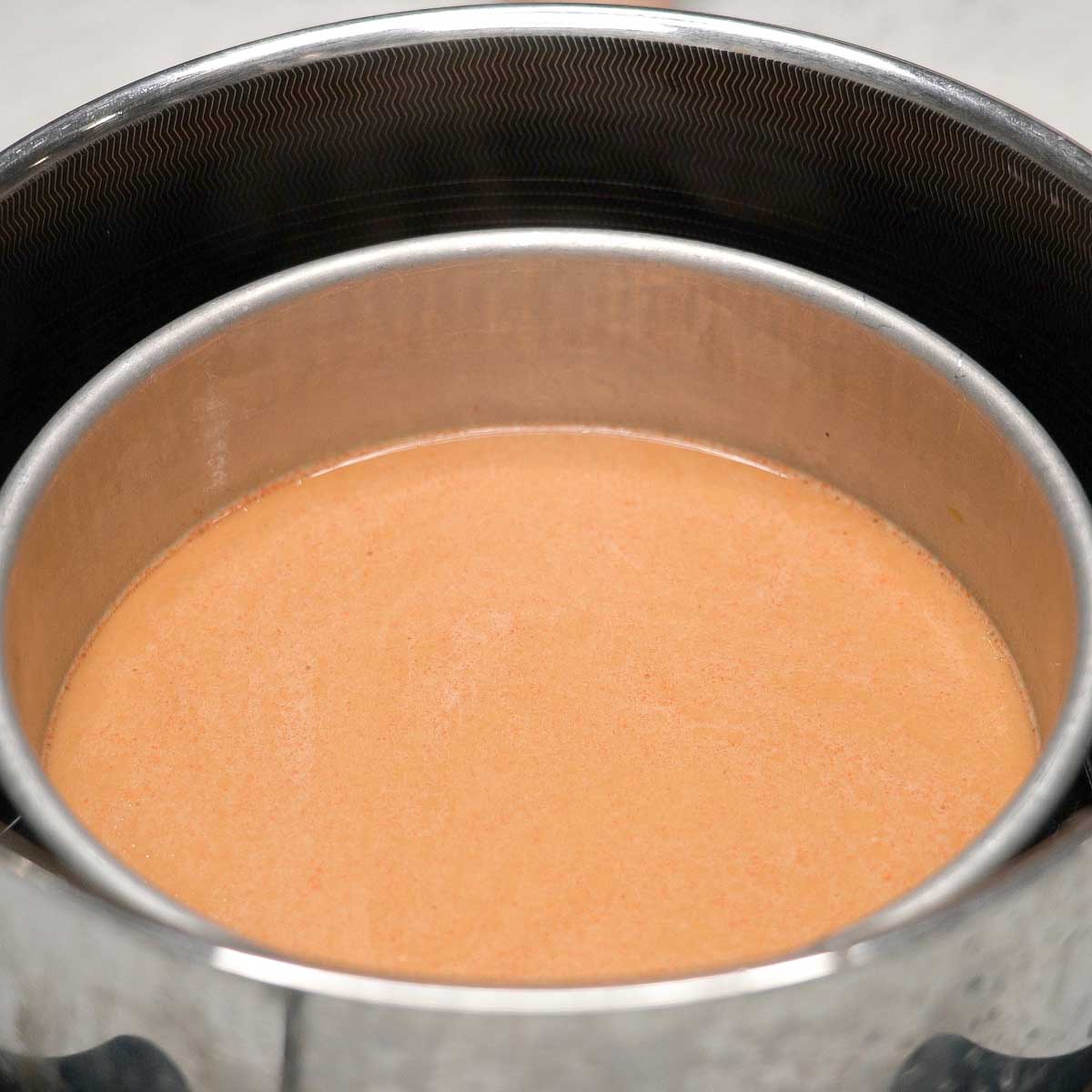
Pour the batter into the prepared pan.
Steam over medium heat for about 15 minutes.
Step 5: Make the top layer
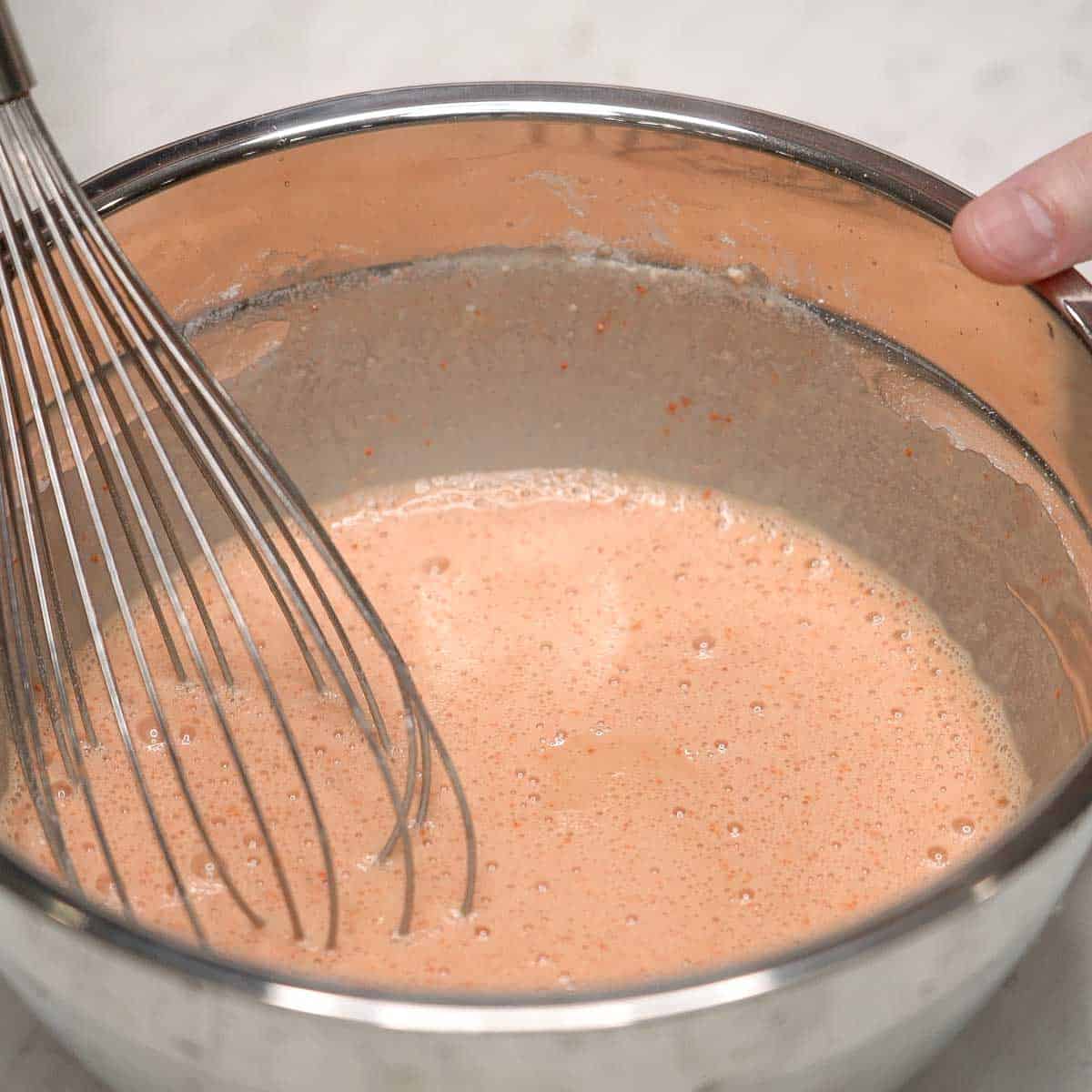
While the bottom layer is steaming, make the second batter.
In another bowl, combine:
- 1 cup glutinous rice flour
- ½ cup light brown sugar (half dark, half light)
- 1 cup water
- 1 teaspoon annatto powder
- ½ teaspoon lye water
- ¼ teaspoon pandan flavor or ½ teaspoon vanilla extract (optional)
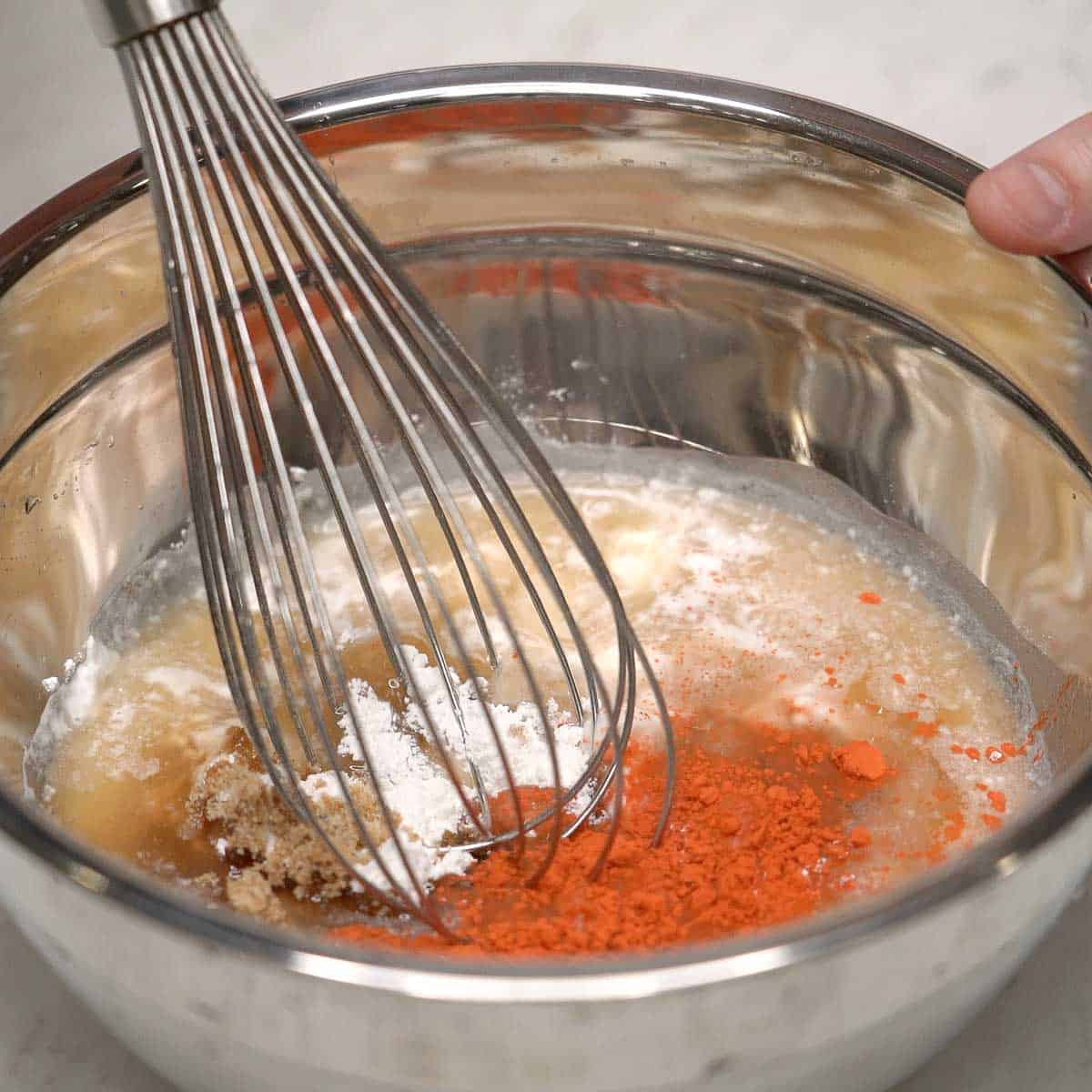
Whisk until smooth. This top layer is softer and a little more tender than the bottom.
Step 6: Strain the top layer
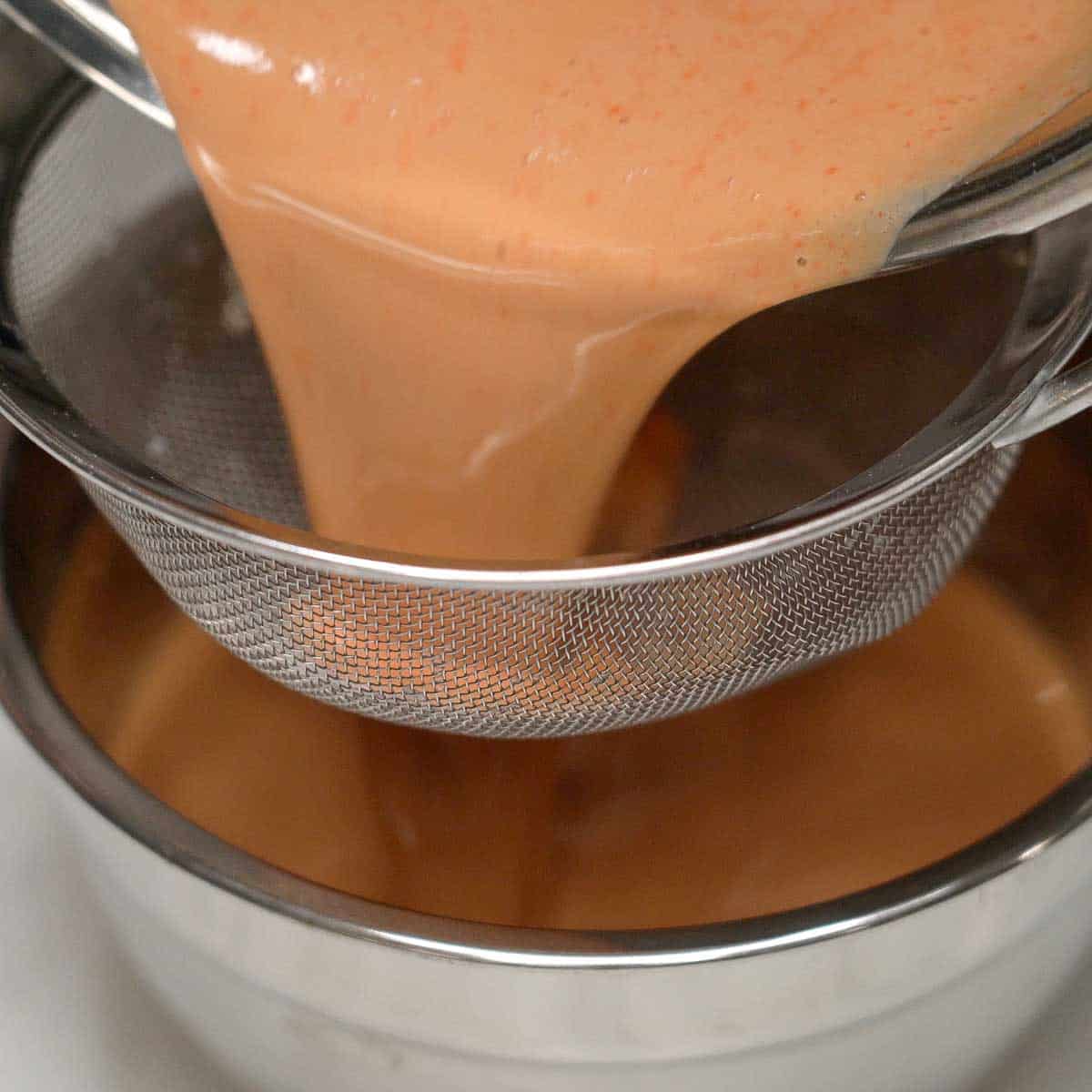
Strain the second batter over a bowl to remove any lumps.
Step 7: Add the top layer
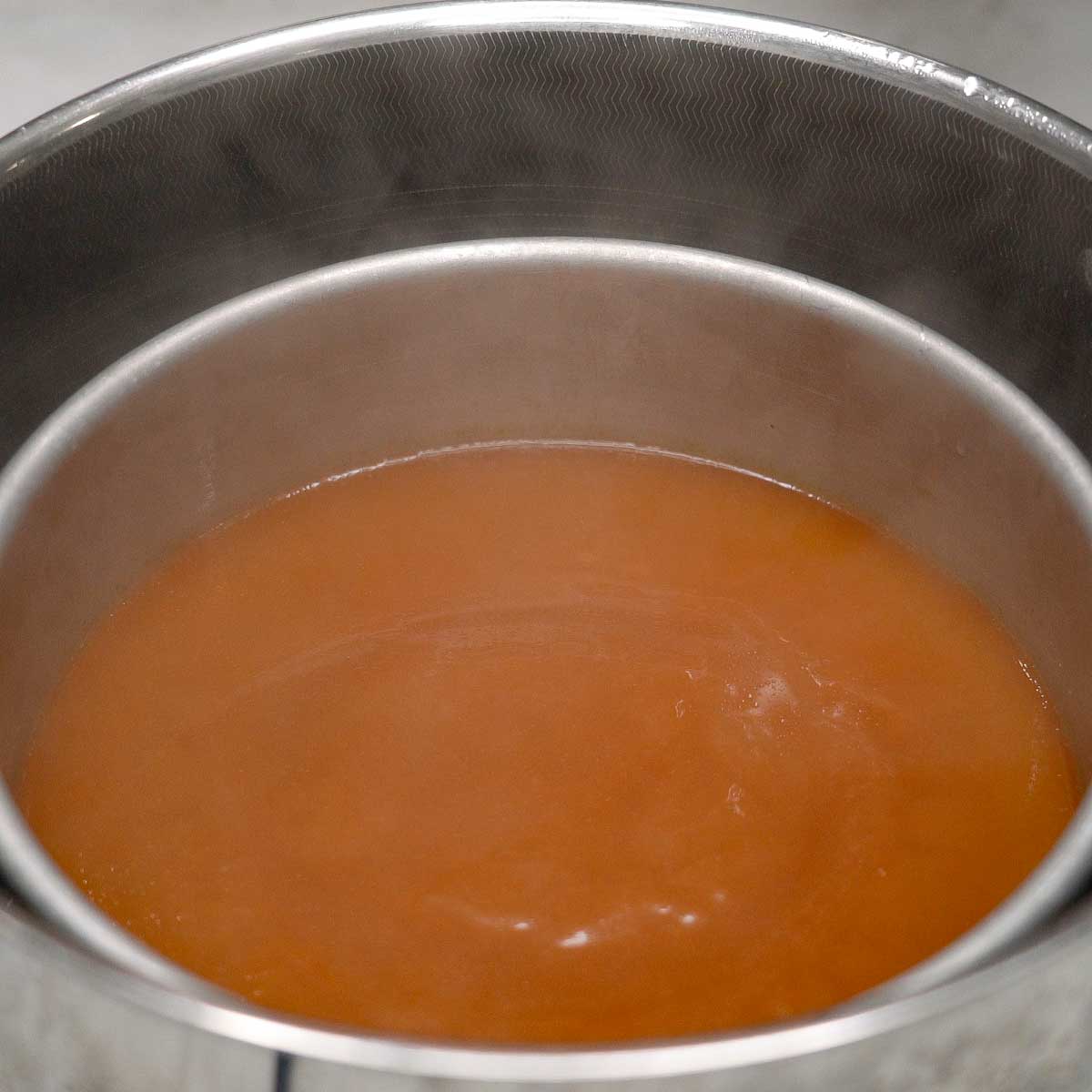
The bottom layer should look mostly set on the surface, but it isn't fully cooked yet.
If the batter still looks very loose or watery on top, steam it for a few more minutes until the surface looks set.
Do not steam it until completely firm or dry. If the first layer cooks too much, the second layer may not stick well and the two layers can separate later.
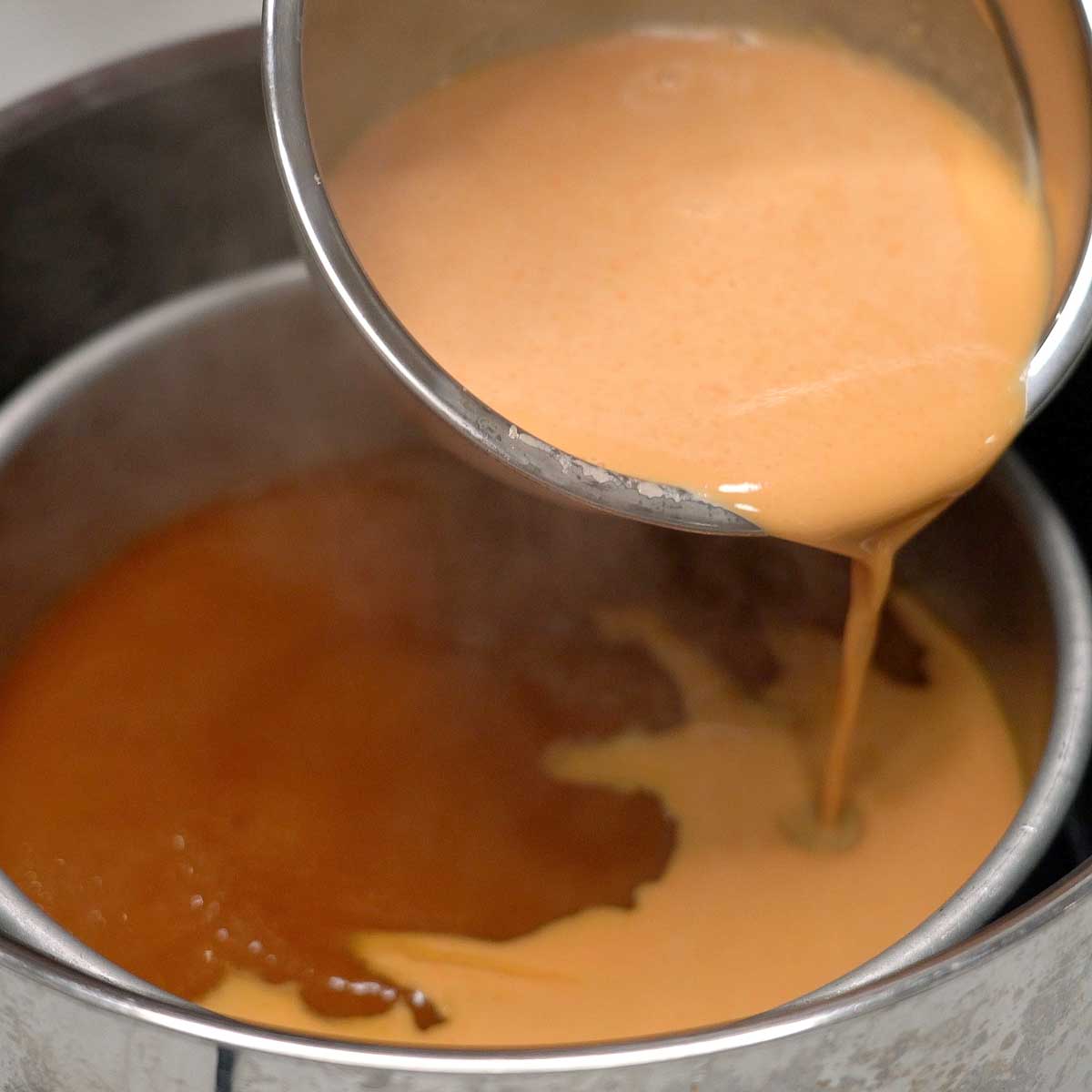
Once the bottom layer is mostly set, stir the mixture again and gently pour the top layer over it.
Pour slowly around the sides first, then toward the center so the first layer doesn't break. You can also pour over the back of a spoon if you want to be extra careful.
Step 8: Steam until fully cooked
Steam for about 30 minutes, or until the top is fully set. Make sure there is enough water in the steamer so it doesn't run dry.
Look for these signs that it's done:
- The top looks set, with no liquid sitting on the surface.
- The center should not jiggle when you gently move the pan.
Try not to oversteam. Too much steaming can make the top layer firmer than you want.
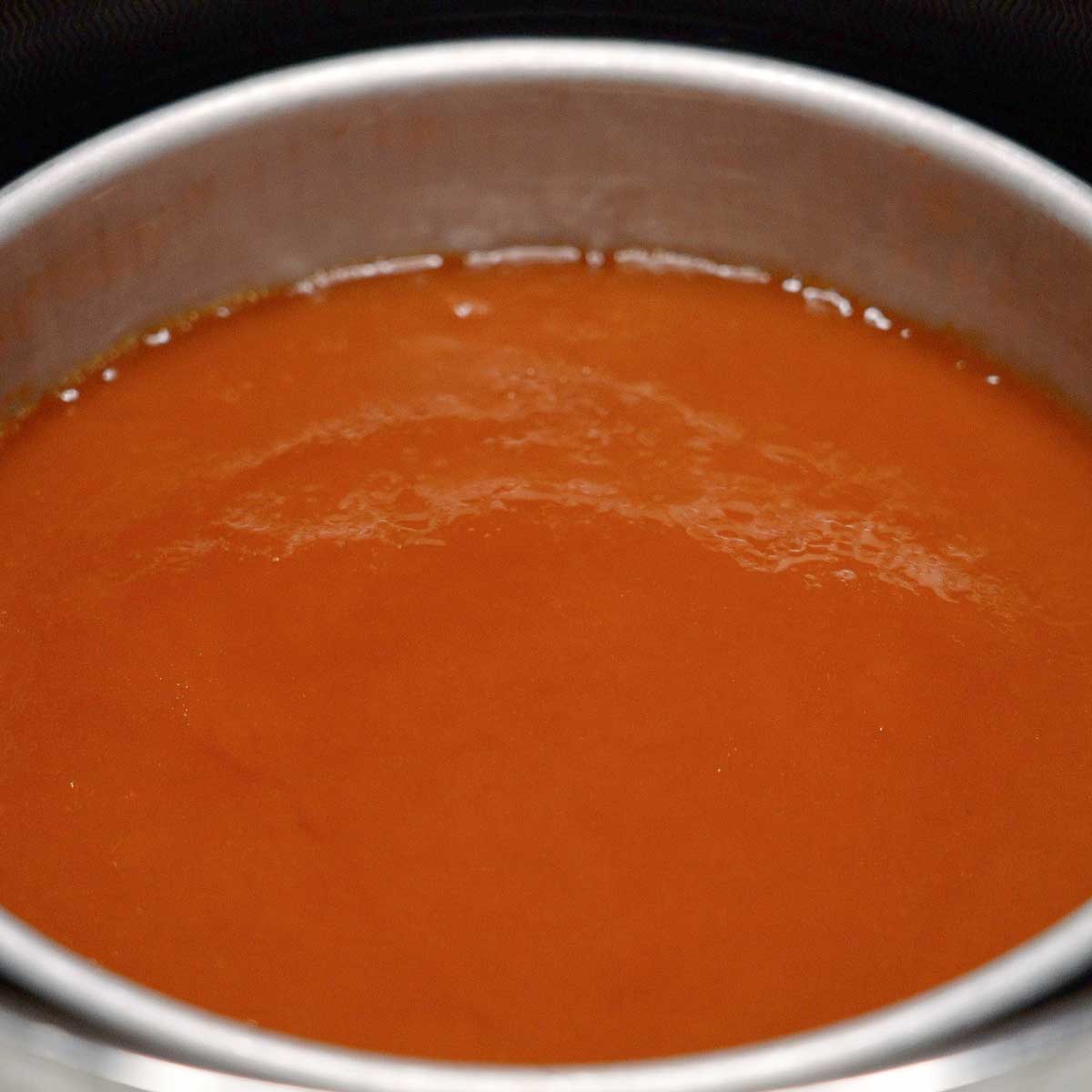
Step 9: Cool and serve
Remove the pan from the steamer. Let it cool for at least an hour before taking out of the pan.
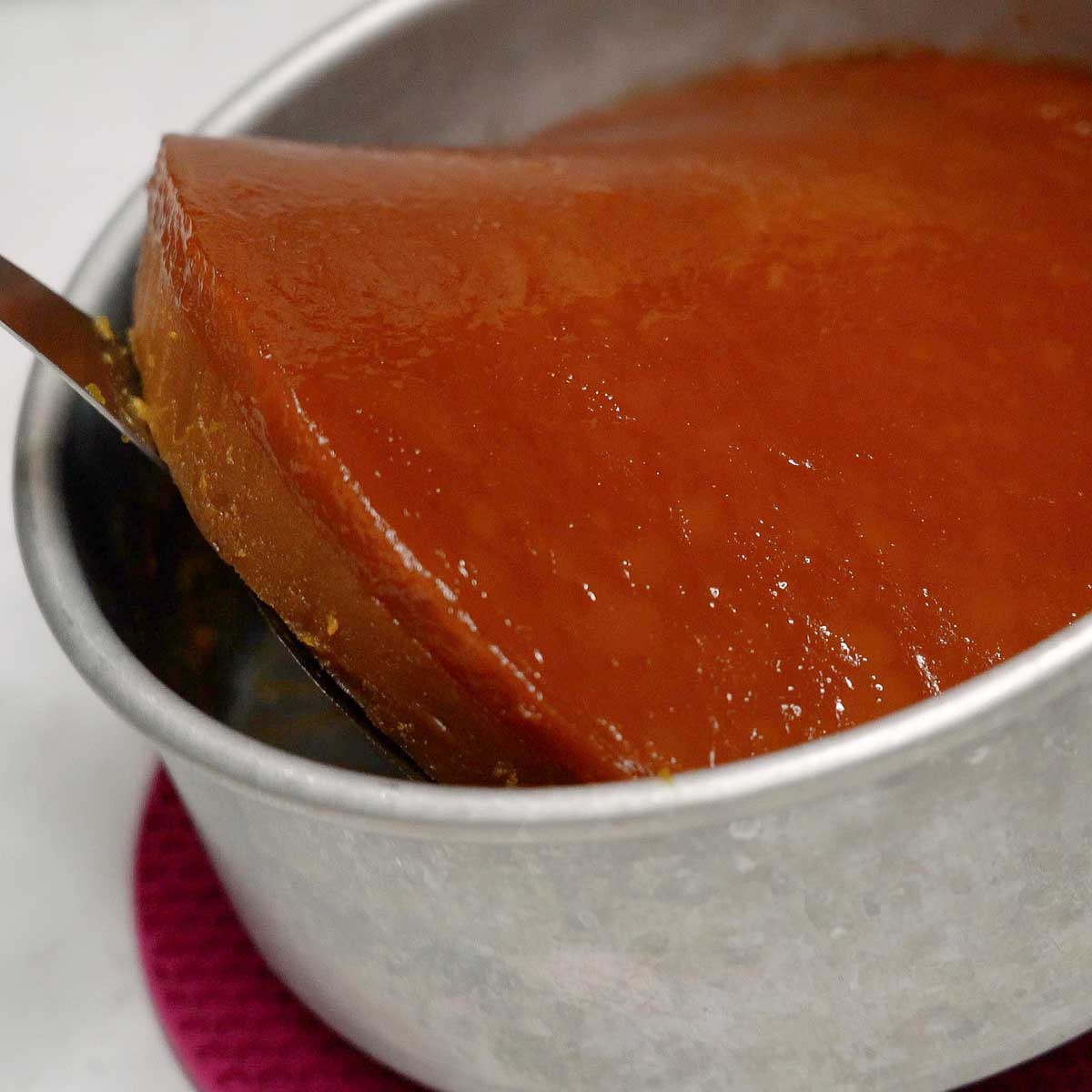
Do not slice while hot. It needs time to set, or it may turn sticky and messy.
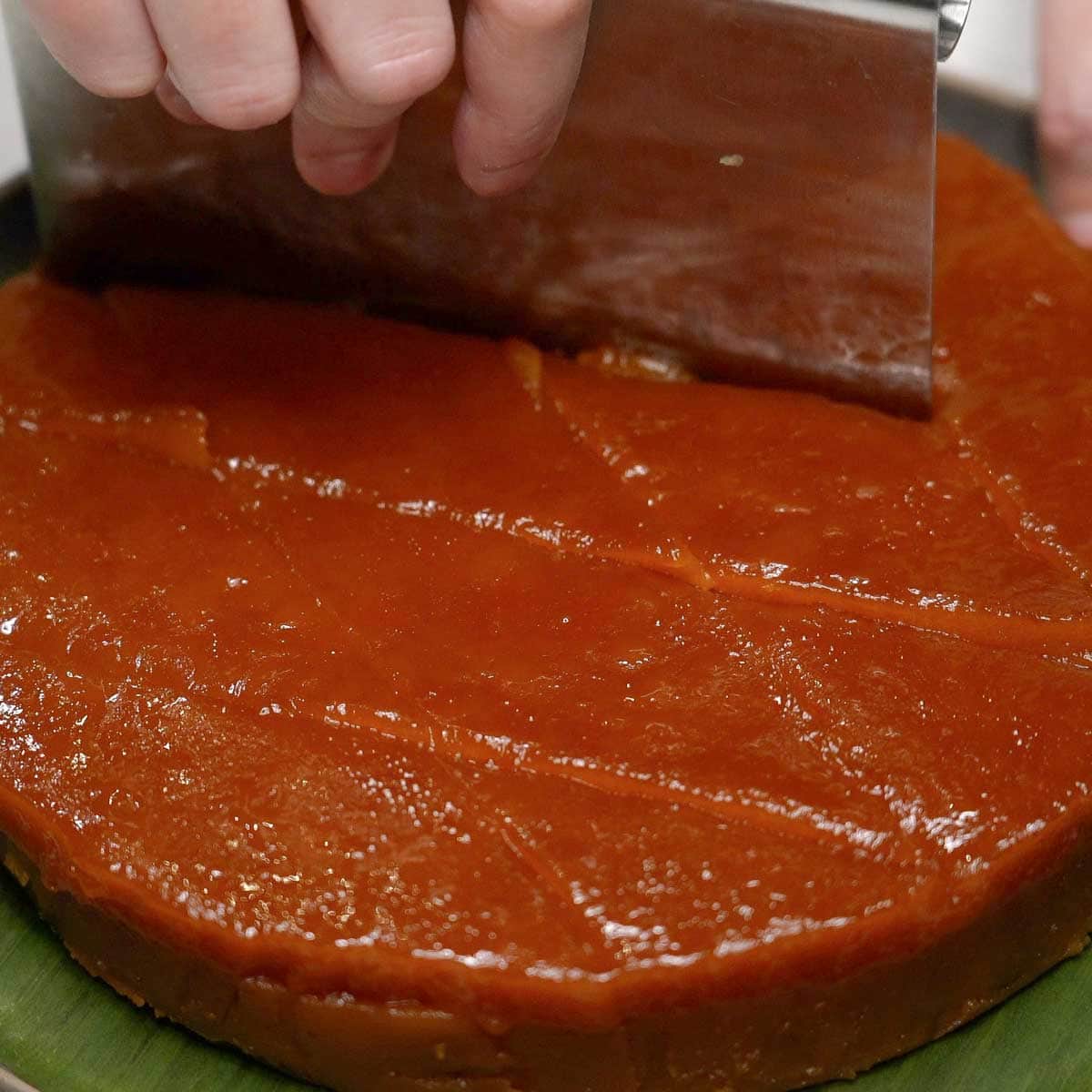
Once cool, slice and serve with fresh grated coconut.
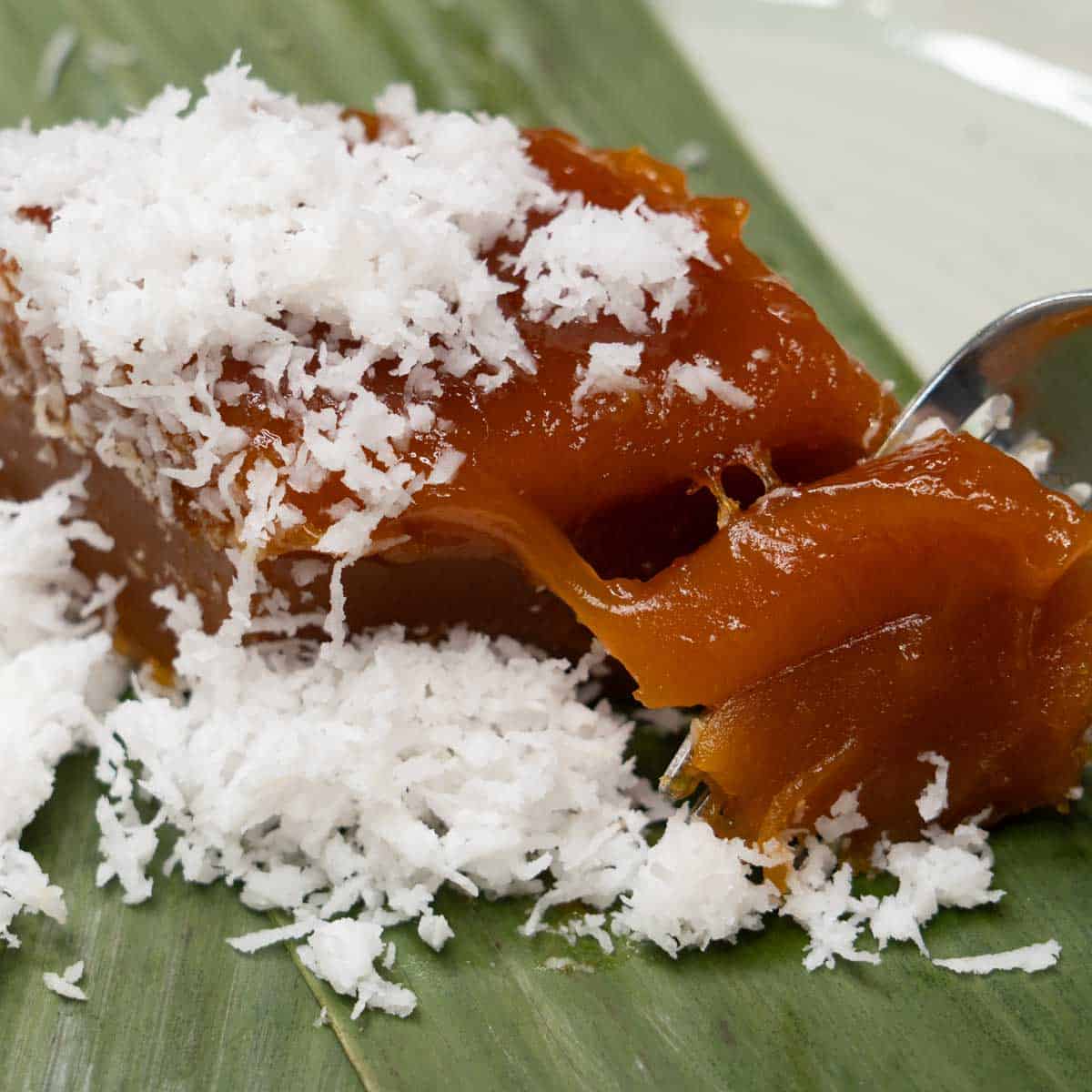
Cooking Tips
- Strain the batter: Removes lumps for a smoother texture.
- Use lukewarm water: Helps the ingredients dissolve faster and makes mixing easier.
- Do not overcook the first layer: The surface should look set, but the inside should still be soft so the second layer sticks.
- Pour the second layer slowly: Start around the sides of the pan, then toward the center to avoid breaking the first layer.
- Steam over moderate heat: Heat that's too high can cause bubbling or uneven cooking.
- Check for doneness: The top should look set with no more liquid. The center should not jiggle.
- Cool before slicing: Let it cool completely so it can set properly. Cutting it while hot can make it sticky and messy.
Storage
- Room temperature: Kutsinta can be kept at room temperature for about 1 day, covered so it doesn't dry out.
- Refrigerator: Store leftovers in an airtight container in the refrigerator for up to 3 days.
- Grated coconut: Fresh grated coconut should be kept in the refrigerator. Add it only when ready to serve so it stays fresh.
Recipe FAQs
Not always. A few drops of condensation usually evaporate as the kutsinta steams.
If your steamer tends to drip a lot of water, placing a cloth over the lid can help keep the surface smooth.
Kutsinta can turn out hard if the batter has too much tapioca flour, too much lye water, or if it was steamed too long.
The first layer may have been too cooked or too dry before adding the second layer.
The surface should look set, but the inside should still be soft so the second layer can stick to it.
Kutsinta gets its chew from tapioca or cassava starch and lye water.
If it turns out soft or not chewy, check that you used the correct amount of starch and lye water.
It may just need more time to cool. Kutsinta firms up as it cools.
If it still feels too soft after cooling, it may have been undercooked.
Lye water helps give kutsinta its chewy texture and darker color.
Some recipes suggest baking soda as a substitute, but the texture may not be the same.
Kutsinta gets its color from brown sugar and annatto (achuete).
If the batter looks too light, you can add a little more annatto powder or annatto water.
More Kakanin to Try
- Pichi-pichi: A soft and chewy cassava dessert coated in grated coconut.
- Sapin-sapin: A colorful layered rice cake made with glutinous rice flour and coconut milk.
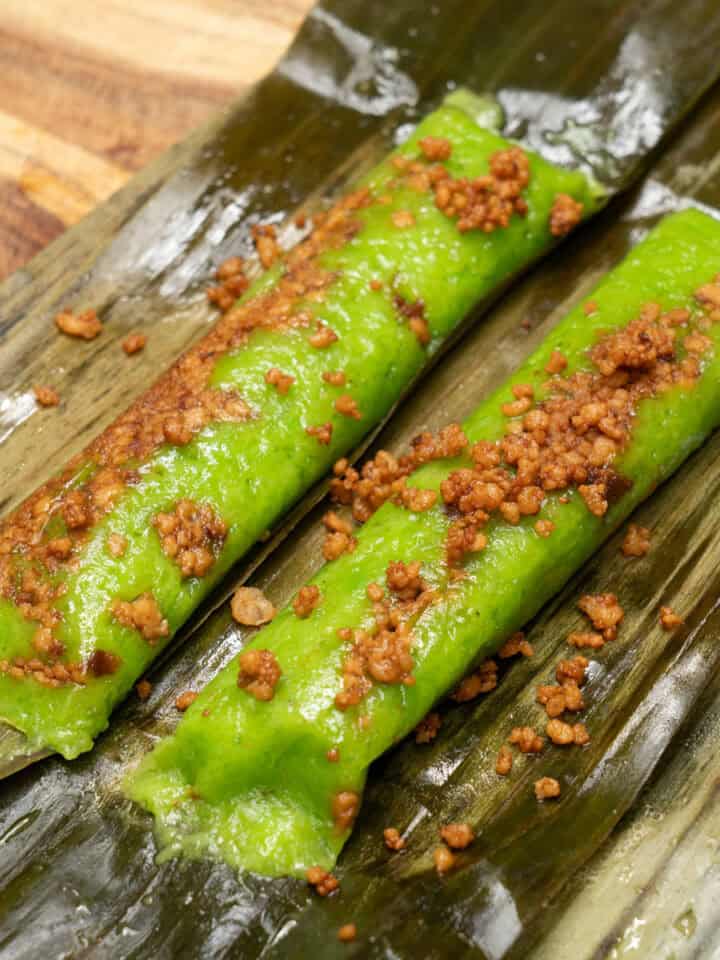
- Palitaw: Soft rice cakes made from glutinous rice flour, boiled until they float, then coated with coconut, sugar, and toasted peanuts or sesame seeds.
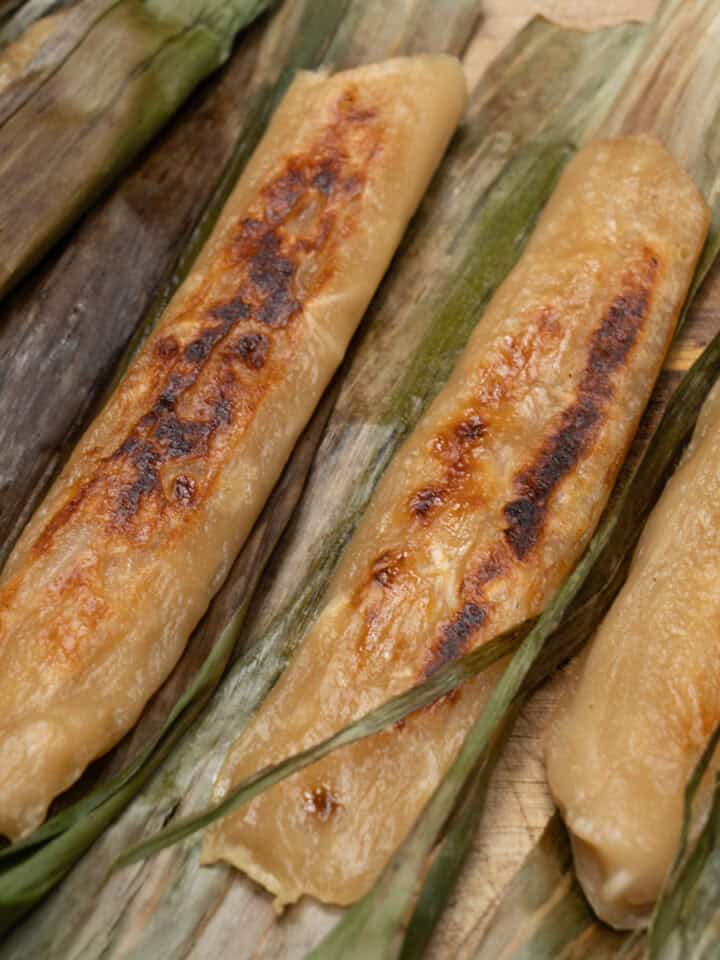
- Suman malagkit: Sticky rice cooked in coconut milk, wrapped in banana leaves, and steamed. Often served with sugar or latik.
- Bibingka: A soft rice cake baked with coconut milk, cooked in clay pots, and topped with salted egg and cheese.
- Kalamay: A sticky sweet rice dessert made with glutinous rice flour, coconut milk, and brown sugar.
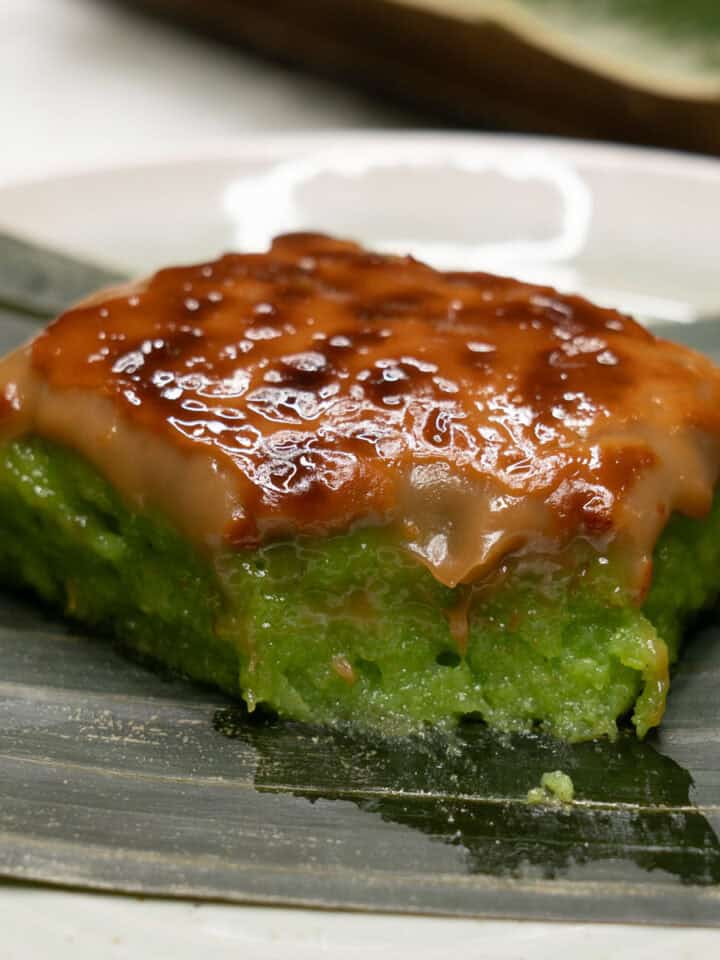
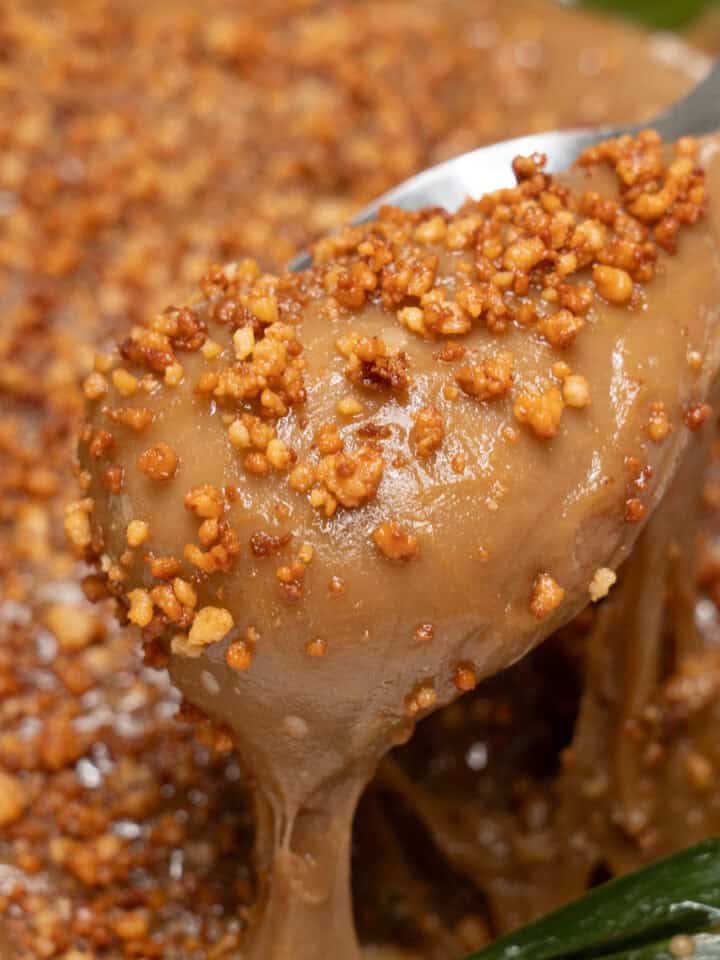
- Inutak: Soft, sticky rice cake with an ube layer, a plain layer, and a browned coconut cream topping.
Other Merienda Recipes You May Like


Did you make this recipe? I would love to know! Your feedback helps me make better recipes. Please rate, review, or comment below. Questions about this recipe are welcome, too!
Let's connect on Facebook, Instagram, Pinterest, TikTok, Twitter, and Youtube. Be sure to tag me when you try any of my recipes @recipesbynora!
📖 Recipe
Traditional Kutsinta Recipe (Steamed in a Pan)
Equipment
- Steamer
- 8-inch round pan
- Mixing bowls
- Whisk
- Strainer
Ingredients
Bottom Layer
- 1 cup all-purpose flour
- ⅓ cup tapioca flour cassava starch
- 1 cup dark brown sugar
- 2 cups lukewarm water
- 1 teaspoon lye water
- 1 teaspoon annatto powder
- ½ teaspoon pandan extract or 1 teaspoon vanilla optional
Top Layer
- 1 cup glutinous rice flour
- ½ cup brown sugar
- 1 cup water
- ½ teaspoon lye water
- 1 teaspoon annatto powder
- ¼ teaspoon pandan extract or ½ teaspoon vanilla optional
To Serve
- Fresh grated coconut
Instructions
- Prepare the pan and steamer: Bring water to a boil in a steamer. I used a large pot with a rack and only needed about 1 inch of water. Just keep the water below the rack and add more if needed.Grease an 8-inch round pan well. You can line the bottom with banana leaf or parchment, then grease the liner again.
- Make the bottom layer: In a bowl, combine 1 cup all-purpose flour, ⅓ cup tapioca flour, 1 cup brown sugar, 2 cups lukewarm water, 1 teaspoon annatto powder, 1 teaspoon lye water, and ½ teaspoon pandan extract (optional).Whisk until smooth.
- Strain: Strain the batter to remove lumps, then pour into the prepared pan.
- Steam the bottom layer: Steam over medium-low to medium heat for about 15 minutes, until the surface looks mostly set but the layer is not fully cooked.
- Make the top layer: In another bowl, combine 1 cup glutinous rice flour, ½ cup brown sugar, 1 cup water, 1 teaspoon annatto powder, ½ teaspoon lye water, and ¼ teaspoon pandan flavor (optional).Whisk until smooth.
- Strain the batter: Strain the mixture to remove lumps.
- Add the top layer: Once the bottom layer is mostly set, gently pour the second batter over it. Pour slowly around the sides of the pan first.
- Steam until cooked: Steam for about 30 minutes, or until the top is set and the center no longer jiggles.
- Cool and serve: Let the kutsinta cool completely before slicing. Serve with fresh grated coconut.
Notes
- All-purpose flour: Helps the bottom layer hold its shape so it slices cleanly.
- Tapioca flour (cassava starch): Gives kutsinta its chewy texture. Too much can make it dense or rubbery.
- Glutinous rice flour (sweet rice flour): Used for the top layer to make it softer and slightly sticky.
- Annatto (achuete): Gives kutsinta its orange color and no flavor. Annatto powder mixes in easily. If using seeds, soak them in hot water and use the colored water.
- Brown sugar: I like to mix dark and light brown sugar for a color that's just right. You can use either one-dark will make the kutsinta darker, while light will make it lighter. You can also use panutsa if you have it.
- Pandan extract or flavor (optional): Adds a light pandan taste. Use clear extract, not the bright green pandan flavoring which will change the color. Vanilla works too, or skip it.
- Grated coconut: Served on top for contrast. Fresh or frozen grated coconut works best. Avoid sweetened shredded coconut since it's sweeter and drier.
- Strain the batter: Removes lumps for a smoother texture.
- Use lukewarm water: Helps the ingredients dissolve faster and makes mixing easier.
- Do not overcook the first layer: The surface should look set, but the inside should still be soft so the second layer sticks.
- Pour the second layer slowly: Start around the sides of the pan, then toward the center to avoid breaking the first layer.
- Steam over moderate heat: Heat that's too high can cause bubbling or uneven cooking.
- Check for doneness: The top should look set with no more liquid on top. The center should not jiggle.
- Cool before slicing: Let it cool completely so it can set properly.
- Room temperature: Keep covered for up to 1 day.
- Refrigerator: Store in an airtight container for up to 3 days.
- Grated coconut: Fresh grated coconut should be kept in the refrigerator. Add it only when ready to serve so it stays fresh.
Theresa says
This is the kutsinta of my childhood. Thanks for the recipe
Nora Reyes says
Love IT! Thanks!