
Coconut milk, or gata in Filipino, is a creamy liquid made from grated coconut.
You'll find it in both savory dishes and desserts. It adds a creamy texture and coconut flavor to many dishes.
In this guide, you'll learn what coconut milk is, how it's made, how it's different from coconut cream, and how it's used in Filipino cooking.

Jump to:
- What is Coconut Milk?
- Coconut Milk vs Coconut Cream
- Are Coconut Water and Coconut Milk the Same?
- What Does Coconut Milk Taste Like?
- Can You Use Coconut Cream Instead of Coconut Milk?
- Buying Coconut Milk
- Storing Coconut Milk
- Filipino Recipes with Coconut Milk
- FAQs About Coconut Milk
- More Filipino Food Guide
- 💬 Comments
What is Coconut Milk?
Coconut milk is a white, creamy liquid made from grated mature coconut (niyog). It's different from coconut water, which is the clear liquid inside young coconuts.

It's made by grating the coconut meat and squeezing it to extract the liquid. The first squeeze gives you a thicker, richer milk, while the next squeezes produce a thinner coconut milk.

In the Philippines, coconut milk is called gata and is used in many dishes, especially recipes known as ginataan, where ingredients are cooked in coconut milk.
Coconut Milk vs Coconut Cream
Coconut milk and coconut cream both come from grated coconut, but they are not the same.
The difference mainly comes down to how thick the liquid is.
Coconut cream
- Thicker and richer
- Usually comes from the first squeeze of the coconut, called kakang gata
- Higher in coconut oil
- Often added toward the end of cooking so it doesn't separate

Coconut milk
- Thinner and lighter
- Usually comes from the second or third squeeze of the coconut
- Commonly used to simmer meats, vegetables, and desserts
In the Philippines, coconut milk is called gata. Sometimes the terms coconut milk and coconut cream are used interchangeably, depending on the squeeze.
This is different from coconut milk beverages, which are thinner and meant for drinking, not cooking.

Are Coconut Water and Coconut Milk the Same?
No, they are not the same.
Coconut water is the clear liquid found inside young coconuts. It's usually enjoyed as a drink and has a light, slightly sweet taste.
Coconut milk, on the other hand, is made by grating and squeezing the meat of mature coconuts. It's thicker and commonly used in cooking.
It should also not be confused with coconut milk beverages, which are thinner and meant for drinking.
To put it simply, coconut water comes from inside the coconut, while coconut milk is made from the coconut meat.

What Does Coconut Milk Taste Like?
Coconut milk used for cooking has a mild coconut flavor with a natural sweetness. It's creamy and rich, which is why it's often used in stews, sauces, and desserts.
Thicker coconut milk, like the first squeeze (kakang gata), has a stronger coconut flavor. Thinner coconut milk has a lighter taste.
In the Philippines, coconut milk is mainly used for cooking. The coconut milk sold as a drink in many Western grocery stores is a different product.
Coconut milk beverages are thinner and more diluted. They may also contain added sugar or flavorings and are usually meant for drinking, not cooking.
For Filipino recipes, the canned coconut milk sold in Asian stores or the international aisle of many supermarkets is the one commonly used.
Can You Use Coconut Cream Instead of Coconut Milk?
Yes, but you may need to adjust it.
Coconut cream is thicker and richer than coconut milk. If a recipe calls for coconut milk, you can dilute coconut cream with a little water to get a similar consistency.
Because coconut cream has more fat, it can make a dish richer and heavier. This works well in some recipes but may be too rich for others.
When cooking with coconut cream, use gentle heat and avoid boiling it too hard, which can cause the oil to separate.

Buying Coconut Milk
Fresh coconut milk is always best, but it's not always easy to find. Most people use canned coconut milk, which works very well for cooking.
You can find coconut milk in Asian grocery stores, the international aisle of many supermarkets, or online.
When buying coconut milk, look for one with coconut extract and water as the main ingredients. Some brands may also include a stabilizer like guar gum.
Avoid coconut milk beverages sold in cartons in the dairy or plant-milk section. These are thinner and meant for drinking, not cooking.
Brands like Aroy-D, Chaokoh, and Mae Ploy are commonly used in many Filipino kitchens, but it's always a good idea to try different brands and see which one you prefer.
Storing Coconut Milk
Fresh coconut milk should be kept in the refrigerator and used within 1 to 2 days.
Canned or carton coconut milk can be stored in a cool, dry place until opened. Once opened, transfer any leftover coconut milk to a sealed container and refrigerate it.
It's best to use opened coconut milk within 4 to 5 days. If the coconut milk separates in the refrigerator, simply stir or shake it before using.
Filipino Recipes with Coconut Milk
Coconut milk (gata) is used in many Filipino dishes, both savory and sweet. Here are some popular recipes that use coconut milk:
- Adobo sa gata: A variation of classic adobo where pork or chicken is cooked in coconut milk for a creamy sauce.
- Bicol express: A spicy dish made with pork, shrimp paste, chilies, and coconut milk.
- Laing: Dried taro leaves cooked in coconut milk with shrimp paste and aromatics.
- Ginataang manok: Chicken stewed in coconut milk with aromatics and vegetables like green papaya.
- Ginataang hipon: Shrimp cooked in coconut milk with vegetables such as squash and yardlong beans.
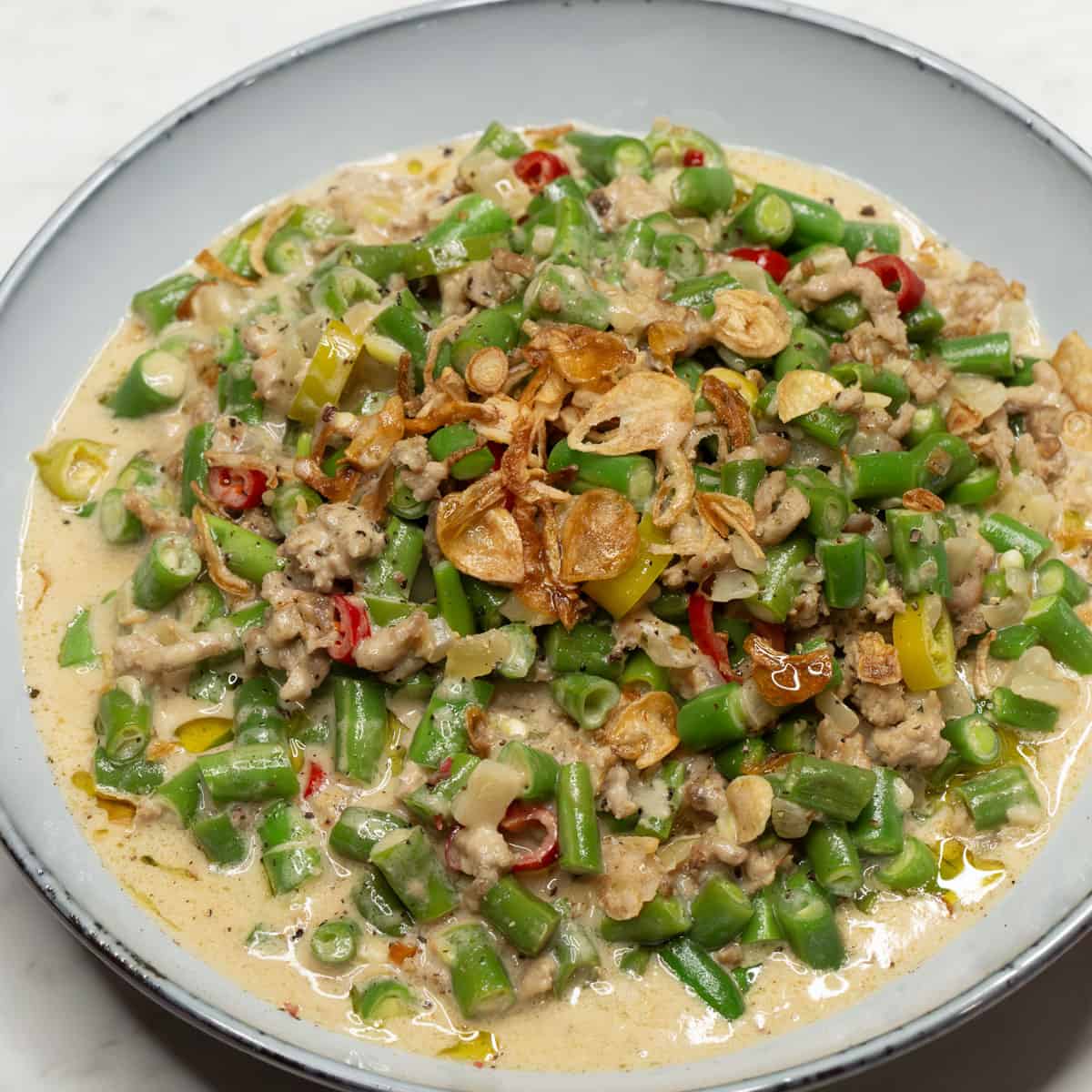
- Gising-gising: Winged beans cooked in coconut milk and chilies.
- Ube halaya: A purple yam jam often made with coconut milk or evaporated milk.
- Cassava cake: A baked dessert made with grated cassava, coconut milk, and condensed milk. Budin is a similar cassava dessert from Quezon.
- Ginataang kamoteng kahoy: A creamy dessert made by simply boiling cassava with coconut milk and sugar.
- Ginataang mais: A sweet porridge made from glutinous rice, sweet corn kernels, and coconut milk.
- Suman: Sticky rice cakes wrapped in banana leaves and cooked with coconut milk.
- Ginataang bilo-bilo: A sweet dessert soup made with coconut milk, glutinous rice balls, fruit, and sago.
- Maja blanca: A creamy coconut pudding made with coconut milk, cornstarch, and sweet corn.
- Latik: Caramelized coconut curds made by cooking coconut milk until the oil separates and the solids turn brown.
- Latik sauce: Coconut milk cooked with brown sugar or panutsa until it thickens into a sweet sauce.

FAQs About Coconut Milk
No. Coconut cream is thicker and richer because it usually comes from the first squeeze of the coconut. Coconut milk is thinner and often comes from later squeezes.
No. Coconut water is the clear liquid inside young coconuts. Coconut milk is made by grating and squeezing the meat of mature coconuts.
Yes, but coconut cream is thicker and richer. You can add a little water to thin it if a recipe calls for coconut milk.
Unopened cans can be stored in a cool, dry place. Once opened, transfer the coconut milk to a sealed container and refrigerate it.
Opened coconut milk usually keeps for about 4 to 5 days in the refrigerator.
More Filipino Food Guide


Did you like this post? I would love to know! Your feedback helps me make better recipes. Please rate, review, or comment below. Questions about this post are welcome, too!
Let's connect on Facebook, Instagram, Pinterest, TikTok, Twitter, and Youtube. Be sure to tag me when you try any of my recipes @recipesbynora!


Nestor G. says
Nothing beats the flavor of freshly squeezed coconut milk. But here in the US, i’ve learned to appreciate the ones in cans or cartons. I get to cook my favorite meals from my childhood.
Nora Rey says
I totally get you! While nothing can replace the flavor of freshly squeezed coconut milk, those cans and cartons are a convenient way to recreate those cherished childhood meals. It's amazing how food can bring back those nostalgic memories. Enjoy your cooking journey down memory lane! 😊🥥🍲